


The 18th ShanghaiInternational Curriculum Forum
On November 7, the 18thShanghai International Curriculum Forum, sponsored by the Institute of Curriculumand Instruction (ICI) of East China Normal University, was solemnly held.Seventeen well-known experts in the field of curriculum and instruction fromthe United States, Britain, Finland and China conducted an in-depth dialogue onthe theme of "How curriculum and instruction respond to the new normal ofeducation". Their discussions about the theoretical and practicalexperience of curriculum and instruction provide forward-looking thinking for thefield in the post-epidemic era.
Opening Ceremony
At the opening ceremony,Professor Chen Shuangye, chairman of the organizing committee of the 18thShanghai International Curriculum Forum and deputy director of ICI, delivered aspeech on behalf of the organizers of the forum. She expressed her sincerewelcome to all the guests, hoping to better construct the new normal ofcurriculum and instruction through this academic feast, and fulfill the missionand responsibility of “for curriculum, for students, for the future”.
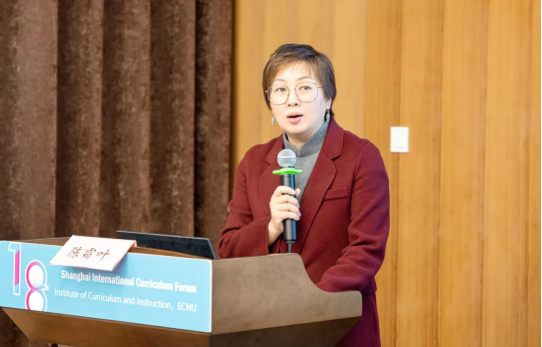
▲ ProfessorChen Shuangye, Chairman of the Organizing Committee of the 18th ShanghaiInternational Curriculum Forum
As an internationalplatform for new opportunities and new developments, at the opening ceremony ofthe forum, ICI signed a cooperation agreement with the International Center forUNESCO ASPnet (ICUA), and officially became its academic guidance institution.This cooperation will further promote the internationalization of ICI, andgradually deepen its professional influence of the international educationaldecision-making.
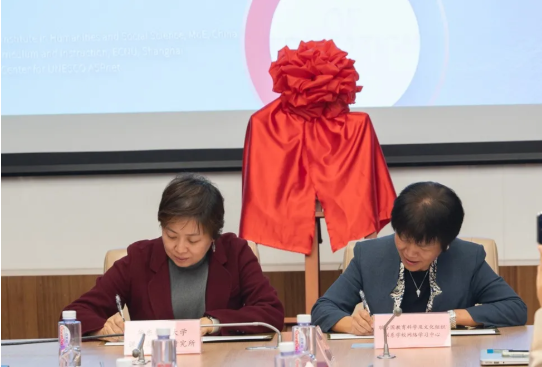
▲ICI has officially become the academic guidance institution ofUNESCO ICUA.
KeynoteSpeech
17 invited expertsshared their insights about “how curriculum and instruction respond to the newnormal of education”, which including their theoretical response, practicalwisdom, online and offline integration, and the combination of education insideand outside the school. Associate Professor Zhou Wenye, Professor Chen Shuanye,Associate Professor Xiao Sihan, Professor An Guiqing, Professor Zhang Wei andProfessor Zhou Yong of ICI served as moderators respectively.
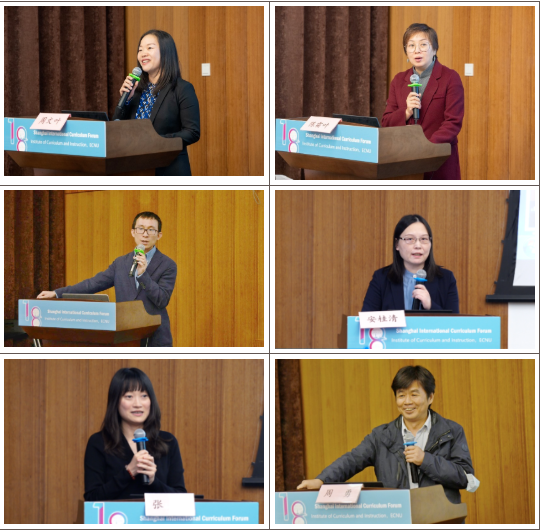
▲ Moderators of keynote speech
The MorningSession of Keynote Speech
Professor Ivor Goodson,who was praised as “one of the most important scholars in the field ofcurriculum research today” by Professor Painer, made a report entitled “Developingcurriculum and narratives for the new normal”. He took the lead in expoundingthe theoretical response to the new normal of curriculum and instruction afterthe epidemic. Professor Ivor Goodson pointed out that in the face of greatuncertainties in our risk society, we cannot completely rely on the free marketand rational choice theory to solve the problems of curriculum and instructionin “the age of new normal”, professionals need to work together to solve thisproblem. During the report, Professor Ivor Goodson also proposed a new teachingmethod to deal with the problems of curriculum and instruction.
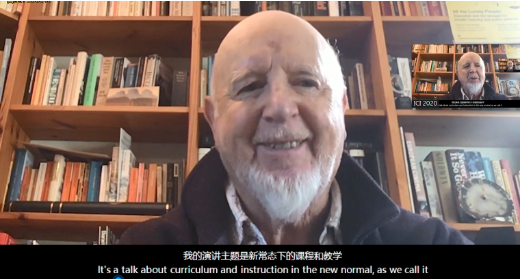
▲ Professor Ivor Goodson, Universityof Brighton, UK
Professor Punya Mishra,founder of the conceptual framework of TPACK, associate dean of the School ofEducation at Arizona State University in the United States, delivered a reportentitled “TPACK and beyond: Designing technology and education from artifactsto culture”. He pointed out that technology-mediated learning has become a keyto instruction in the context of COVID-19 epidemic. Professor Punya Mishra alsoput forward a new framework based on the previous TPACK conceptual framework, whichis, the Five Spaces for Design in Education. The purpose is to better providenew ideas for the future curriculum and instruction. Professor Punya Mishraalso introduced the specific practice of the new framework and put forwardsuggestions for future research and practice.
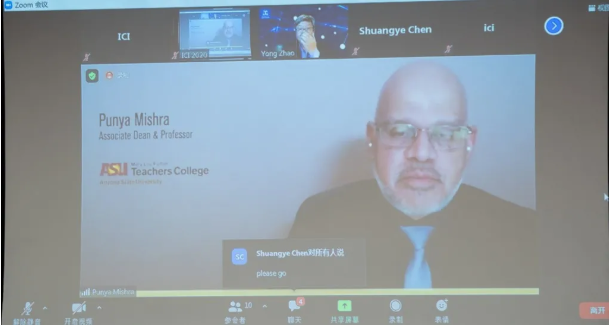
▲ Professor Punya Mishra,associate dean of the School of Education at Arizona State University in theUnited States
Professor Zhao Yong, anexpert from the School of Education of the University of Kansas in the UnitedStates and the School of Education of the University of Melbourne in Australia,made a report entitled “Students as change partners: Student self-determinationand autonomy”. From the perspective of students, Professor Zhao emphasized thatstudents should become participants and owners of curriculum and instructionreform. Professor Zhao also put forward specific strategies to encourage andsupport students’ self-decision-making and self-service, which provided newideas for the development of the new normal of curriculum and instruction inthe future.
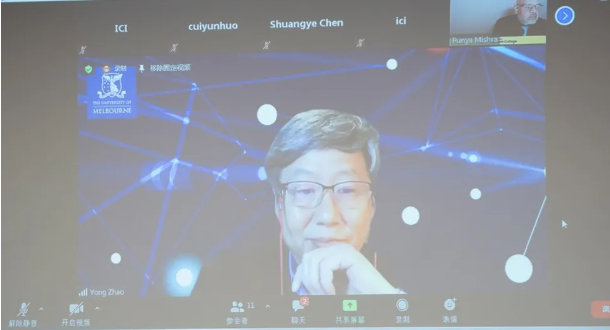
▲ ProfessorZhao Yong, the School of Education of the University of Kansas
Professor Lei Jing, fromthe School of Education, Syracuse University in the United States, made areport entitled “Blended learning: From theory to the latest practice”, and putforward the important concept of blended learning. In the report, Professor LeiJing focused on the theoretical basis, design models, development trends andchallenges of blended learning, and shared some effective strategies of blendedlearning by taking K-12 Schools in the United States as examples.
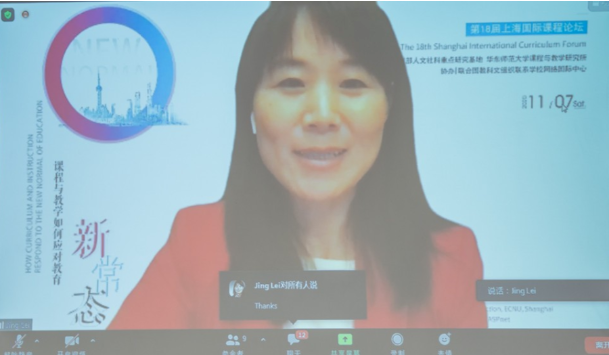
▲ ProfessorLei Jing, the School of Education, Syracuse University
Professor Zheng Donghui,from the Institute of Curriculum and Instruction Theory of Ningbo University,made his report entitled “An online teaching survey under the background of‘Classes Suspended but Teaching Continues’ based on data from four provinces”. ProfessorZheng shared the results of online teaching survey of primary and secondaryschool teachers from four aspects: teaching knowledge, teaching practice,teaching experience and teaching support. It is found that teachers try topractice online instruction according to their self-awareness, but the teachingeffect is not good. Based on the results, Professor Zheng Donghui put forwardseveral suggestions: to implement personalized teaching based on learningresource package, to improve the quality of teachers using technology to supportstudents’ learning, and to strengthen the coordination and mutual promotionbetween online instruction and offline classroom.
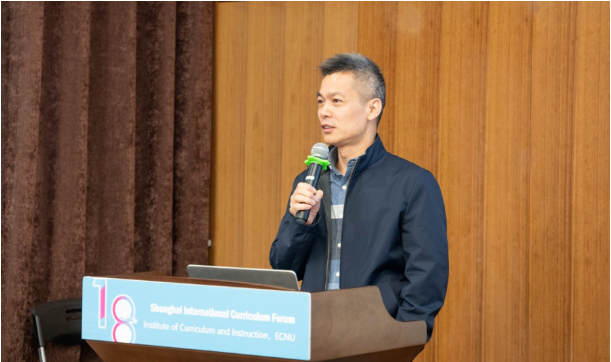
▲ ProfessorZheng Donghui, the Institute of Curriculum and Instruction Theory, NingboUniversity
Professor Chen Shuangye,the Institute of Curriculum and Instruction of East China Normal University,made a report entitled “Escape from being disciplined: abnormal learning statusin the pandemic and implications for the new normal”. From the perspective ofeducational discipline system, professor Chen put forward some problems inonline education, such as the “problem of imitating the regular timetable”, “insufficientinteraction” and “lack of self-regulated learning”. She believes that theseproblems resulted from the implicit extension from the discipline and surveillancehidden in the traditional classroom. In response, Professor Chen Shuangyepointed out that when the online education model is to be more integrate intooffline curriculum, classroom and teaching, a new blended education system needto go beyond the technical perspective reconstruct the institutional disciplineand surveillance, and finally empower learner’s learning with more professionalinstructional design.
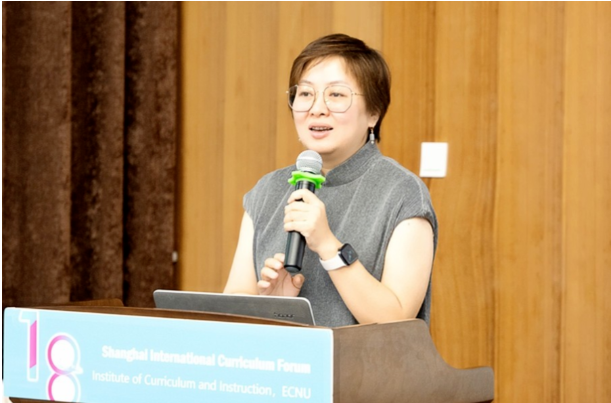
▲ ProfessorChen Shuangye, the Institute of Curriculum and Instruction, East China NormalUniversity
Associate Professor YangXiaozhe, the Institute of Curriculum and Instruction of East China NormalUniversity, made a report entitled “Innovation and the future of educationunder the new normal”. From the perspective of technology, Associate ProfessorYang Xiaozhe discussed how scientific and technological innovation affectseducation, teaching, learning space and curriculum learning under thebackground of current scientific and technological innovation, and pointed outthat we should grasp the turning point, dig for new laws, reshape new formats, andexplore new teaching.
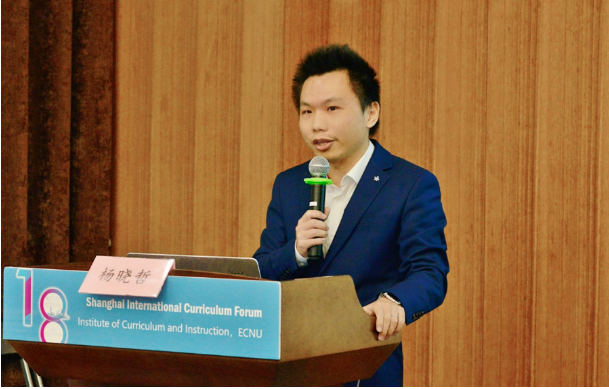
▲ AssociateProfessor Yang Xiaozhe, the Institute of Curriculum and Instruction, East ChinaNormal University
The Afternoon Session ofKeynote Speech
Professor Lyu Lijie, Facultyof Education, Northeast Normal University, made a report entitled “Discussionon the curriculum potential of textbooks under the background of new normal”.Professor Lyu believed that in the context of the interconnected internationalcommunity, it is particularly important to cultivate students’ learning and transferringability, enhance their ability of identifying information, and strengthen theirability of communication and understanding between cultures. Textbooks areimportant carrier to cultivate students’ abilities mentioned above. Therefore, currently,the issue of how to effectively transform the literacy goals and develop thepotential of textbooks needs to be paid more attention to and considered bytextbook designers.
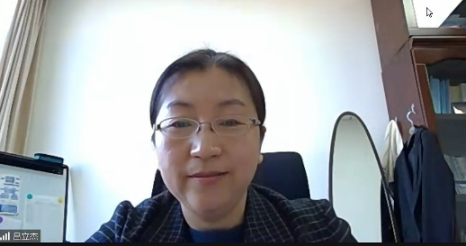
▲ ProfessorLyu Lijie, Faculty of Education, Northeast Normal University
Professor Wang Muhua, Facultyof Education, Southwest University, made a report entitled “From constructivismto connectivism: future trends of curriculum development”. Professor Wang discussedthe future trends of curriculum development from three aspects: subject pluralism,space pluralism and unblocked mechanism. Professor Wang Muhua believed that we shouldintegrate high-quality resources both inside and outside the school and at homeand abroad as a whole. Taking the diversified and personalized development of studentsas guidance, following the development principles of co-construction, sharingand common development, we should actively build a resource platform conduciveto the development of students’ personality and innovation, and build a talenttraining system that is holistic, diverse, selectable and sustainable.
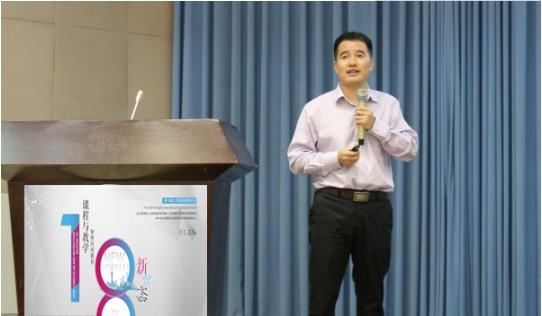
▲ ProfessorWang Muhua, Faculty of Education, Southwest University
Professor Tina Grotzer,chief scientist of Project Zero of Harvard School of Education, made a reportentitled “Innovative pedagogies: How on-line learning underscores theimportance of developing self-directed learners”. Professor Tina Grotzerintroduced two pedagogical approaches: Teaching for Understanding and LivingCurriculum, and contrast the affordance of each for developing 21st Centurylearners. In the report, Professor Tina Grotzer also shared the basicassumptions and objectives of the two approaches, and expounds how each impact learners’autonomous learning.
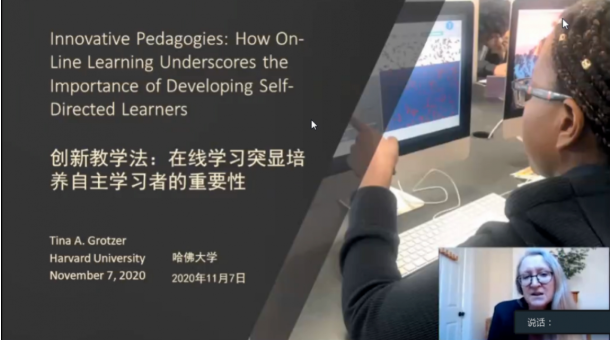
▲ ProfessorTina Grotzer, School of Education, Harvard University
In the report entitled “Effectseducational games on students’ achievement in science: a meta-analysis”,Associate Professor Lei Hao of ICI shared how he used the method ofmeta-analysis to carry out research from the aspects of question raising,research design, research results and discussion. The results indicate that theinfluence of game-based learning on the science performance of eastern studentsis significantly higher than that of western students, and the influence on elementaryschool students and undergraduate students is higher than that of middle schoolstudents. In addition, he also found that game-based learning had the leastimpact on students’ science homework scores, game-based learning for 4Hr-1 weekhad the greatest impact on students’ science scores. These findings will helpto guide teachers’ classroom teaching, stimulate students’ learning motivationand improve students’ academic achievement.
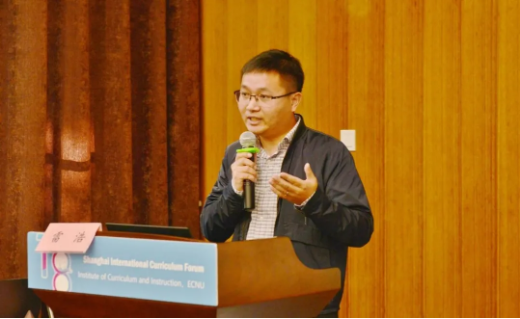
▲ AssociateProfessor Lei Hao, the Institute of Curriculum and Instruction, East China NormalUniversity
Professor Li Zijian,Vice President and Vice Chancellor of the Hong Kong University, made a reportentitled “The impact of COVID-19 on Curriculum and Teaching”. He took Spain,Finland and the United States as examples to explore the impact of COVID-19 oncurriculum and instruction from different perspectives ranging from policyimplementation to teaching and learning. At the same time, he also focused onChina’s experience and introduced how China flexibly used informationtechnology to carry out online teaching during the epidemic. In the report,Professor Li Zijian also creatively put forward the framework of C-O-V-I-D,therefore, to look forward to the future trends of curriculum and instruction.
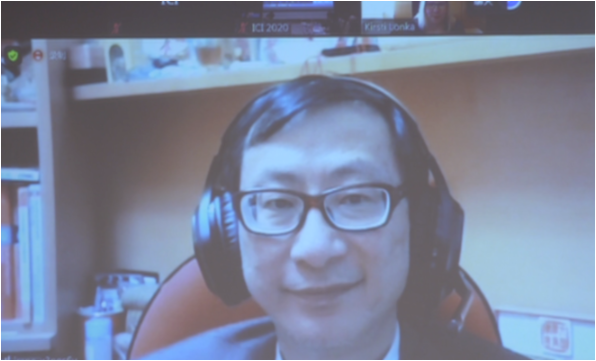
▲ ProfessorLi Zijian, Hong Kong University
Professor Kirsti Lonkaof the Department of Educational Psychology, University of Helsinki, Finland,delivered her report entitled “Phenomenal learning from Finland: How to promotefuture skills?” Professor Kirsti Lonka pointed out that education has alwaysbeen a key factor affecting the development of Finland. She believed thatalthough the education system Finland is different from that of China, it alsofaces global challenges. To deal with the challenges of digitization,globalization, climate change and other complex issues, new solutions areneeded to update Finland's school system. In the report, Professor Kirsti Lonkagave a brief introduction to the current digital practices in Finland, she particularlyemphasized a phenomenon-based form of learning. She pointed out that it wasparticularly important for Finnish education to improve students’ interest and learningmotivation.
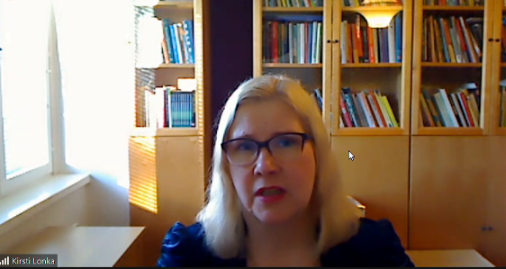
▲ ProfessorKirsti Lonka, the Department of Educational Psychology, University of Helsinki
Professor Liu Lianghuaof the Institute of Curriculum and Instruction of East China Normal University madea report entitled “Video-based Lesson Study: from Academic Research to TeachingResearch”. Professor Liu Lianghua made use of the existing video to carry outacademic research and teaching research, he applied the video-based analysis tothe research of teaching practice, and proposed the “five-four system” (fivesteps and four videotapes) of video-based analysis of lesson study. During theprocess of the implementation, the “five-four system” was further adjusted tothe “three-one system”. Through video-based analysis, the closed teachingdesign will be turned to the open classroom interaction, which further brings anew perspective for lesson study.
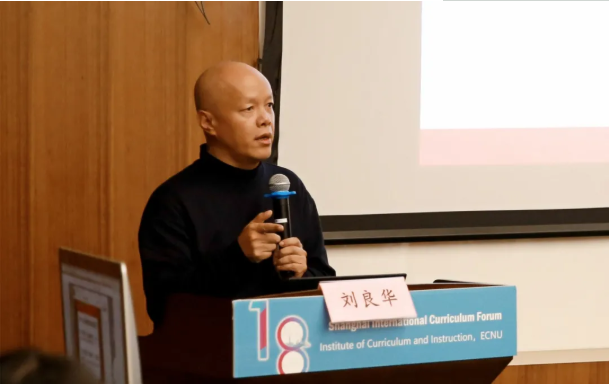
▲ Professor Liu Lianghua, the Institute of Curriculum and Instruction,East China Normal University
Associate Professor WangTao of the Institute of Curriculum and Instruction of East China NormalUniversity paid attention to the dilemma of global civic education in the trendof globalization and anti-globalization. He made a report on “GlocalizedCompetence: the new normal of global education and curriculum development”. Heproposed the concept and framework of “glocalized competence”. He believed thatin the face of the new situation of globalization, students need to strengthencultural self-confidence, and be able to understand and analyze the process ofhuman civilization, the development of the world and global challenges.Students also need to seek common ground while reserving differences, respectthe diversity and differences of multiculturalism, actively participate incross-cultural exchanges, and establish a sense of a community with a sharedfuture for mankind. In the report, Associate Professor Wang Tao furtherelaborated on how curriculum design based on local and controversial publicissues and instructional design based on the civic debate would facilitatestudents’ “glocalized” understanding.

▲ Associate Professor Wang Tao, the Institute of Curriculum andInstruction, East China Normal University
Professor Zhang Wei of theInstitute of Curriculum and Instruction of East China Normal University, made areport entitled “Shadow education during and after Covid-19: what internationalcomparisons tell us about the futures of education”. She used the empiricaldata collected since the outbreak of the epidemic to analyze the changes causedby shadow education under the epidemic. She focused on three different culturalcontexts, namely China, Denmark and Kenya, and compared the response of shadoweducation and schooling to the epidemic, and unpacked interrelationships withparticular attention to the blurring boundaries between the two sides. Inaddition, Professor Zhang Wei also analyzed and emphasized the impact thatshadow education posed on teachers’ professional level, curriculum policy andeducational prospects.
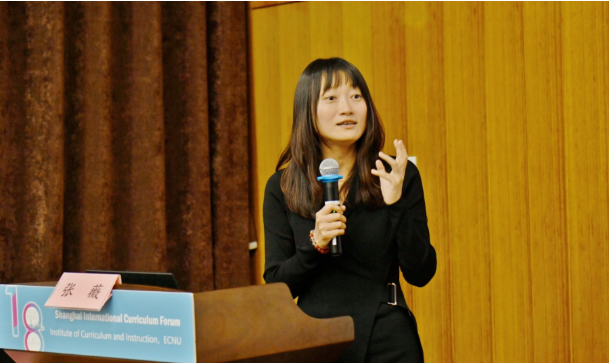
▲ Professor Zhang Wei, the Institute of Curriculum andInstruction, East China Normal University
Professor Cui Yunhuo,director of the Institute of Curriculum and Instruction of East China NormalUniversity, made a report entitled “The new normal of school education in the Post-epidemicera: new states, old norms”. Professor Cui pointed out that in thepost-epidemic era, the new patterns of school education are mainly manifestedas curriculum elements, student-teacher interaction, student-curriculuminteraction. The key factor affecting these changes is the development of newtechnologies, which is hidden behind the epidemic. Therefore, improving the informationliteracy of teachers and the interaction quality between students andcurriculum are the direction of the new normal in the future of schooleducation.
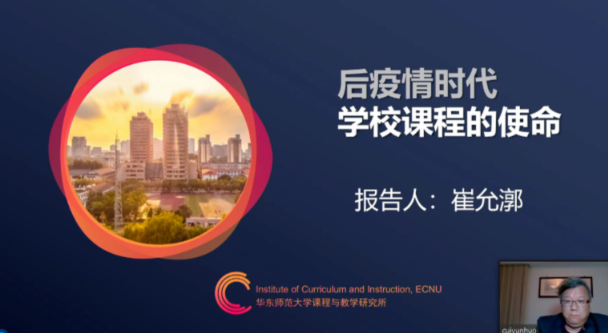
▲ Professor Cui Yunhuo, the Institute of Curriculum andInstruction, East China Normal University
Parallel Sessions
Three parallel sessionscontinued the discussion at the noon and night of November 7, the topics are “Theoreticalresponse of curriculum and instruction to the new normal” “Practical wisdom of curriculumand instruction in the age of new normal” and “Curriculum transformation andpractical reflection in the Post-epidemic era”. Associate Professor WangXiaoming, Associate Professor Lei Hao and Li Kai (doctoral student of ICI) servedas moderators.
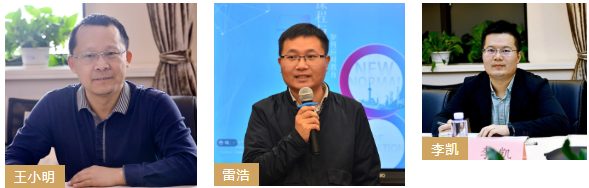
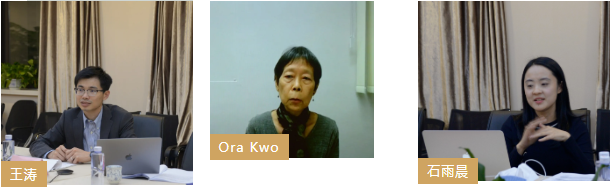
The forum fist initiateda parallel session for graduate students, and invited Professor Ora Kwo of theSchool of Education of the University of Hong Kong, Associate Professor WangTao and Dr. Shi Yuchen of the Institute of Curriculum and Instruction of EastChina Normal University, as guests to comment on students’ reports.
More than 300 curriculumresearchers and front-line educators focused on curriculum theory innovation inthe post-epidemic era, classroom teaching reconstruction, teachers’professional development, the international experience and enlightenment ofcurriculum transformation, the way of deep learning and other topics, and carriedout warm exchanges and discussions.
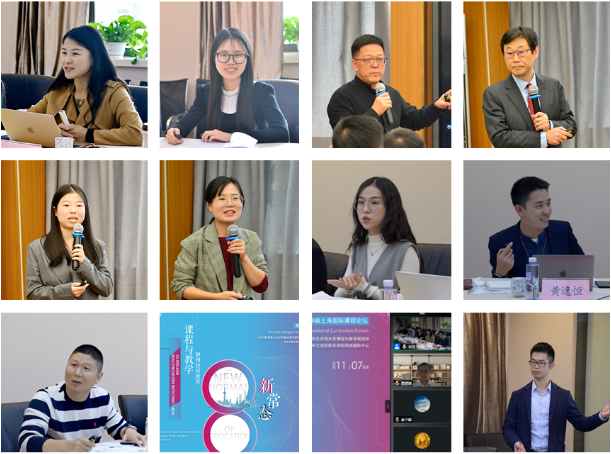
▲ Reporters of parallelsessions
Technology Innovation
The forum creativelyused bilibili platform (a cultural community and video platforms in China) andlive broadcast of Tencent conference to conduct online and offline simultaneousinteractive discussions. The live broadcast attracted nearly 18 thousandexperts and scholars to participate in this academic feast. We would like tothank the Propaganda Department and the Office of Information Governance ofEast China Normal University for their support, and also sincerely thank expertsand scholars online and offline for their participation in the whole process.
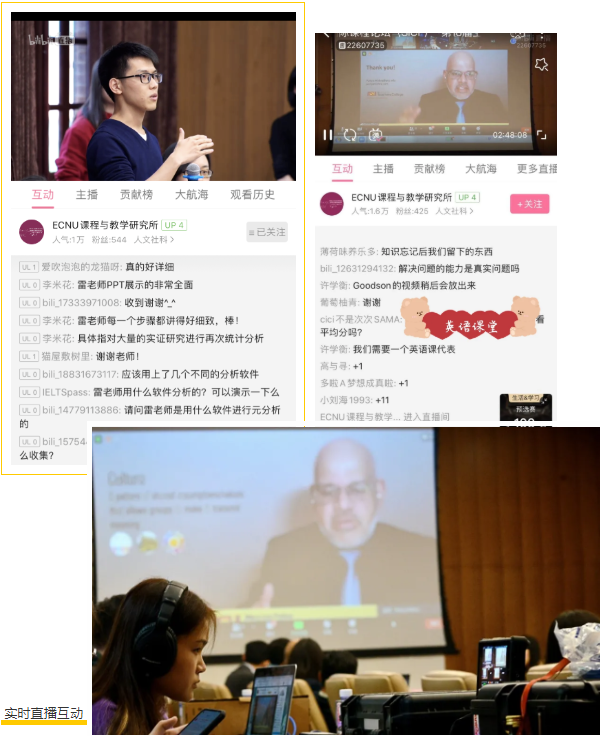
▲ Live broadcast andreal-time interaction
An Invitation for Further Interaction
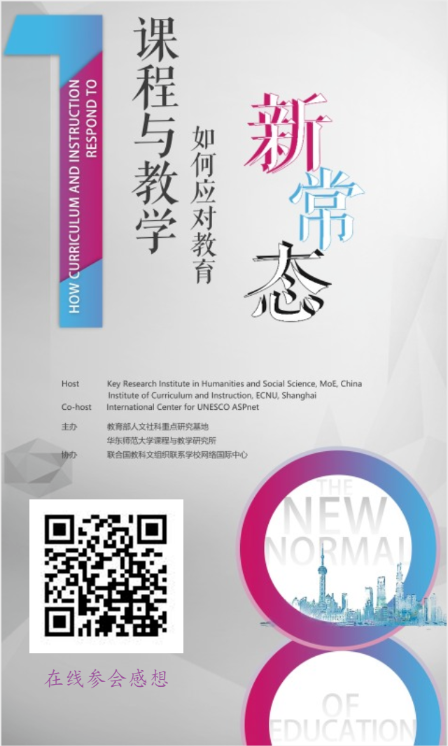
Experts and scholars whoattend the meeting online are cordially invited to scan the code to providephotos, ask questions and share your ideas about the forum. Your questions andthoughts may have the opportunity to be shared in the follow-up series of themereport releases. Stay tuned for our future releases!

 Address: 3663 Zhongshan North Road, Shanghai
 Email: ecnuici@163.com
 电话:021-32526084