
The International Classroom Analysis Lab seeks to unravel the “Black Box” of classrooms and aims to explore effective ways to empower classrooms with technology and artificial intelligence.
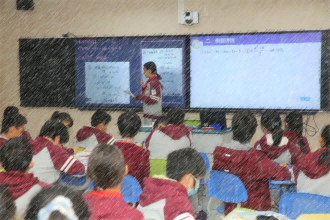
The AI-empowered high-quality classroom intelligent analysis constitutes one of the key research areas of the International Classroom Analysis Laboratory. The goal of the intelligent analysis is to unravel the “Black Box” of classrooms by utilizing artificial intelligence to automatically transcribe, code and analyze classroom videos and to provide a diagnostic report that encompasses qualitative and quantitate results, as well as data visualizations. The use of AI in the process of video analysis enables the delivery of results with accuracy and efficiency. Our AI-empowered high-quality classroom intelligent analysis is multimodal, examining both the verbal and non-verbal aspects of classroom interactions; it is also multidimensional, combining coding schemes at various levels to provide a thorough representation of what actually took place in a classroom. As a result, the analysis not only offered tremendous and valuable data for researchers, it also served as an essential aid for teacher professional development efforts, helping teachers to collaboratively reflect on, discuss and improve their classroom teaching practices.
One of the novel features of our AI-empowered high-quality intelligent analysis is that, for each classroom video, it was capable of automatically delivering a diagnostic report consisted of multiple pages. For a report sample, please see the page for High-quality Classroom Intelligent Diagnostic Analysis Report. The report revealed how the teachers and students verbally and non-verbally participated in the lesson, how they interacted with each other, and the extent to which the learning goals were fulfilled. Compared with the subjective judgment of experts when observing and evaluating lessons, our diagnostic report featured “hard evidence” and “objectiveness,” which we believe were conducive to helping teachers form a "practice-based research community" that were essential for the professional developments and growth of pre-service and in-service teachers.
Specifically, our AI-empowered high-quality classroom intelligent analysis automatically classified teachers' questions, students' answers and teachers' evaluations; it also visually displayed the distribution of classroom activities using time charts. While some of these analyses were entirely based on objective data, such as counting the number of words spoken by teachers or students, or calculating the number of conversational transitions between teachers and students, other analyses involved judgments by AI, such as automated coding based on the content of the discourse, that is, the classification of the teacher or student discourse into specific categories according to a pre-defined framework. The diagnostic report sought to encourage teachers, teaching researchers and academic researchers to conduct collaborative discussions, in which the evaluation of teaching and suggestions for future improvements are cooperatively formed.
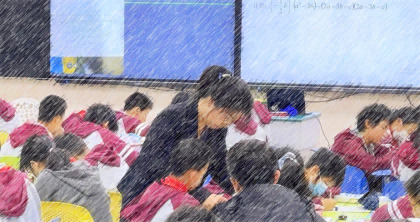
Over the past two decades, classroom videos are increasingly used in teacher education and teacher professional development programs to facilitate teacher learning and to allow teachers to reflect on their lessons. Classroom videos have many unique characteristics that make them especially suitable for teacher learning and reflection in professional development settings (Chen et al., 2020). First, videos capture the richness and complexity of classroom interactions without losing authenticity. Second, they can be repeatedly played and paused to satisfy teachers’ learning needs. Third, video-based teacher reflection offers multiple perspectives and allows teachers to revisit their classrooms, which situates their exploration in a more familiar and motivating environment than PD materials from sources such as textbooks (Chen et al., 2020).
The International Classroom Analysis Laboratory closely collaborates with teachers and teacher educators from a wide array of schools across China to fully leverage the potential of video-based analysis to implement professional development efforts. Together, we combined selected video clips, classroom observations and intelligent analysis report of videos to help teachers reflect on, discuss and improve their classroom teaching. In our video-based professional development programs, we follow the complete video-based practice and reflection cycle, including forming teaching and research groups, proposing research questions, forming research hypotheses, recording classroom videos, analyzing videos, reflecting on and discussing evidence from videos to facilitate pedagogical changes.
Evidence lies at the core of video-based professional developments. According to the degree of subjectiveness in the process of video analysis, we divided video evidence into four types, as shown in Table 1. Original video evidence presents unprocessed evidence in the form of complete videos or video clips. Basic video evidence mainly includes objective counting, such as the total number of words spoken by a teacher. Quantitative video evidence involves coding and classification of utterances into pre-defined categories. Quantitative video evidence is more subjective basic video evidence as coding involves judgments by a human being or by AI. Lastly, the most subjective type of evidence is qualitative video evidence, which involves qualitative analysis of video clips or episodes.
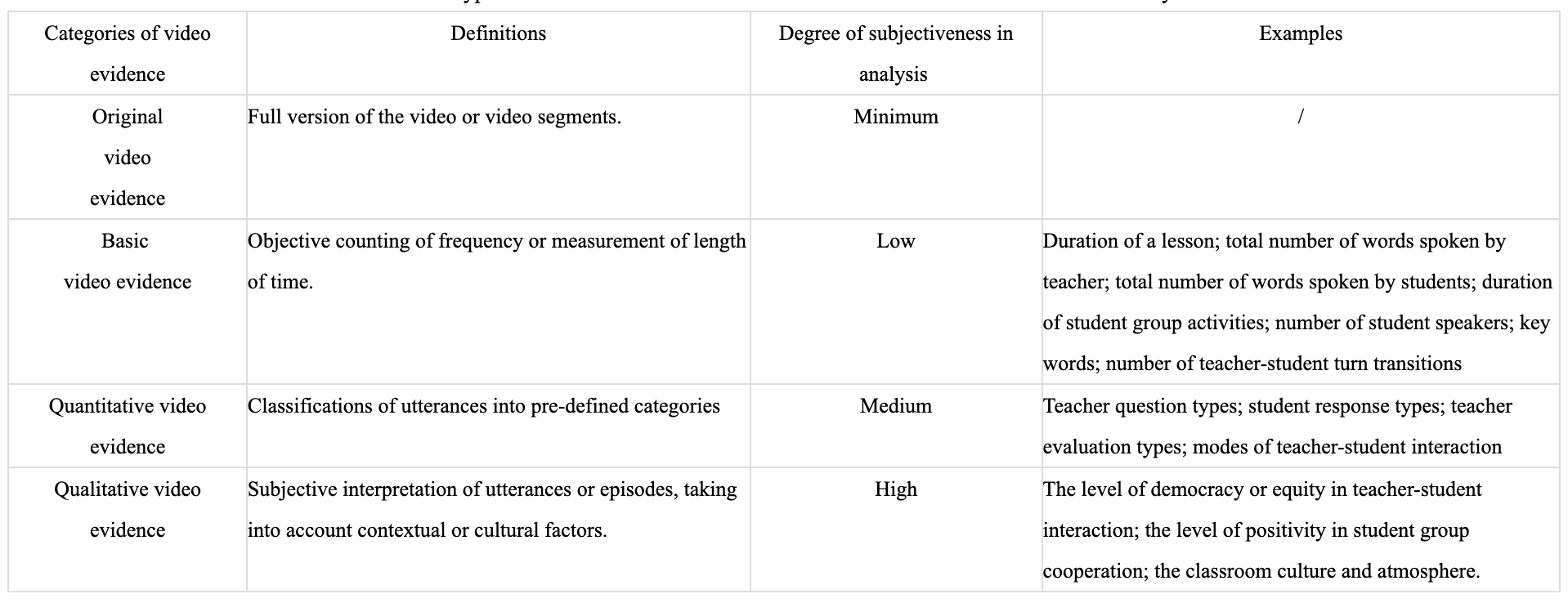
Table 1. Types and characteristics of evidence in evidence-based classroom video analysis
As shown in Figure 1, we proposed and implemented three approaches of video-based professional development, namely, researcher-led classroom video analysis, intelligent analysis of video, and school-based classroom video analysis. As shown in Figure 1, the horizontal axis represents the researchers’ level of participation in research and the vertical axis represents teachers’ level of participation in research. From the first to the third approach, the researcher's research participation gradually decreases, while the teacher's research participation gradually increases. Each of the three approaches has its own advantages and disadvantages. For example, researcher-led video analysis can reduce teachers' research workload and improve feasibility, but the analysis may not be directly applicable to improve teaching. When carrying out video-based professional development, teachers may choose one of these approaches, combining two or even three of the approaches, or gradually transitioning from one approach to another.
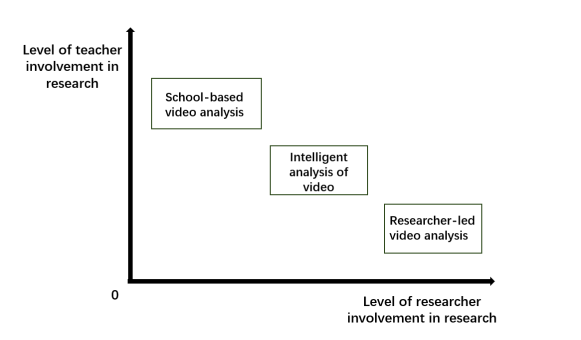
Figure 1. Three approaches of video-based professional development
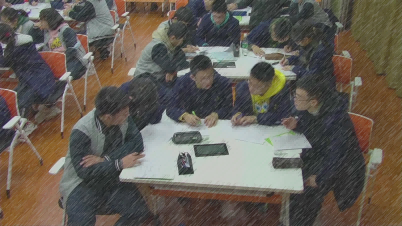
One of the goals of the transformation of primary and secondary school classroom teaching under the latest curriculum standards in China is to shift from the traditional teacher-centered classroom interaction mode into a dialogic mode that foregrounds student-centered or even student-led interactions. In the teacher-centered classroom teaching, the proportion of student discourse is low, the interaction mode between students and teachers is restricted, and the direct interaction between students and students is relatively lacking. Dialogic teaching encourages students to speak out their own opinions, listen to and question the opinions of others, weigh different opinions, as well as being reasonable, objective and fair in their expressions. In doing so, the teachers manage to improve student participation in the behavioral, cognitive and affective dimensions.
Since the Spring of 2021, our International Classroom Analysis Laboratory has closely collaborated with several schools in Shanghai to design and implement dialogic teaching, with a particular focus on the teaching of controversial public issues in the subject of Morality and Law (akin to Social Studies). In one of our recent studies, we enrolled in the study five fourth-grade classes from a public elementary school in Shanghai. The size of the five participating classes ranged from 32 to 35 students, with 168 students (76 boys and 92 girls) participating in the study. The students aged between nine years five months to ten years five months at the start of the intervention; they all spoke Chinese as their first language. The school was a top-performing elementary school in the district, primarily serving middle- to upper-middle-class Chinese families whose residential address was nearby.
Four controversial issues, based on four units of textbook contents, were developed for the present intervention. The fourth-grade Morality and Law textbook was developed and mandated by the Ministry of Education in China and is used nationally. Two weeks before the start of the intervention, our research team conducted a 2-day workshop in a conference room at the school, with each day’s workshop lasting approximately three hours. The workshop introduced teachers to the theoretical foundations of and instructional approaches for dialogic teaching, including Accountable Talk, Dialogic Teaching, Exploratory Talk and Inquiry Dialogue. In addition, the research team provided and discussed with teachers a list of discursive moves that encompassed categories of Invitation to express viewpoint, Invitation to justify with evidence or reasons, Invitation to build on own or other’s contributions, Invitation to agree/disagree with others, Invitation to challenge others, Invitation to predict/hypothesize, and Invitation to summarize. Throughout the intervention, the research team provided the teacher participants with detailed lesson plans 3 or 4 days before a session. The lesson plan specified the learning goals and listed the sequence of activities in which teachers were expected to engage their students to meet those goals. The categories of discursive moves as mentioned above, along with definitions and examples for each category, were attached to each lesson plan as an appendix; teachers were encouraged to exercise their own judgment to make use of a move when appropriate. Following each lesson, the team communicated with the teacher, in person or via email, to reflect collaboratively on the strengths and weaknesses in their teaching performance.
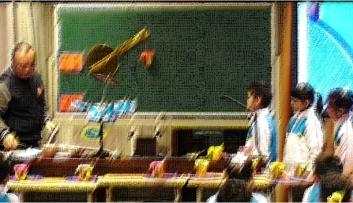
Recent research and policy documents call for engaging students and teachers in scientific practices to fulfil the goal of shifting science education from students knowing scientific and epistemic ideas, to students developing and using these understandings as tools to make sense of the world (Berland et al., 2016). Disciplinary practices in science education have been foregrounded in China in the most recent curriculum standards in the subject of science. Disciplinary practice lies at the core of the daily research work of scientists, whether it is familiarizing oneself with existing theories, proposing research questions, selecting variables, designing experiments, collecting and analyzing data, presenting and interpreting results, or communicating with peers and responding to critical comments, etc. All of these efforts belong to the scope of the disciplinary practices of science. Internationally, the change in the key words of science education in the United States from "inquiry" to "practice" also reflects the conceptual transformation toward disciplinary practices in science. Research shows that "scientific inquiry" carried out in primary and secondary schools both in China and beyond are always limited and tend to skew authentic scientific practices.
Since the Spring of 2022, the International Classroom Analysis Laboratory has formed long-term strategic partnership with Shanghai Teacher Institute (The Teaching Research Section of Shanghai Municipal Education Commission) to transform the teaching and learning in elementary and secondary science classrooms in China. Specifically, we collaborate with three schools from each district in the city of Shanghai and we offered professional development courses for participating science teachers with respect to authentic science activities such as inquiry and argumentation. We also video-taped lessons and used our intelligent system to analyze videos, following which we conducted focus group reflections based on videos and the diagnostic reports, with a particular focus on the extent to which the teachers’ classroom practices were aligned with normative models in disciplinary practice in science.
In order to build a model of disciplinary practices of science, we extensively consulted literature both in China and abroad. The model shown in Figure 1 points to two goals: to cultivate "expert insiders " who acquire extensive knowledge and skills and can think and practice like a scientist, and to cultivate “competent outsiders” who have the ability to acquire, discern, understand, and use scientific information in the face of everyday problems. For cultivating “expert insiders,” science education in primary and secondary schools shoulders the important mission of screening and preparing talents in the field of science for higher education. At the same time, the vast majority of students will not be engaged in scientific research after graduation from high schools, but they are still citizens living and functioning in the Information Age, and thus they should be able to evaluate scientific information in their daily lives and make rational, informed and accountable decisions for the benefit of not only themselves but also society at large.
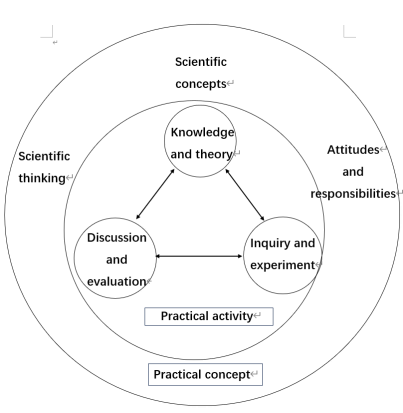
Figure 1. Model of disciplinary practice in science based on core competencies
Copyright:Curriculum and Teaching Research Institute of East China Normal University
 Address: 3663 Zhongshan North Road, Shanghai
 Email: ecnuici@163.com
 电话:021-32526084
邮编:200062


