

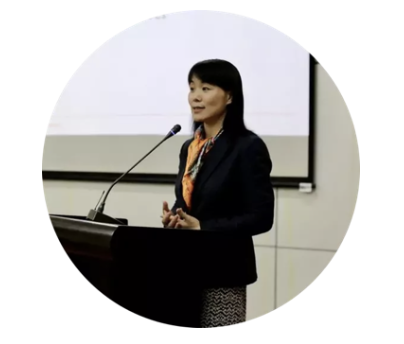
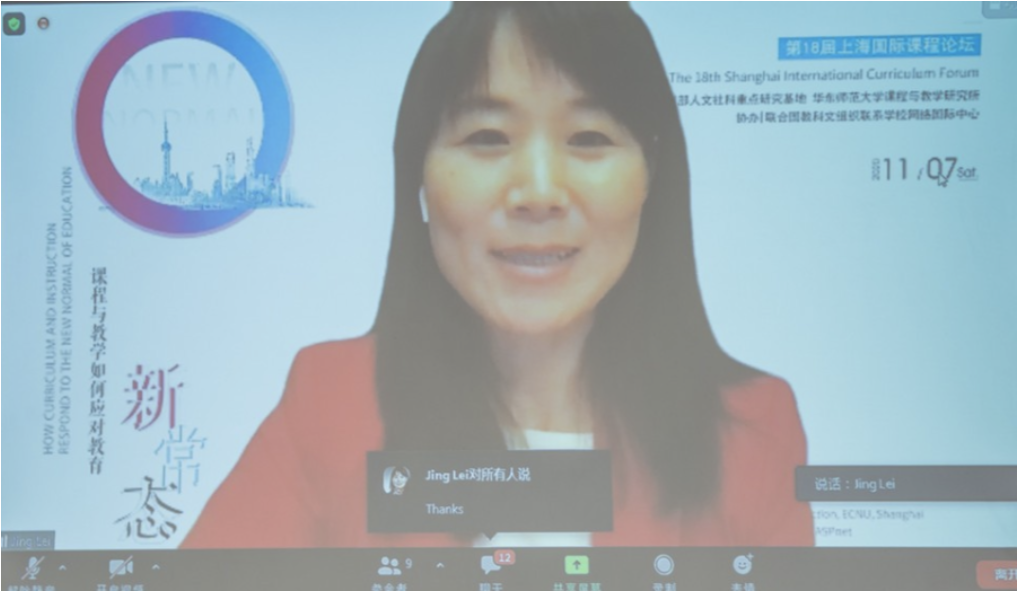
▲Professor Lei Jing
Syracuse University

Title: Blended Learning: From Theory to The Latest Practice
For the original video: Please scan the QR code and login
We publish this report with the permission of Prof. Lei for the use of scholarly communications only.


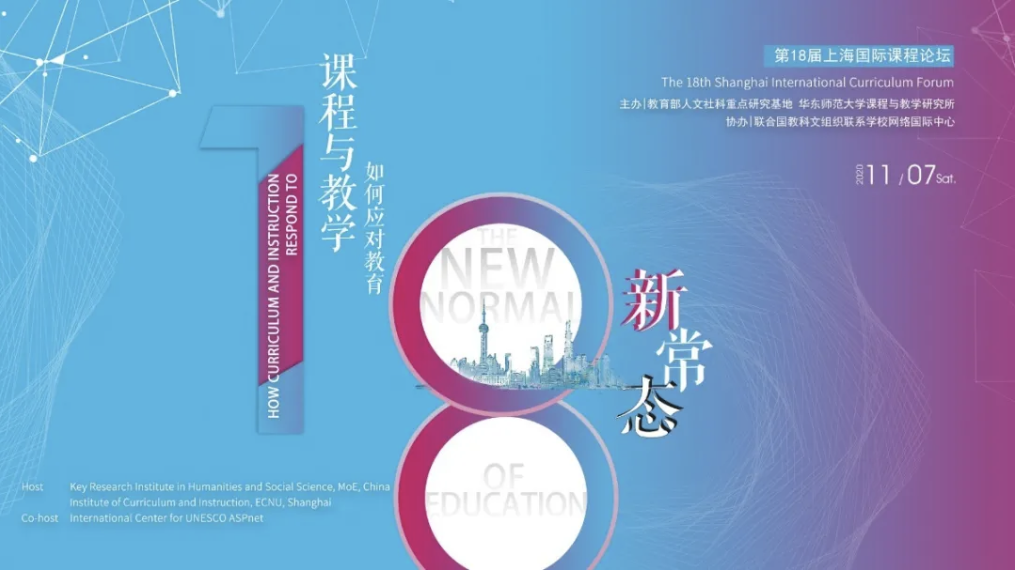
An overview of the development trends of blended learning
Blended Learning is a new teaching mode derived from the rapid development of electronic information technology.
Though scholars define blended learning differently, a common feature is that they all think that blended learning is a hybrid learning environment that combines traditional e-learning and traditional classroom learning.

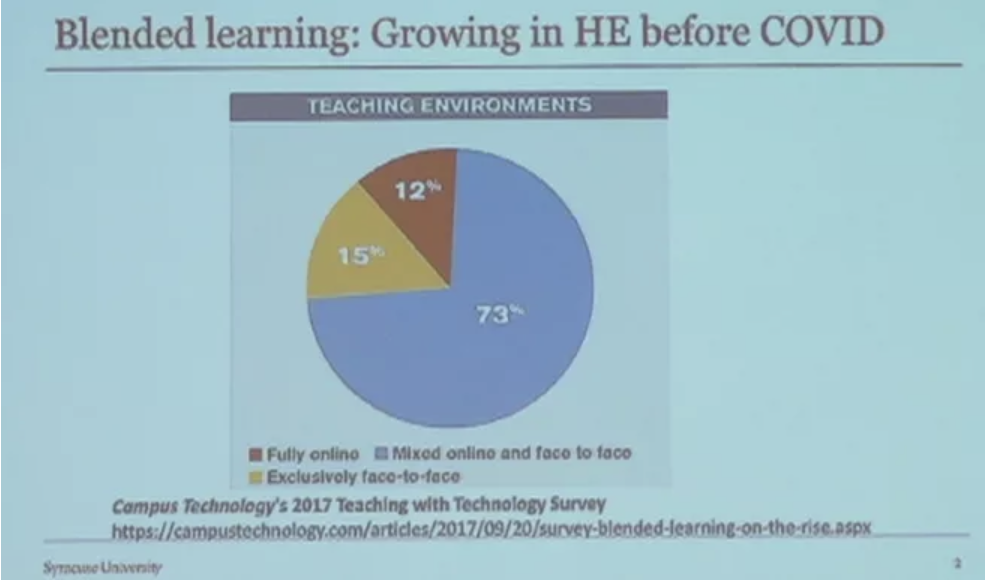

Different modes of blended learning have also been discussed. In 2002, several different forms of blended learning were proposed, such as classroom learning plus e-learning, e-learning plus offline tutoring, and simulated learning plus structured classroom learning.
In the past 20 years, there have been a large number and wide range of studies on blended learning. To sum up, the most important influencing factors of blended learning in these studies are as follows:
1. First, blended learning should be the organic integration of network teaching and classroom teaching, rather than the simple superposition of different teaching modes.
2. Second, technology should be used meaningfully.
3. Third, we should pay attention to the importance of teaching methods in blended learning.
4. Some scholars have discussed three ways of interaction, that is, the interaction between students and students, the interaction between students and teachers, and the interaction between students and teaching content. It is found that the teaching method with the coexistence of two or three forms of interaction is more beneficial to students’ learning than any single form of interaction.



The current practices in K-12 schools in the United States
1. The research on the plan in fall semester
Prof. Lei first shared the data from the Center on Reinventing Public Education, which collects plans for 124 school districts in the United States. These school districts include the largest school districts in the United States, such as the school district of New York City, and the school district of Los Angeles, and so on. There are probably more than 10 million students in these 124 school districts. However, it should be noted that in the United States, there are actually a very large number of school districts, with more than 130000 school districts and more than 50 million supplies for primary and secondary schools. Besides, the data does not fully represent the situation of the United States as a whole, in that the situation in the United States is quite diverse.

The website of the Center on Reinventing Public Educations: https://www.crpe.org/

Prof. Lei summarize that a school would mainly consider eight aspects in making a plan:
(1) A clear and comprehensive plan with regular communication;
(2) A meaningful and structured learning plan;
(3) An explicit plan for the start of a school year;
(4) Effective allocation of resources;
(5) Provide educational assistance to vulnerable groups;
(6) Support teachers and school staff;
(7) Various health and safety measures;
(8) Ensure fair access to education for all students.



2. Research on the effect of blended learning
Looking at the plans of 120 school districts, Prof. Lei felt that each school district has actually done a lot of preparatory work, and the teachers also work hard and diligent. Now, the fall semester has begun for a month or two, how effective have these plans been? I do another study, and the data in this study come from the parents of students, which is a questionnaire survey of parents in a school district that adopts blended learning. The study is currently under way, Prof. Lei mainly shared the problems reflected by parents:
1. Parents feel the need for a clear learning structure;
2. Parents need more explicit and fluent communication;
3. Parents ask teachers to change their teaching strategies and methods;
4. Parents look forward to more communication and interaction between students and teachers.



Prof. Lei pointed that blended learning is basically carried out in one course, nevertheless, during the epidemic, it has expanded to all levels of teaching from kindergarten to colleges and universities. What’s more, there is a gap between research and practice, and the experience of effective blended learning should come from the practice.



 Address: 3663 Zhongshan North Road, Shanghai
 Email: ecnuici@163.com
 电话:021-32526084