



I’m Christopher Dede, professor in learning technologies at Harvard University. I’m excited to share ideas with you about artificial intelligence and education, and I’m going to bring up some slides to help me talk about this.
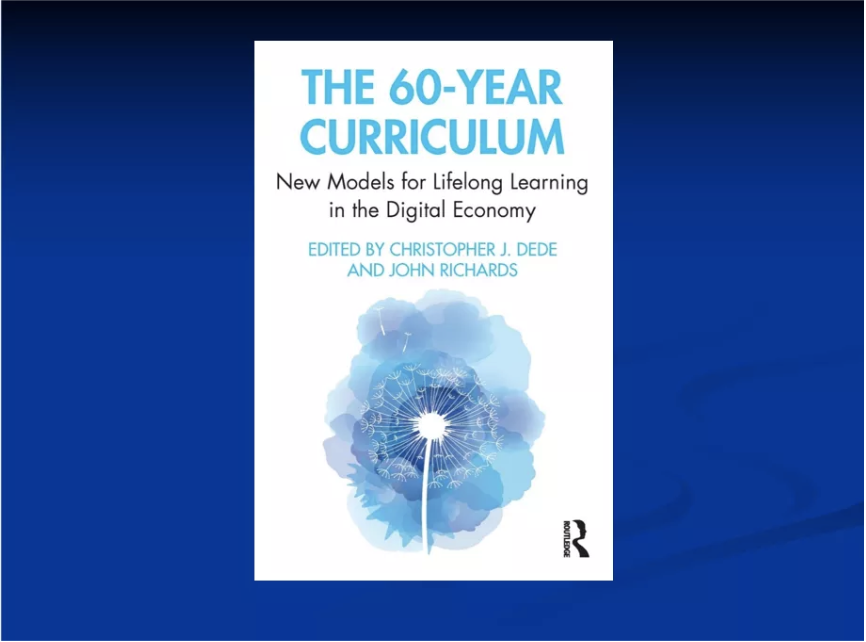
I co-edited the book a year ago on rethinking lifelong learning. Right now, lifelong learning is intermittent and episodic. You change jobs, you get a promotion, you start a new career. And so there is a temporary burst of learning, and often it happens largely early in life; but the future will be quite different than the past. We’re going to enter a time of discontinuous and disruptive change.


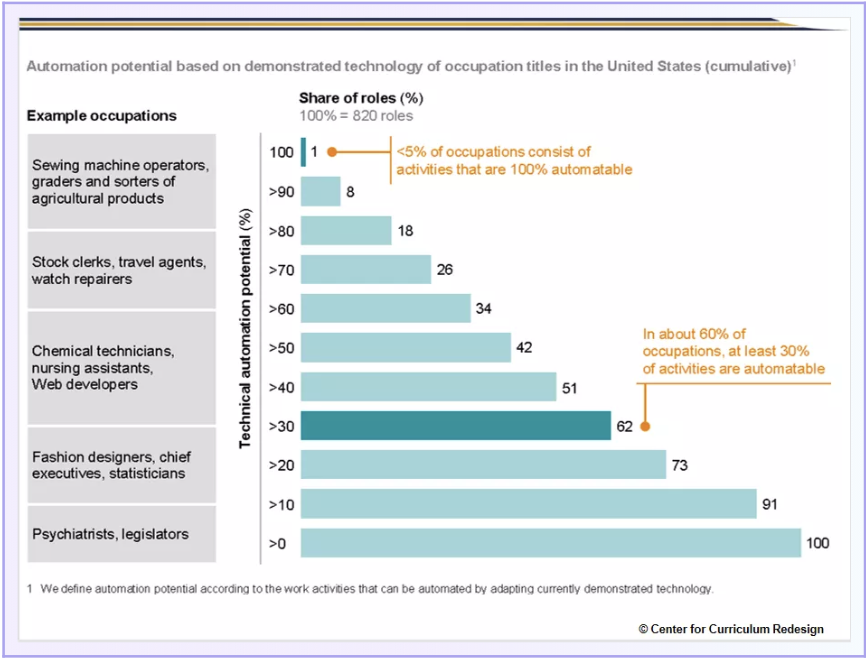
Now, the largest of these disruptions in terms of the workplace is likely to be artificial intelligence and machine learning. This is because these technologies are becoming more and more capable of doing things that historically people have done. Now there is a lot of scary news stories about jobs disappearing and being replaced by AI, and that’s going to happen to a small extent, but to a larger extent, artificial intelligence is going to become a partner in different kinds of work.


One way of understanding this new division of labor between artificial intelligence and human beings is to look at the movies, and in particular science fiction movies. Some of you may be familiar with movies in the television series called Star Trek: The Next Generation. In that series, caption Picard is human, and Data is an android, a robot that looks like a human being that has very advanced artificial intelligence. The two of them make a very effective partnership, because Data advises captain Picard on what to do, and them he makes decisions that incorporate that advice.

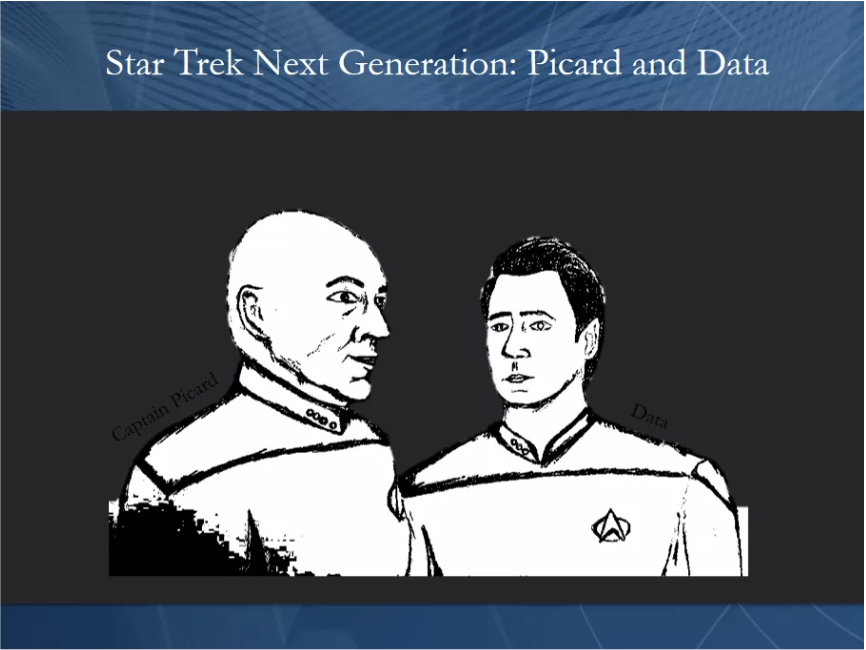

This is a theme that’s been around for a long time. It reflects the fact that this partnership can work very well if both sides are prepared for it. Now, in the research literature, this is described as AI doing reckoning, which is calculative prediction, and human beings doing judgement, which is practical wisdom.

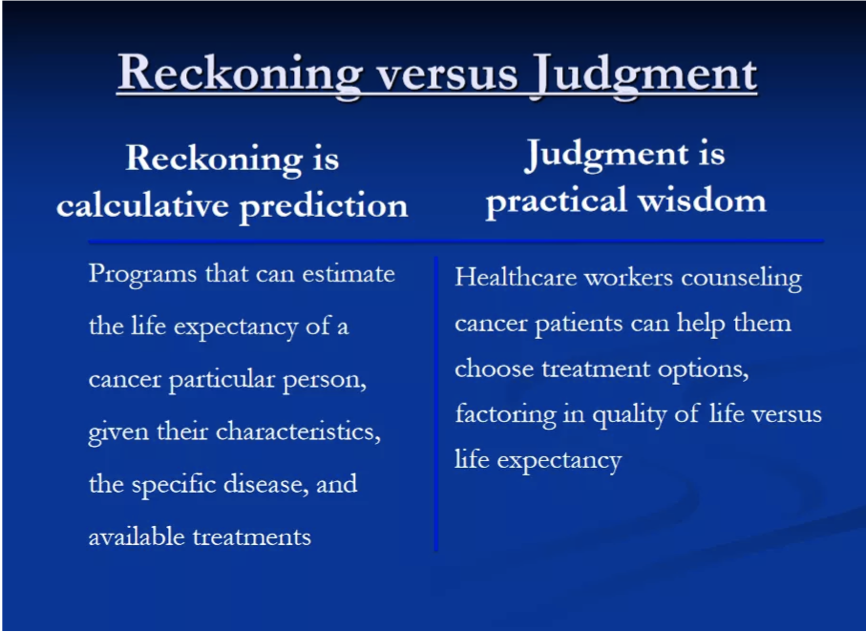

But what the human does that the AI cannot do now and I will argue that AI cannot do even in the future, is to counsel patients based on a knowledge of what it’s like to have a human body, a knowledge of what culture the patient is from and what personal preferences they may have within that culture, moral and ethical considerations that may be based on the patient’s spiritual values and so on. These are things the AI does not understand because it doesn’t have a body.
There’s a very clear distinction between what the machine can do and the person can do in this kind of situation, and this isn’t unique to health care. You can look at many roles that human beings play now, and divide them into reckoning and judgement. In this situation, while part of the job can be done through the reckoning of AI, the judgement of the human being is really important in knowing exactly what to do.



In fact, we are going about preparing people in an entirely the wrong way, because we’re continuing to emphasize reckoning, as if that was the most important thing that human beings could bring to the workplace. Instead of that, emphasizing judgement, you can see this in things like the high-stake tests.

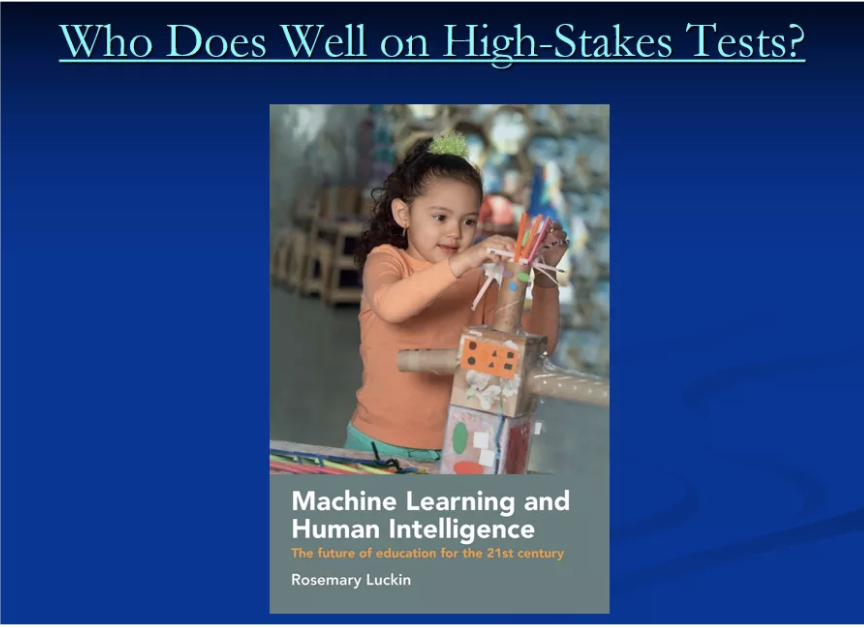

This is the major message that I want to convey, is that while AI can improve the process of education in many ways, it’s biggest impact may be on the outcomes of education, the objectives of education, trying to move people towards more and more judgement as machines become more and more capable of reckoning.
AI can help us move from high-stakes psychometric tests that rely on multiple choice items and short answers to much better proxies for particularly, for judgement, rather than reckoning.

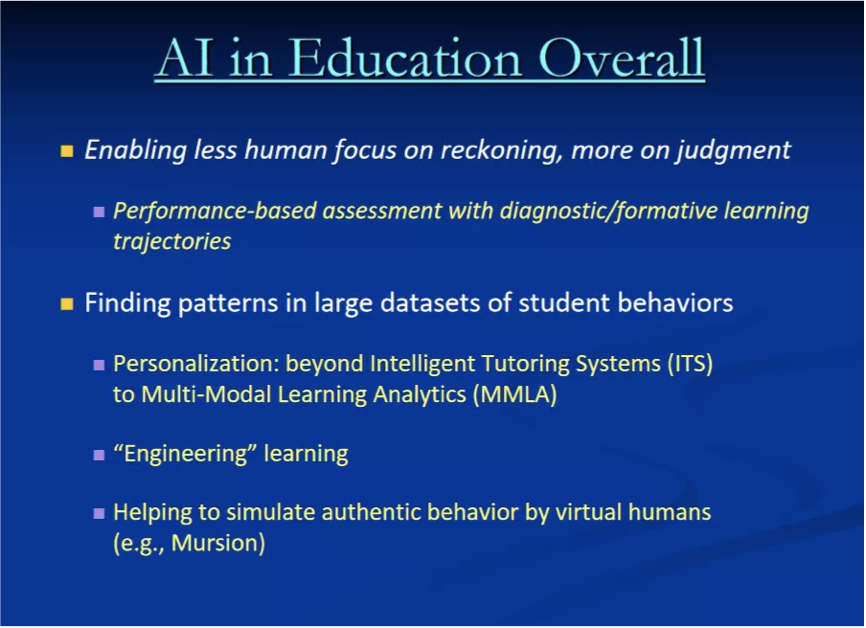

It’s an exciting future with all of these things. But we don’t want to only look at the process. We also want to look at the outcome of preparing people for judgement rather than reckoning. Thanks for giving me the chance to share these ideas.

 Address: 3663 Zhongshan North Road, Shanghai
 Email: ecnuici@163.com
 电话:021-32526084