


Recently, Deeper Learning, the new book written by Prof. Zhong Qiquan, the honorary director of ICI, was officially published in East China Normal University Press.

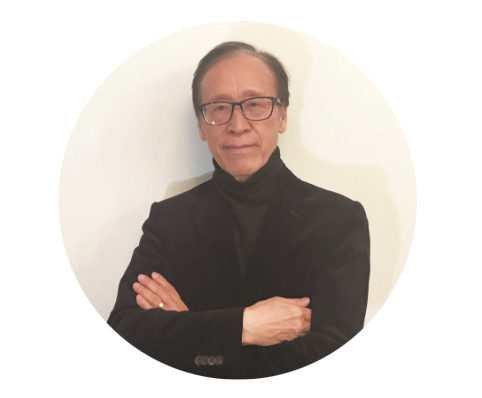
Prof. Zhong Qiquan
ICI, ECNU

A Brief Introduction of Deeper Learning

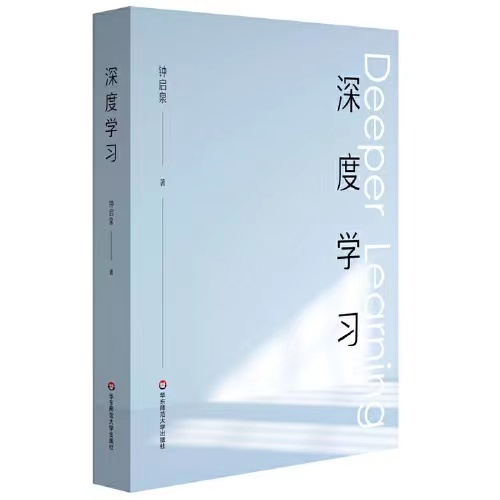

This book aims to sort out the theoretical basis, implementation models and practical cases of “deep learning”, so as to provide theories and experiences for the construction of teaching theory in the new era and the creative teaching in China.

Main Ideas:
1. Only when “knowledge” is placed in a specific context can it be meaningful, and this linked “knowledge” can make deep understanding possible. Therefore, it is not simply to accumulate the subject knowledge, but to reconstruct the “knowledge” in response to the context, and this is the fundamental starting point of “deep learning”.
2. “Deep learning” is not a specific teaching method, but a general term for learners to actively participate in “subjectivity”, “dialogue” and “collaborative” learning activities. The theoretical research and practical cases of “deep learning” emerge one after another, which brings a continuous source of power for “classroom transformation”.

Introduction
Embrace “Copernican Revolution”

As early as the beginning of the 20th century, John Dewey proposed a “Copernican Revolution”: from teacher-centered education to children-centered education. In the current knowledge society, classroom transformation based on “core competencies” is inevitable. Innovative teachers should and will enthusiastically open their arms and embrace the “Copernican Revolution” of school education in the new century.



“Deeper learning” covers three viewpoints:
1. Subjective learning. It means that learners use their own language to describe their own thinking.
2. Dialogic learning. “Dialogue” refers to a collaborative intellectual task based on the common goal of finding a “better solution” and adhering to the sense of trust and honesty between each other.
3. Collaborative learning. It means to examine others’ opinions from their point of view, gain insights into problems and seek empathy.



“Deeper learning” creates three challenges for teachers:
1. The first challenge is that teachers need to shift from focusing on “teaching” to focusing on “learning”.
2. The second challenge for teachers is to change the learning model from “individual learning” to “collaborative learning”.
3. The third challenge for teachers is to shift from “teaching plan” to “learning plan”.

“Deeper learning” depends on the creation of teachers. In the classroom of examination-oriented education, teachers are the monopolists of knowledge, children are regarded as knowing nothing, and the task of classroom instruction is to let children accept the standard answers delivered by teachers. In the classroom of well-rounded education, children, as the subject of learning, can join inquiry activities designed by teachers based on children’s differences. With the help of dialogue and reflection, the construction of knowledge and the cultivation of affection, “core competencies” of learners can be developed. These are two completely different visions of education.

 Address: 3663 Zhongshan North Road, Shanghai
 Email: ecnuici@163.com
 电话:021-32526084