


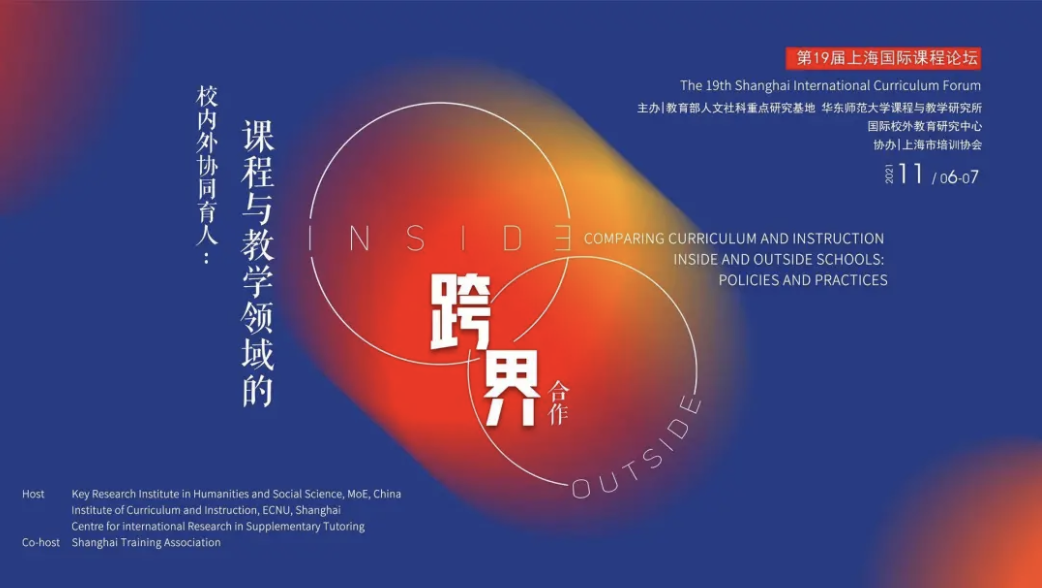

In order to promote the development of collaborative education inside and outside schools, and the standardized and orderly development of out-of-school training industry, The Centre for International Research in Supplementary Tutoring (CIRIST) of ICI, and Shanghai Training Association held a forum entitled “Comparing Curriculum and Instruction Inside and Outside Schools: Policies and Practices” from Nov. 6 to 7, 2021.



This forum is the first professional international forum focusing on “collaborative education inside and outside the schools” worldwide, it brought together the multiple voices and rational thinking of 65 experts and scholars, leaders of educational administrative departments and professional practitioners.

Opening Ceremony



On the morning of Nov. 6th, Prof. Dai Liyi, vice-president of East China Normal University and president of Shanghai Training Association, delivered a speech on behalf of the organizing committee of the 19th Shanghai International Curriculum Forum and expressed his warm welcome to all the distinguished experts. Prof. Dai hoped that this forum will promote the resolution of the problem of collaborative education inside and outside schools and open up new research areas within the field of curriculum and instruction.

Keynote Report

Fifteen experts were invited to conduct in-depth discussions, and put forward new thoughts on the topic of “Comparing Curriculum and Instruction Inside and Outside Schools: Policies and Practices”. Professor Chen Shuangye, Associate Professor Wang Tao from ICI, and Professor Guo Weiyu from the Faculty of Education, ECNU, presided over the forum.

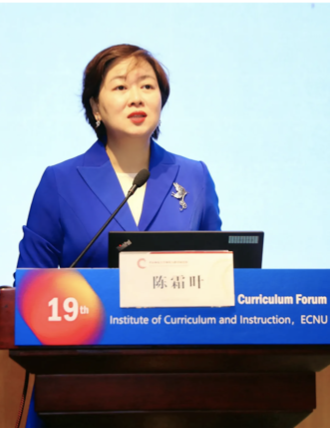
Professor Chen Shuangye

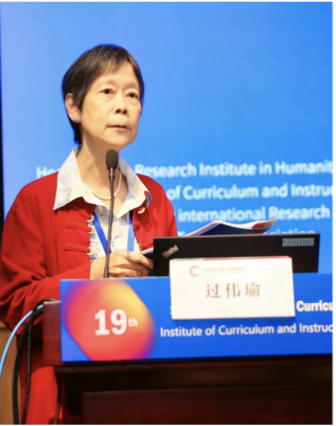
Professor Guo Weiyu

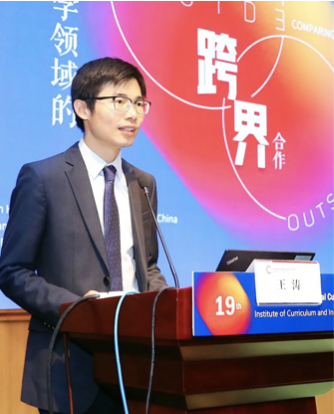
Associate Professor Wang Tao

1
The Development, History and Prospects of Education
Inside and Outside Schools

Yin Houqing, the president of Shanghai Society of Education, made a report entitled “The development, history and prospects of education inside and outside schools”. He combed the history of out-of-school education in China and pointed out that the boundary between education inside and outside schools has become increasingly blurred, the barrier between the two is breaking down.



Professor Mark Bray, the Director of CIRIST, also the founder of out-of-school education research, and Professor Zhang Wei, the Executive Director of CIRIST, made a report entitled “Learning in and out of school: Changing dynamics in China and beyond”.



2
From School Education to Out-of-school Education
Educational Competition and Social Reproduction

Professor János Gordon Györi from the Department of Education and Intercultural Psychology, Loran University, Hungary made a report entitled “Two-tier gifted selection and development systems: Interconnections of formal and shadow gifted education in South Korea, India and China”. He introduced the selection and development system that gifted students in South Korea, India and China faced with. He indicated that this system intensifies the competition for the highest quality projects in shadow education and formal education.



Professor Bae Sang-Hoon from Department of Education, Seung Kwan University, South Korea, made a report entitled “What really matters to unshrinkable private tutoring in Korea: Defective public schooling or universalized desire for upward mobility and family reproduction?” It is pointed out that the reason why the scale of supplementary tutoring in South Korea can’t be reduced lies not only in the quality of education in public schools, but also in people’s general desire for social mobility and social reproduction.



3
International Comparison of the Normative Development of Out-of-school Education
Experiences and Challenges

Priya Joshi, a senior researcher of GEM report, UNESCO, made a report entitled “The 2021/2 GEM report on non-state actors: Embedding the private tutoring phenomenon in global analysis”. She displayed the global phenomenon of out-of-school tutoring from the perspective of fairness and system, and analyzed the reasons for the expansion of out-of-school tutoring and the impact of out-of-school tutoring on academic performance and satisfaction. She also noted the unexpected outcome that out-of-school tutoring impact on the education system by changing the behavior of teachers and students.



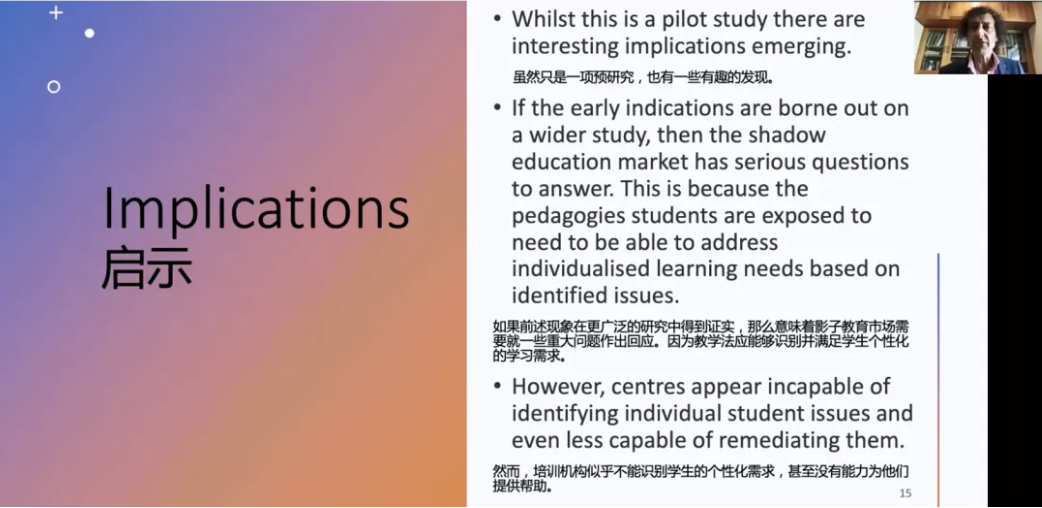
Mohan Dhall, the president of Australian Association of Out-of-school Education, made a report entitled “Interrogating pedagogies of commercial tutoring in Australia”. She shared the results of an analysis of teachers at an out-of-school tutoring center in Sydney, Australia, which initially showed that the teaching method adopted by the center seemed to be quite limited and that the effectiveness or applicability of the teaching method had not been fully taken into account in its application.


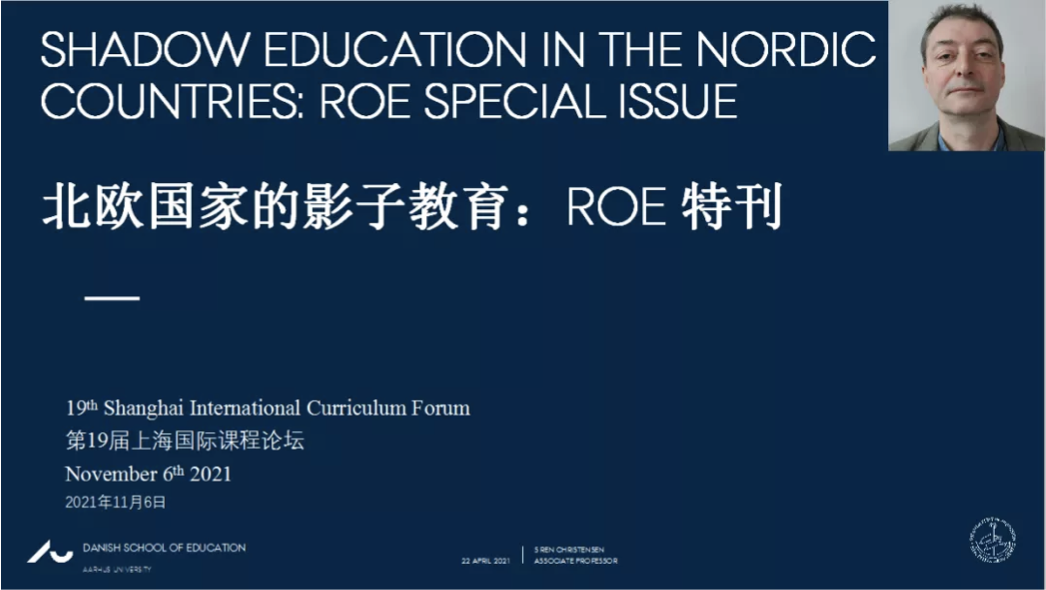
Professer Søren Christensen from University of Aarhus, Denmark, made a report entitled “Shadow education in the Nordic countries: RoE special issue”. He introduced the social and political developments that promote the development of shadow education in Nordic countries, as well as the similarities and differences between shadow education in Nordic countries. He then discussed the possible impact of these developments on Nordic education in the future.


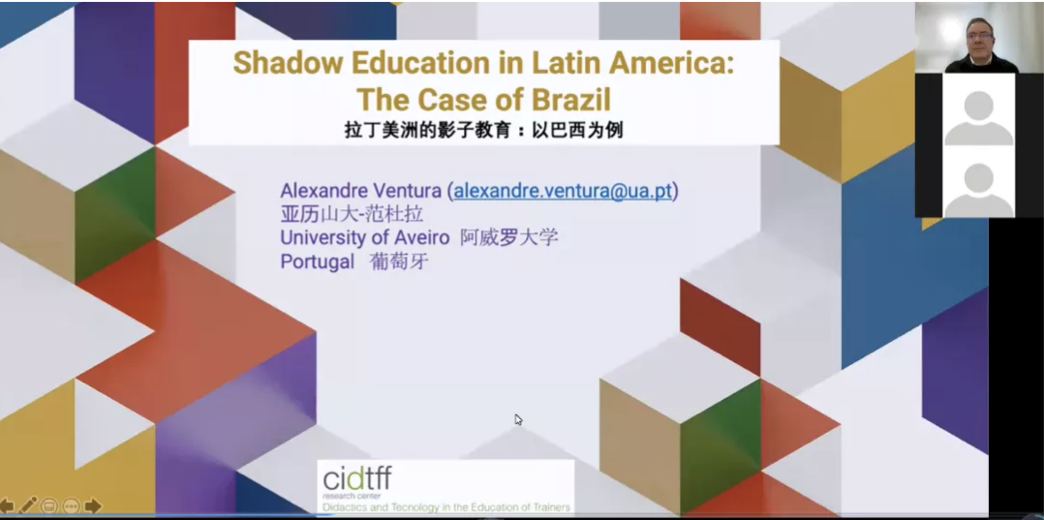
Professor Alexandre Ventura from the Department of Education and Psychology, University of Aveiro, Portugal, made a report entitled “Shadow education in Latin America: The case of Brazil”. He pointed out that shadow education is a universal phenomenon, which is not “carefully planned” by specific forces, but shaped by a series of complex variables and trends.


4
Curriculum and Instruction Under the Background of “Shuang Jian”
Focuses and Difficulties

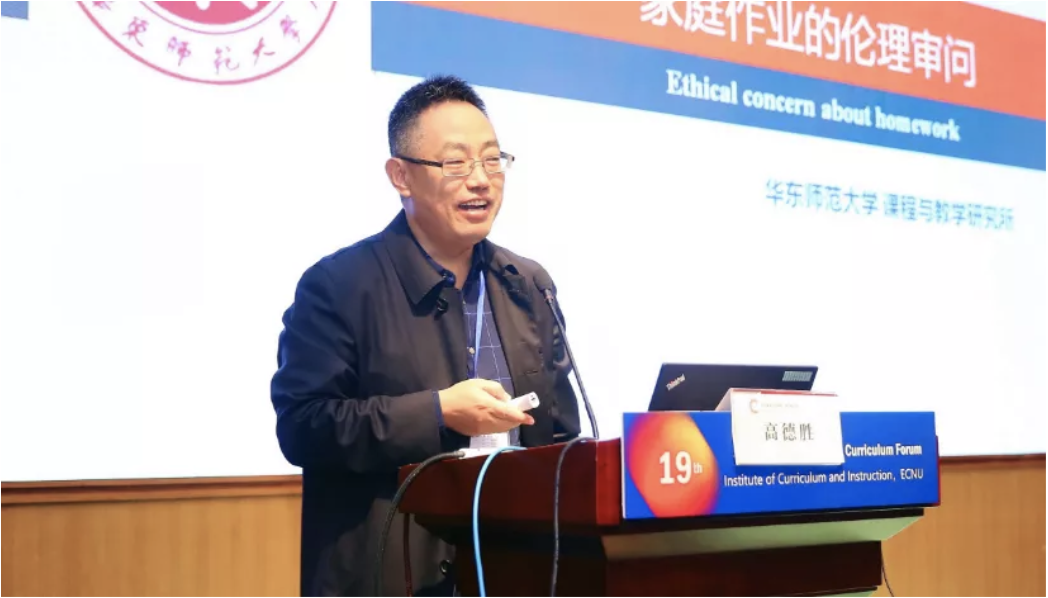
Professor Gao Desheng from ICI made a report entitled “Ethical Concern about Homework”. Gao creatively examines homework from an ethical perspective. He pointed out that to study homework, it’s necessary to see 1) whether homework conforms to the ethical relationship between the three basic ethical entity: family, school and community (society); 2) the various premises and value presuppositions of homework; 3) whether these presuppositions have a basis and whether they have been implemented.


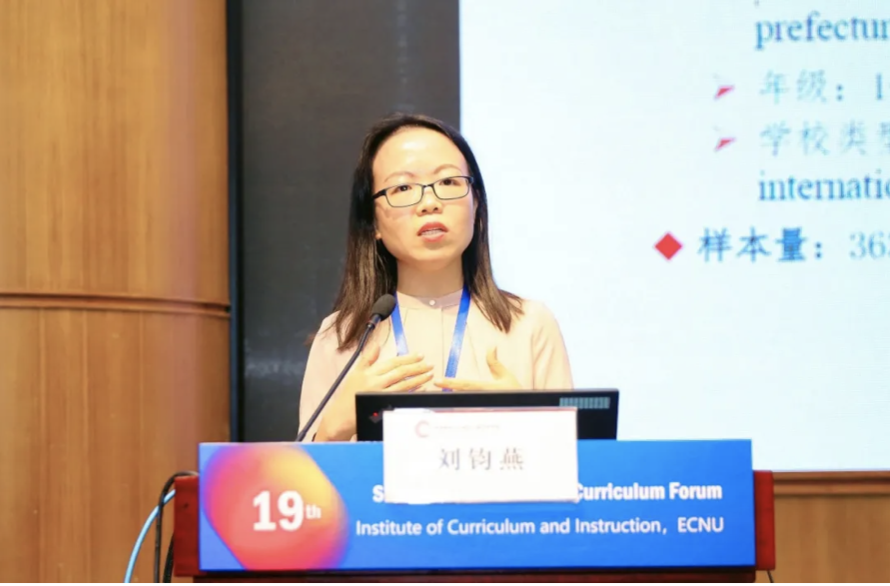
Liu Junyan, a core member of CIRIST, made a report entitled “How do parents view ‘Shuang Jian’: Expectations, anxieties and choices”. She shared the results of a national survey on “Shuang Jian” among parents at the stage of compulsory education. The study showed that parents have high expectations for 1) the improvement of school education and teaching quality; 2) after-school service quality and diversity; 3) standardized governance of out-of-school training. Meanwhile, they are also anxious about their children’s daily study life and long-term educational development under “Shuang Jian”. Some parents are opposed to specific governance measures such as restrictions on the periods of out-of-school euducation; some parents still insist on seeking out-of-school education.


Summary

Professor Cui Yunhuo, the director of ICI, made a concluding speech on the keynote reports. Prof. Cui fully affirmed the new wisdom, new opportunities and new development carried by this forum, and appealed to academic colleagues to make concerted efforts to contribute theoretical and practical wisdom to generate effective methods to educate people synergistically.



 Address: 3663 Zhongshan North Road, Shanghai
 Email: ecnuici@163.com
 电话:021-32526084