

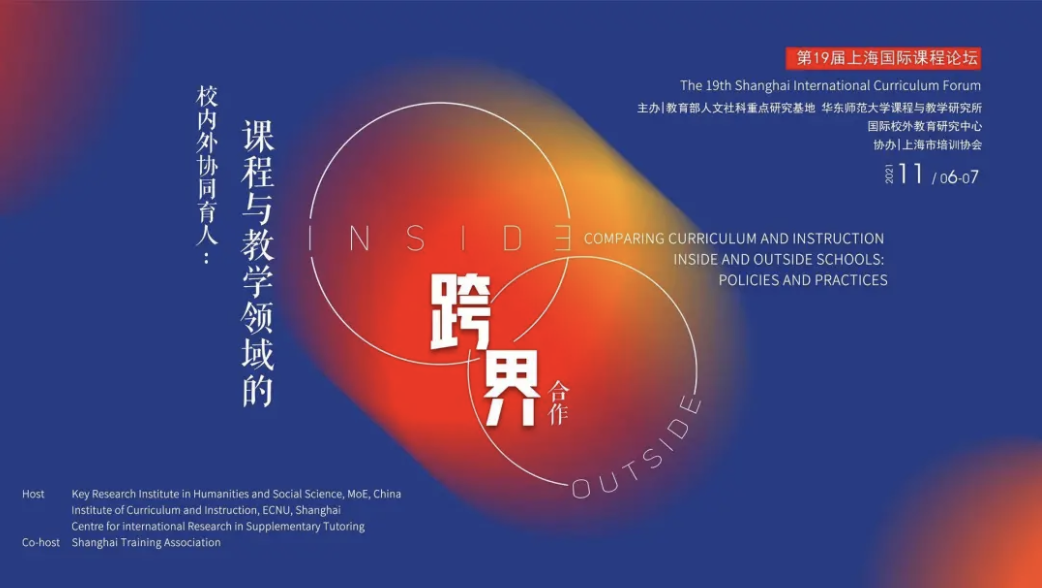

In order to promote the development of collaborative education inside and outside schools, and the standardized and orderly development of out-of-school training industry, The Centre for International Research in Supplementary Tutoring (CIRIST) of ICI, and Shanghai Training Association held a forum entitled “Comparing Curriculum and Instruction Inside and Outside Schools: Policies and Practices” from Nov. 6 to 7, 2021.

Professor János Gordon Györi
Department of Education and Intercultural Psychology, Roland University, Hungary
An editor of European Journal of Education

Main Content of the Report

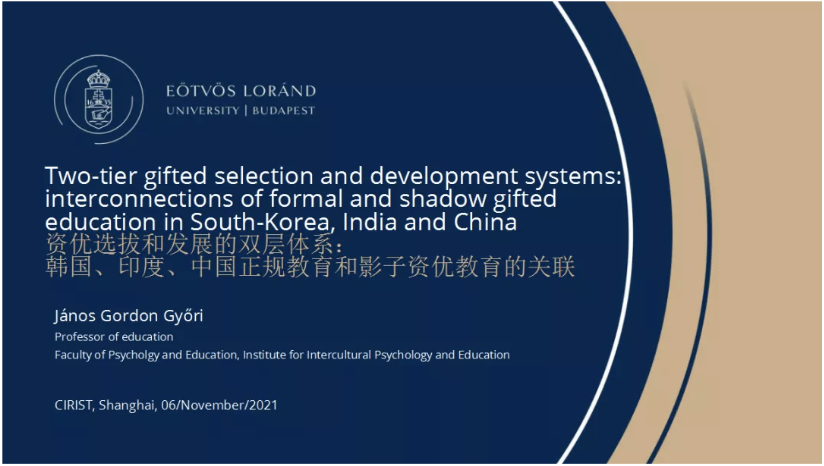

Dear host and audiences, I am honored to have the opportunity to give a speech at this grand conference. I am János Gordon Györi from Hungary. My two main interests in education are gifted education and shadow education. Today, I will put them together.

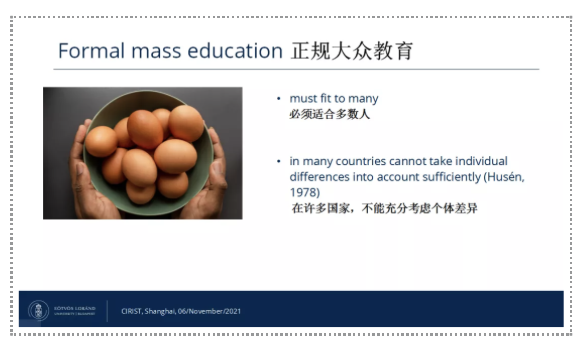
The theme of my speech is “Two-tier gifted selection and development systems: Interconnections of formal and shadow gifted education in South Korea, India and China”. As we all know, formal mass education is very important, especially for the most important civilization and development in human history. However, we know that this kind of education has many disadvantages: the first is that it must be suitable for many different students, who have different futures and different visions for the future. Perhaps the biggest disadvantage of formal education is that in many countries, if individual differences are not fully taken into account, it will bring a lot of problems to individuals, families and society because of the rigidity of formal mass education.


As we know from the early literature of Professor Baker and Bray, shadow education contains two aspects, namely, remedial/preventive and gifted/enrichment. The provisions are designed for gifted students. Shadow education also involves gifted education.

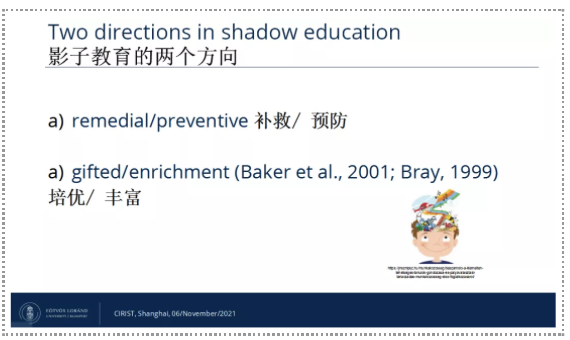

Shadow education provides different possibilities for the development of gifted children. Like many other off-campus training programs, it provides opportunities for talented students.
We found in India that they also have highly selective gifted educational institutions in secondary and higher education. From gifted educational institutions to the most strictly selected universities, these schools enroll very few Indian students.

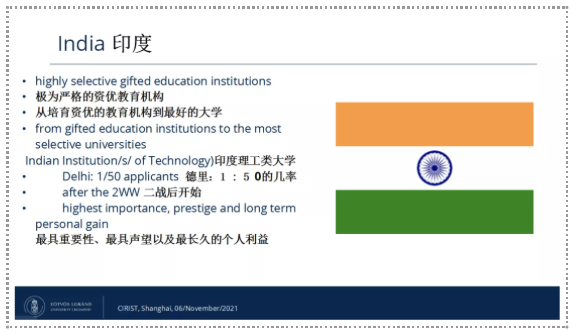

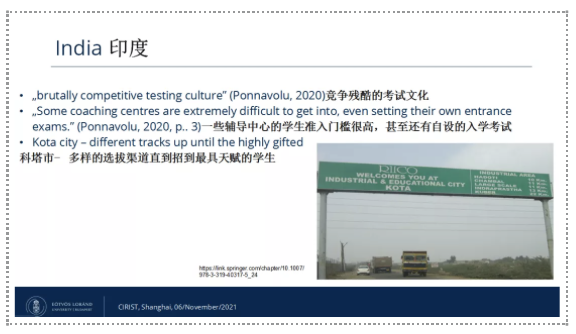
However, it is very difficult to be accepted by gifted education programs. India has a fiercely competitive examination culture in this respect.


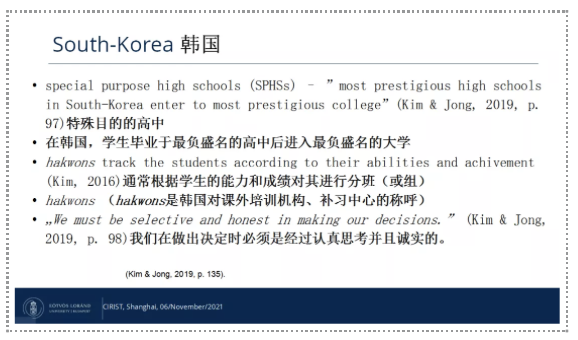
We have found a similar situation in Korea, where shadow education plays a vital role in gifted education, and it is a necessary part for us to understand the academic excellence of Korean students.


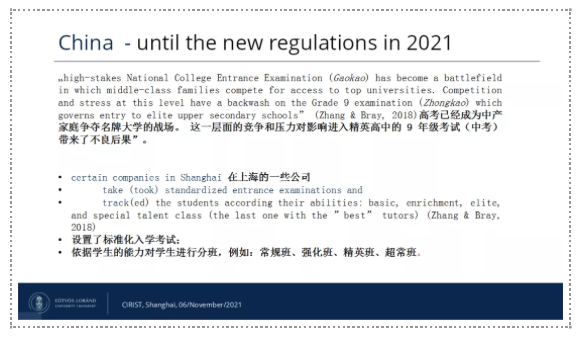
What is the situation in China, or rather, before the introduction of the “Shuang Jian” policy? The high-profit and harmful examination, the college entrance examination, has become a battlefield for middle-class families to compete for famous universities. The competition and pressure at this level have brought adverse consequences to the ninth-grade exams that affect the entry into elite high schools.


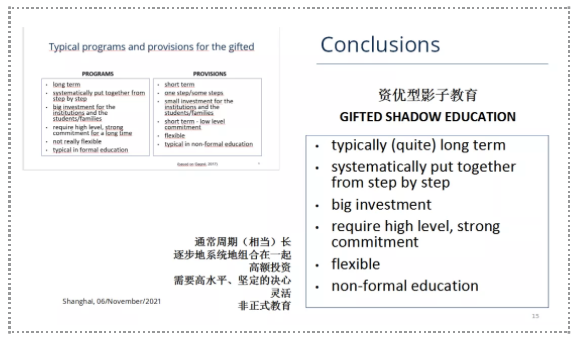
Therefore, this gifted shadow education lies between formal education programs and non-formal education activities, as they are usually long-term, gradually and systematically combined. They require significant investment and strong determination and input from institutions and clients, but they are flexible and integrate the functions of non-formal education.


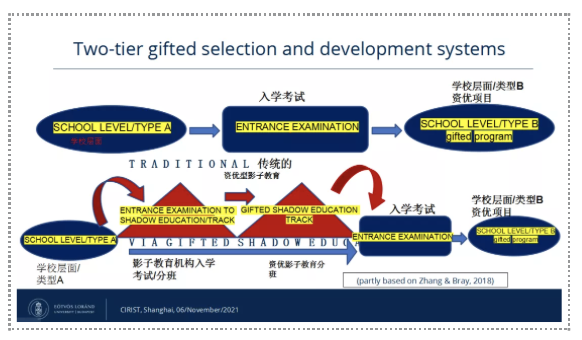
Thus, we can see that this two-tier system of gifted identification and development has been formed in India, South Korea and China, with students entering shadow educational institutions from schools.


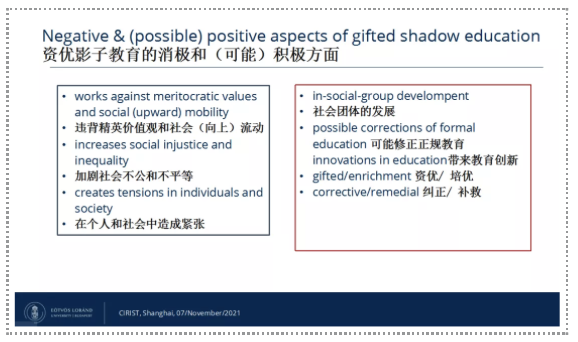
This two-tier system has brought both positive and negative consequences. The negative side is that it violates the values of talent education, increases social injustice and creates tension between individuals and society. But it also has a positive side, because in the same social group, its development can also correct formal education to a certain extent and bring innovation to formal education as a reference for formal education.


What about the supervision? What are the possible future prospects of this two-tier system of gifted identification and development? According to the data collected by Bray and Kwo a few years ago, their regulation can be different. There are both free markets with very loose regulations and those with very strict regulations that prohibit shadow education.

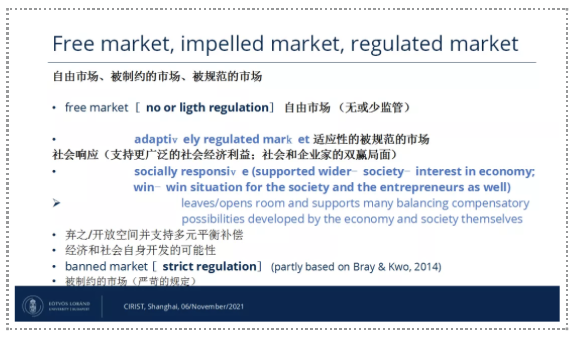

In this regard, we can also say that the best development path should be an adjustable and regulated market, with socially responsible participants. I think this socially responsible adaptive market will have an impact on the society it supports. 
Thank you very much for listening!

 Address: 3663 Zhongshan North Road, Shanghai
 Email: ecnuici@163.com
 电话:021-32526084