

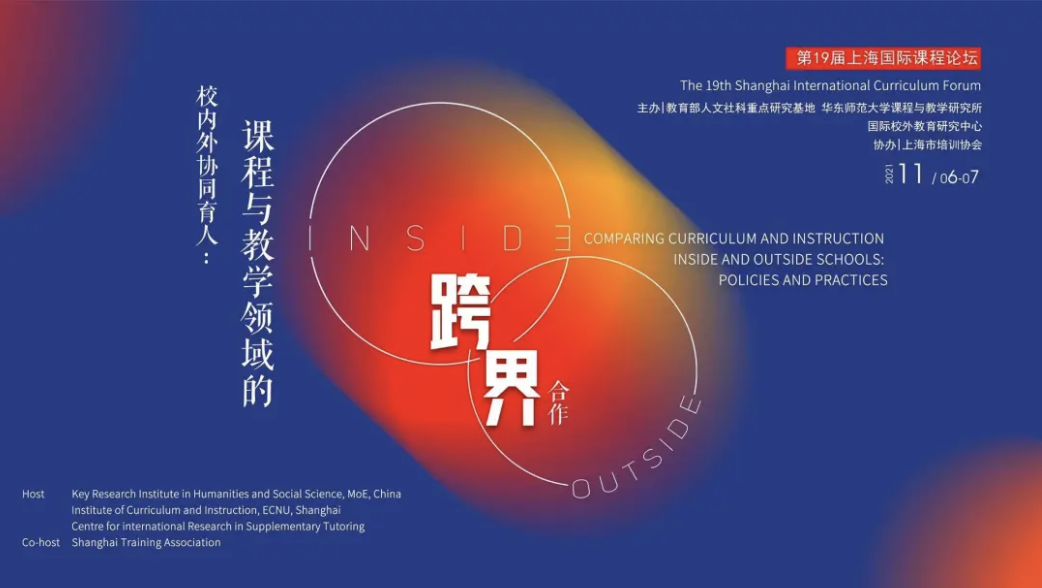

In order to promote the development of collaborative education inside and outside schools, and the standardized and orderly development of out-of-school training industry, The Centre for International Research in Supplementary Tutoring (CIRIST) of ICI, and Shanghai Training Association held a forum entitled “Comparing Curriculum and Instruction Inside and Outside Schools: Policies and Practices” from Nov. 6 to 7, 2021.

Professor Gao Desheng
Institute of Curriculum and Instruction, East China Normal University
Executive Editor-in-Chief of the Nationally-edited Textbook of Morality and the Rule of Law for Primary Schools

Main Content of the Report

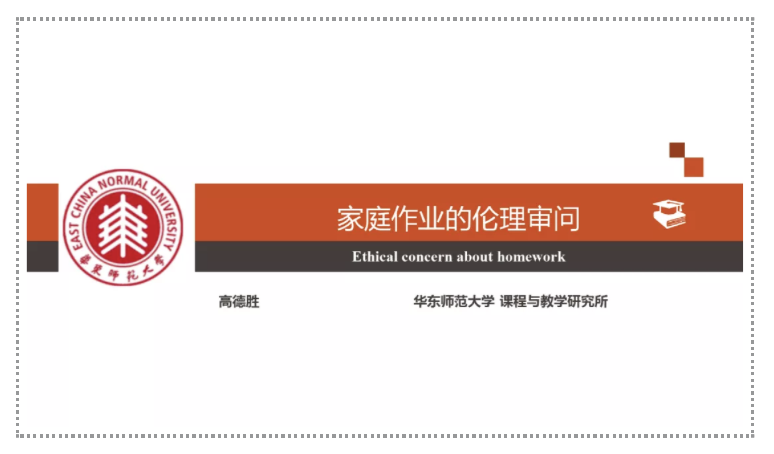
The relationship between this article and the “Shuang Jian” policy is an accident, because this article was written in 2020, when “Shuang Jian” policy had not been promulgated, the inspiration for this article came from my personal experiences.

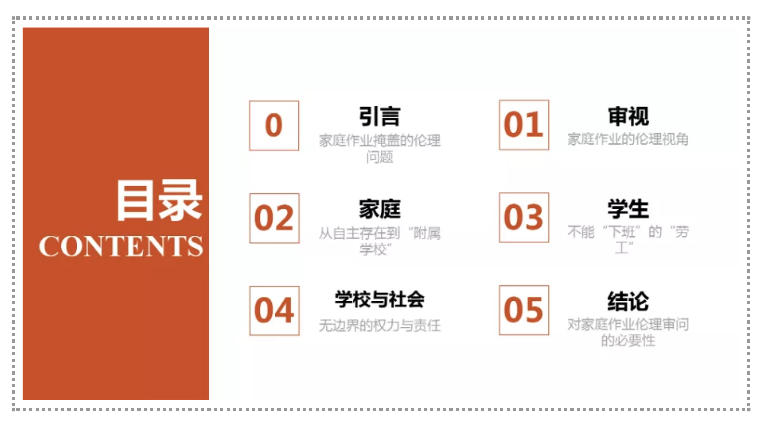
I will talk about the topic from the following aspects: the introduction, the theoretical perspective, the impact of homework on family, students, schools and society, and the conclusion.


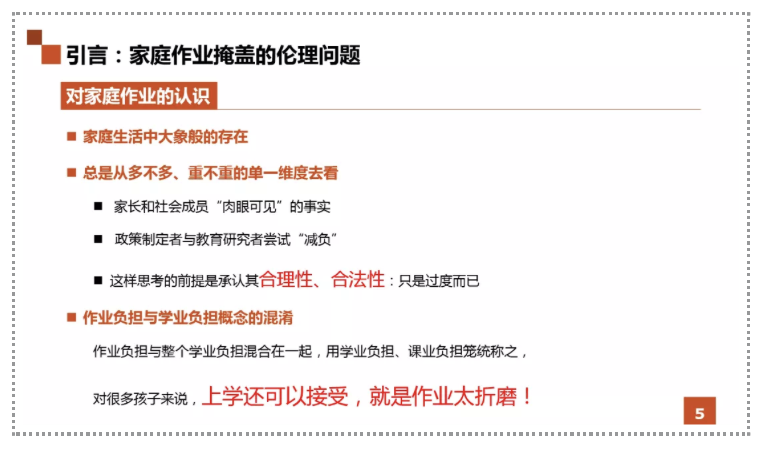
When we talk about homework, there is an inertial thinking that we care most about the amount of homework. If you evaluate homework from the dimension of the amount of it, the preset is that you’re actually acknowledging the legitimacy of homework, the fundamental issue is the excessive amount of homework.

Another problem is that people confuse the burden of homework with that of academic study; however, these are actually two different concepts.


I think an important problem has been overlooked, that is, the ethical relationship between the school, family and society. School, family and society are different ethical entities and cannot be substituted for each other.

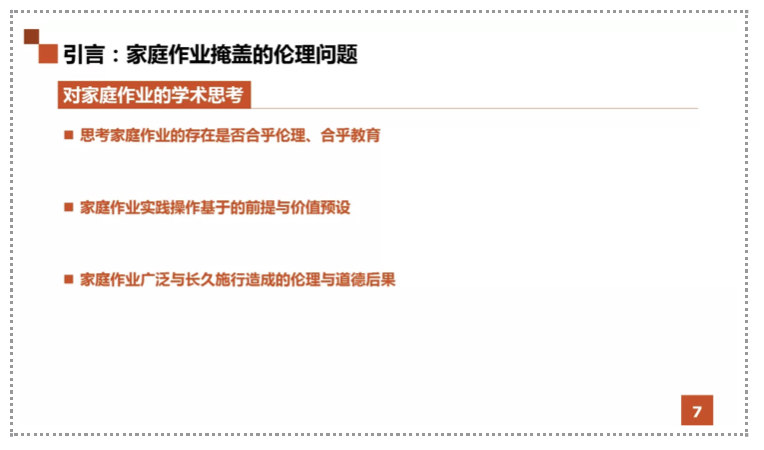

01 The Ethical Concern of Homework

First, the ethical relationship between school, family and society:
1. School, family and community (society) are different ethical entities and cannot be substituted for each other.
2. School, family, and society have their own boundaries, and each ethical entity cannot go beyond them.
3. Different ethical entities can cooperate with each other.

Second, the premise and value presupposition of homework:
1. Schools and teachers have the right to assign homework.
2. All students, parents and families have environmental conditions to finish homework.
3. Homework contribute to students’ academic performance.
4. Homework can help students to develop good learning habits.

Third, what consequences does the practice of homework have on families, students, and society?

02 Families

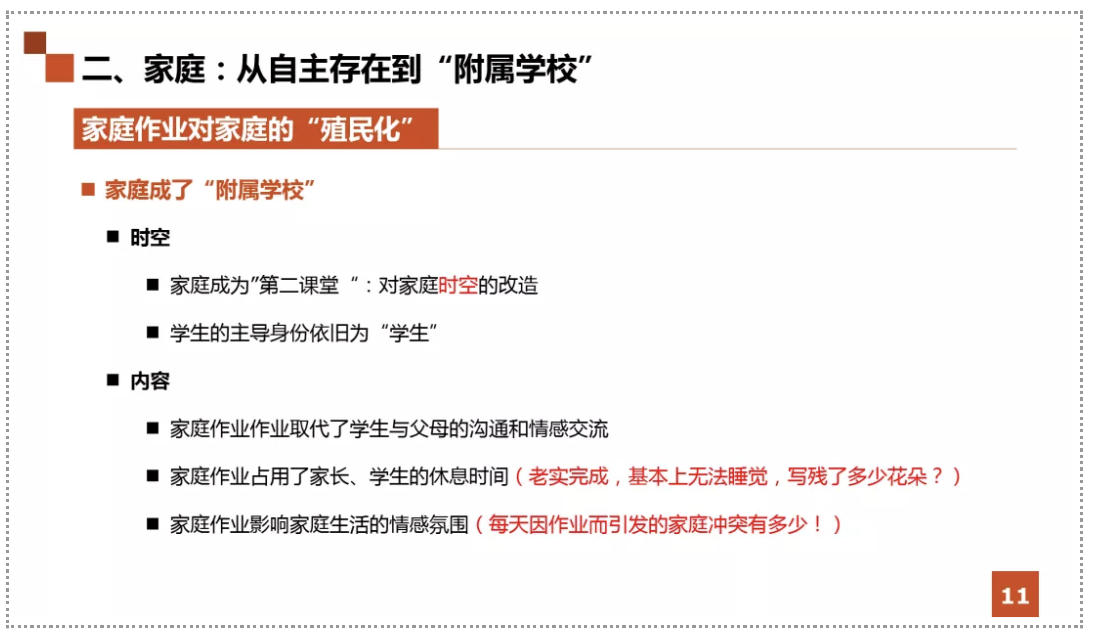
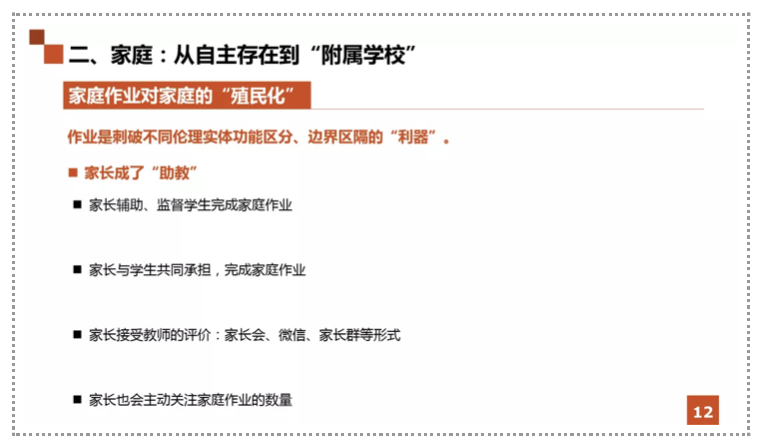
The universal and long-term implementation of homework has turned families into affiliated schools, parents have become teaching assistants.

What’s more, homework occupies parents’ and students’ right to rest at home. If a child wants to finish homework in time, he can’t do anything at home. Homework is so cruel that it affects the relationship of family members. Too many family conflicts are caused by parents urging their children to do homework.


Homework is a powerful tool for piercing the boundaries between different ethical entities. There used to be boundaries between family and school, but now the boundaries are all broken.


03 Students

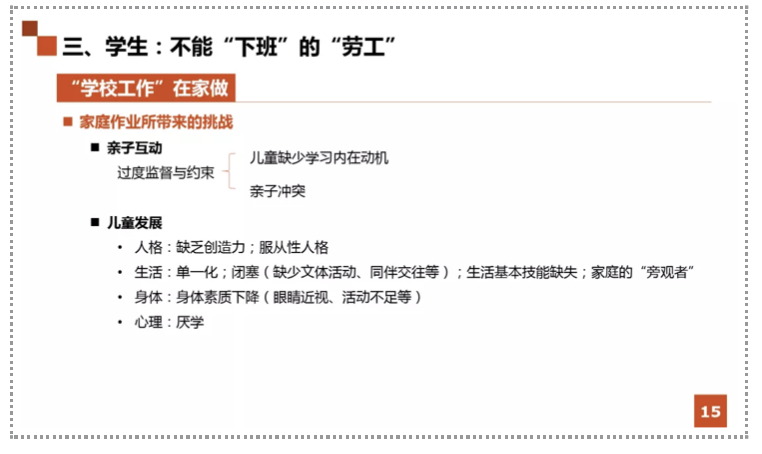
Under this condition, students have become workers with no time off work.
This involves a question, from the perspective of schools and teachers, we need to consider whether teachers have the right to manage students’ activities in their families. From the perspective of students themselves, the question is whether they have the right to arrange their own life together with their parents in the family field.


04 Schools and the Society

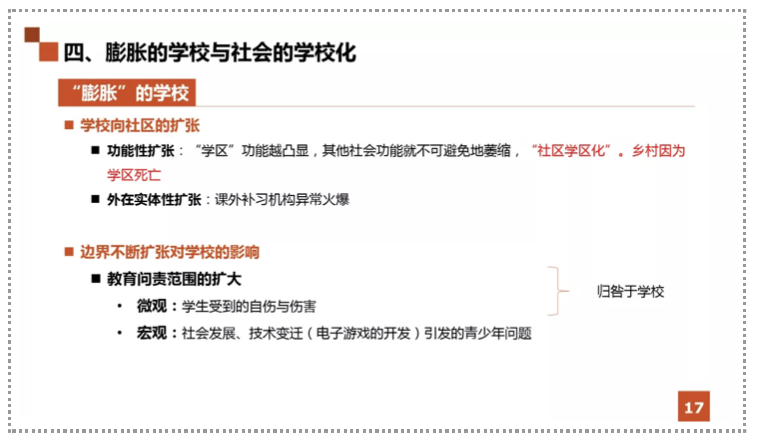
Now, the school has inflated itself with homework, the school has expanded into the community, and the community has died out into a school district. In metropolis, school districts are more important than communities, and in rural areas, communities disappear.


05 Conclusion

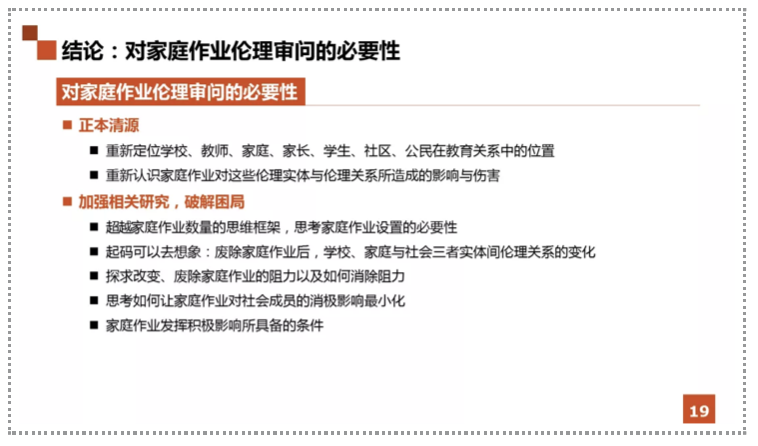
Finally, I think we need to rethink the positions of schools, families, teachers, parents, students, and community citizens in the educational system. Each of them must be in their place, and they must not be confused. The ethical entities as a whole cannot be dominated by a single role or ethical entity.


 Address: 3663 Zhongshan North Road, Shanghai
 Email: ecnuici@163.com
 电话:021-32526084