

On February 27, Shen Hongying, a former director of English learning in New York city, New York city Manhattan area superintendent, the now education expert of New York state bureau of education bilingual and international language office, the professor of department of culture, education and human development from New York university, guested at 159th Huaxia Curriculum forum and gave a report entitled "New York education reform framework, principles and influence". The forum was hosted by Professor Chen Shuangye, professor of the Institute of Curriculum and Instruction, East China Normal University. The forum attracted many teachers and students from the curriculum departments and other departments.

Professor Shen Hongying briefly shared the basic background and development of New York's education reform around the ongoing education reform in New York, mentioned the four basic principles related to the reform, and discussed the impact of these changes with the teachers and students present.
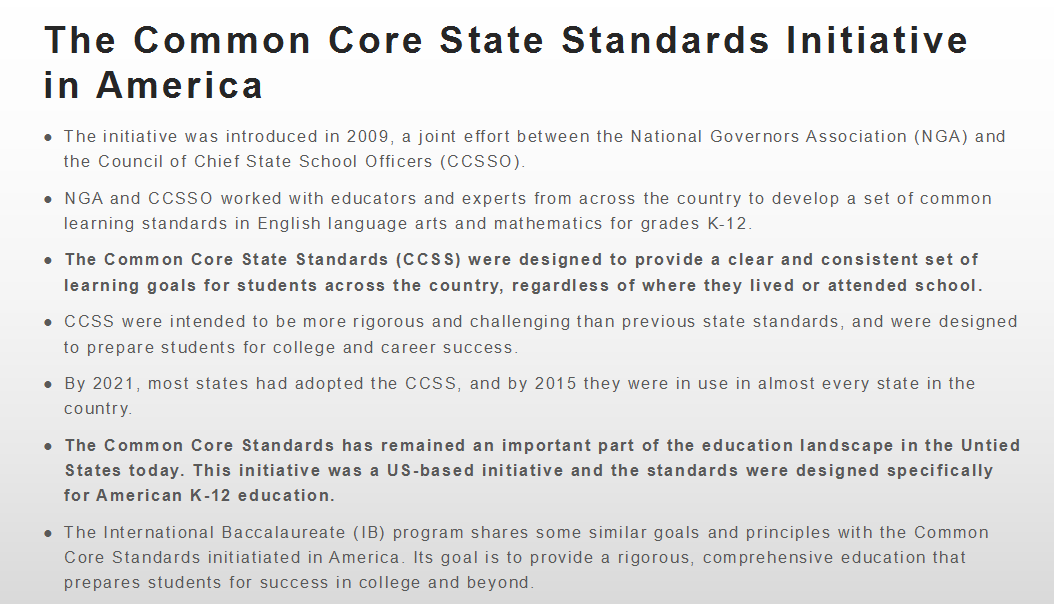
New York's education reform is generally carried out around the basic education problems that plague New York, such as the overall low level of students' academic performance and the uneven development of regional public education. Professor Shen Hongying first introduced the blueprint of New York's education reform: the Common Core State Standards Initiative proposed by the United States in 2009. It is a set of common learning standards developed by educators and experts across the country to provide a rigorous, comprehensive education that prepares students for college and career success, from preschool through elementary education. It aims to change the situation where curriculum and teaching in each states are established as distinct whole, and it is difficult to match and coordinate with each other.
Based on the Common Core, the New York City's Applied Strategy was formed based on its own circumstances. Professor Shen Hongying mentioned that this reform has referred to the experience of other countries and regions, especially taking Finland as a model in many fields of education reform, referring to and adjusting its teacher preparation system and Leadership Enhancement Program of the trinity of inspectors, principals and teachers .
The framework for the implementation strategy of the New York education reform is the Culturally Responsive-Sustaining Education Framework (CR-S), which includes four principles:
Welcoming and affirming environment
High expectation and rigorous instruction
Inclusive curriculum and assessment
Ongoing professional learning
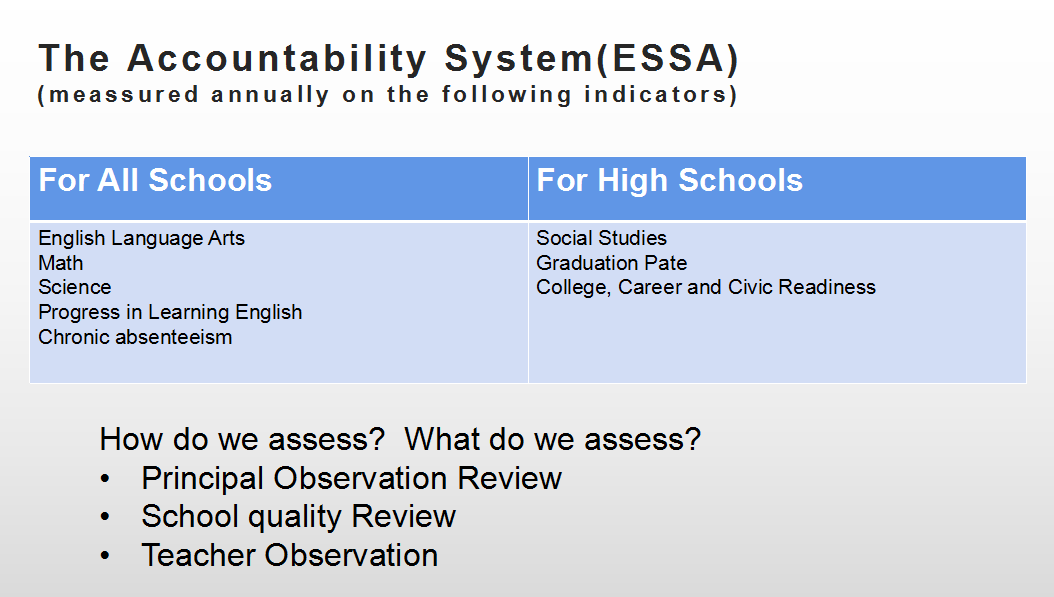
The "Well-rounded Education" implemented in New York is based on the Every Student Succeeds Act (ESSA), which covers the school development, curriculum design and teaching quality of all schools in compulsory education and high school. It designs three implementation mechanisms of principal evaluation, school quality evaluation and teacher evaluation.
Finally, Professor Shen Hongying also specifically introduced the mechanism for cultivating top talents in New York City - selecting and cultivating talents through the establishment of 9 highly selective Specialized High Schools. All educational costs of students in these high schools are borne by the municipal education funds. Top-notch students sign up as early as the eighth grade. Only a very small number of students can enter this type of high school after passing the strict and complicated application process such as teacher recommendation, school district’s elite education program review, and passing the SHSAT (Specialized High School Admission Test). Although there are some criticisms, this mechanism has realized the screening and selection of top talents to a certain extent, and also protected the accuracy and fairness of the selection.
Professor Shen Hongying succinctly and meticulously outlined the general outline of the education reform in New York City, which aroused the strong interest of the teachers and students present for further questioning. In the follow-up question-and-answer session, the participating teachers and students conducted discussions and exchanges on issues such as teaching evaluation (leadership evaluation), the implementation of the common core, curriculum construction and evaluation, project-based learning, second language acquisition, and teacher training.


 Address: 3663 Zhongshan North Road, Shanghai
 Email: ecnuici@163.com
 电话:021-32526084