

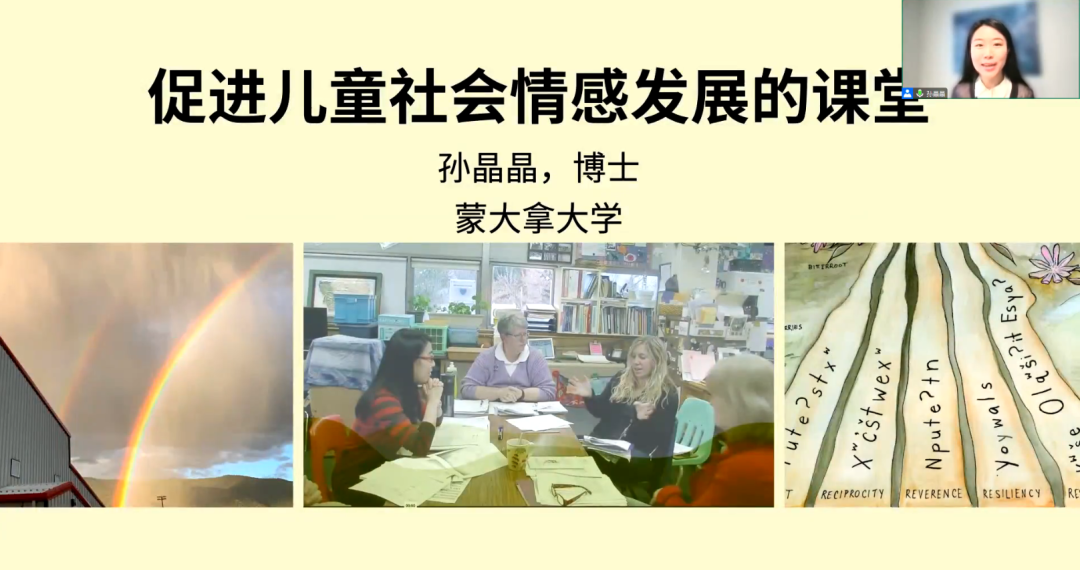
Associate Professor Sun Jingjing's report introduced classroom intervention research aimed at promoting the development of students' social emotional abilities in China and the United States, including student-led group collaborative discussions and teacher-led whole class discussions. She explored the implications of the above research findings on promoting students' social-emotional development from the perspectives of community, family and school.
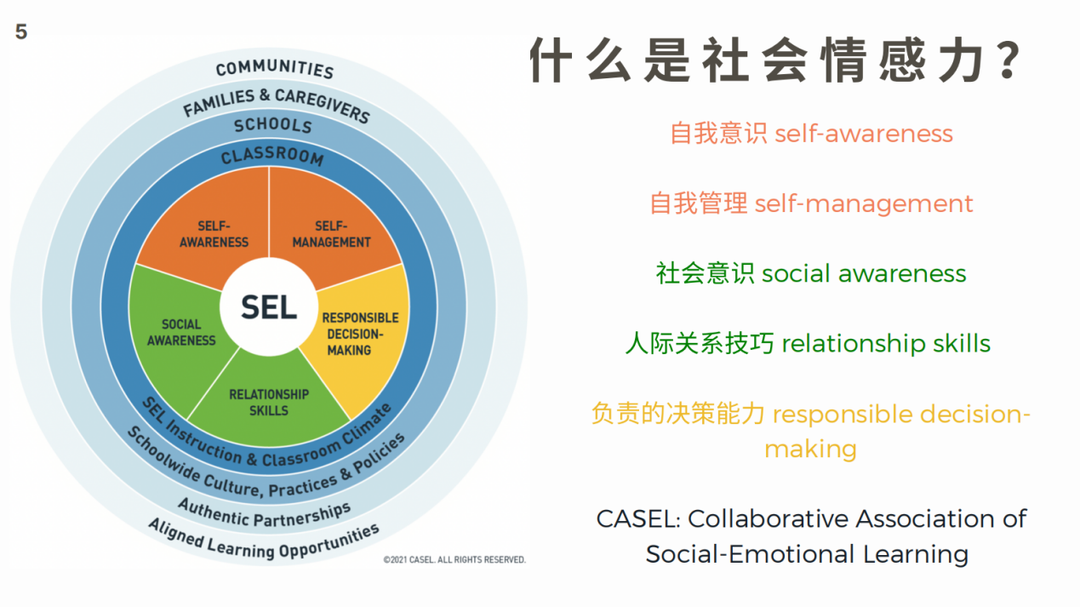
First, she introduces the concept of social-emotional learning. At the individual level, social-emotional learning broadly includes self-awareness, self-management, social awareness, relationship skills, and responsible decision-making. In addition to these five aspects, factors such as classroom, school education, parents, and the community will also have an impact on the development of children's social-emotional learning.
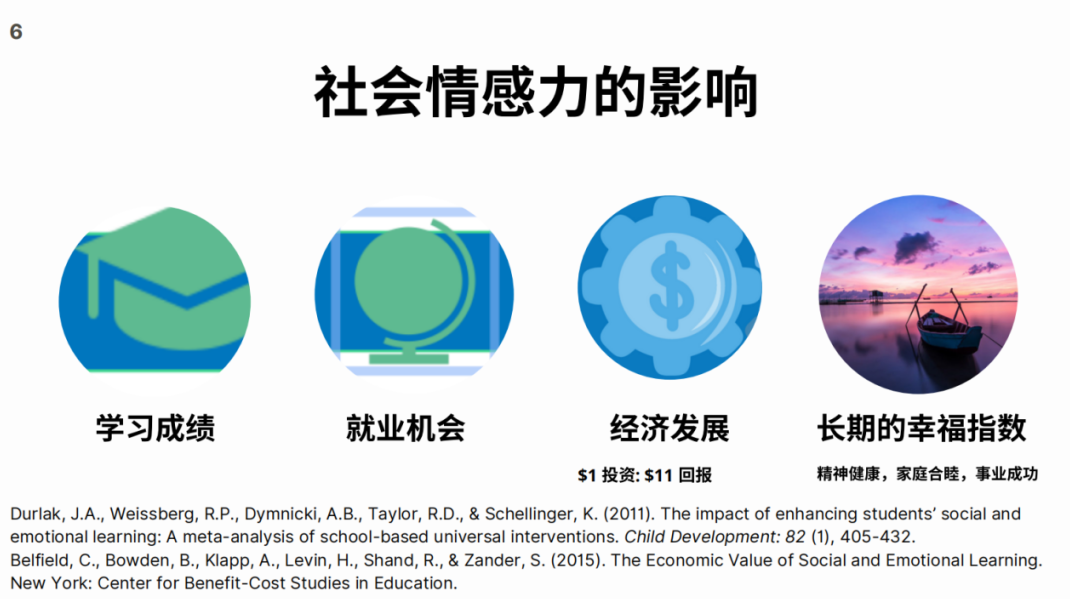
The importance of social emotional power is reflected in its multiple influences. In the short term, it will affect students' academic performance and employment opportunities. In the long run, it can affect economic development and long-term happiness index. Investing in the cultivation of social emotional strength has a very high rate of return, which is reflected in the improvement of personal mental health, family harmony and career success.
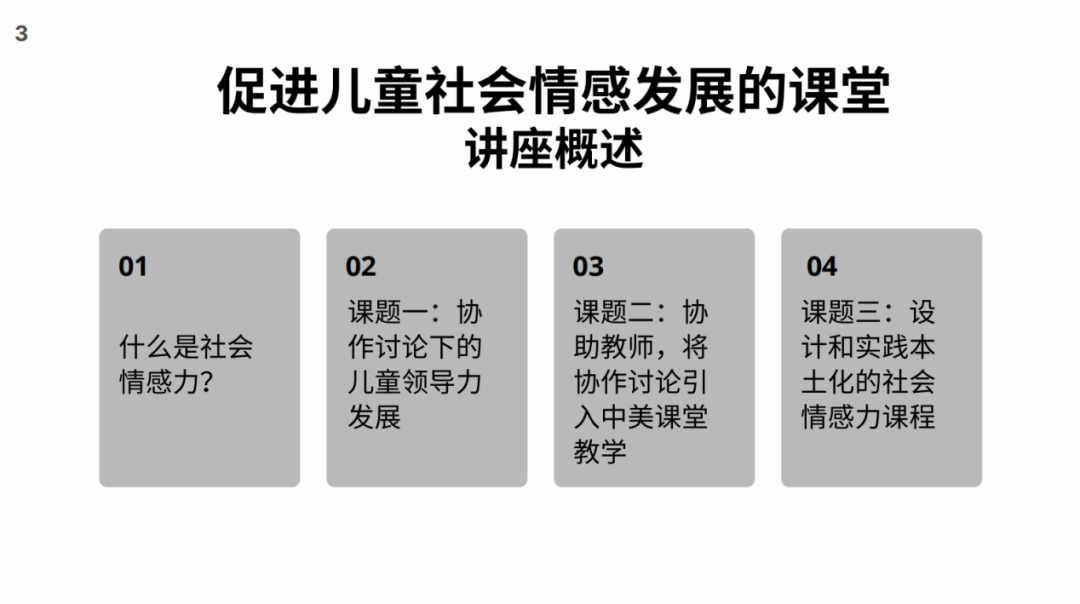
How can social emotional development be introduced into the classroom? Associate Professor Sun Jingjing introduced her two research subjects. Topic 1: Children's leadership development under collaborative discussion. She introduced the collaborative discussion (Collaborative Reasoning, CR) and the concept of children's spontaneous leadership in collaborative discussions that she focused on, and shared the development trend of children's spontaneous leadership in group discussions.
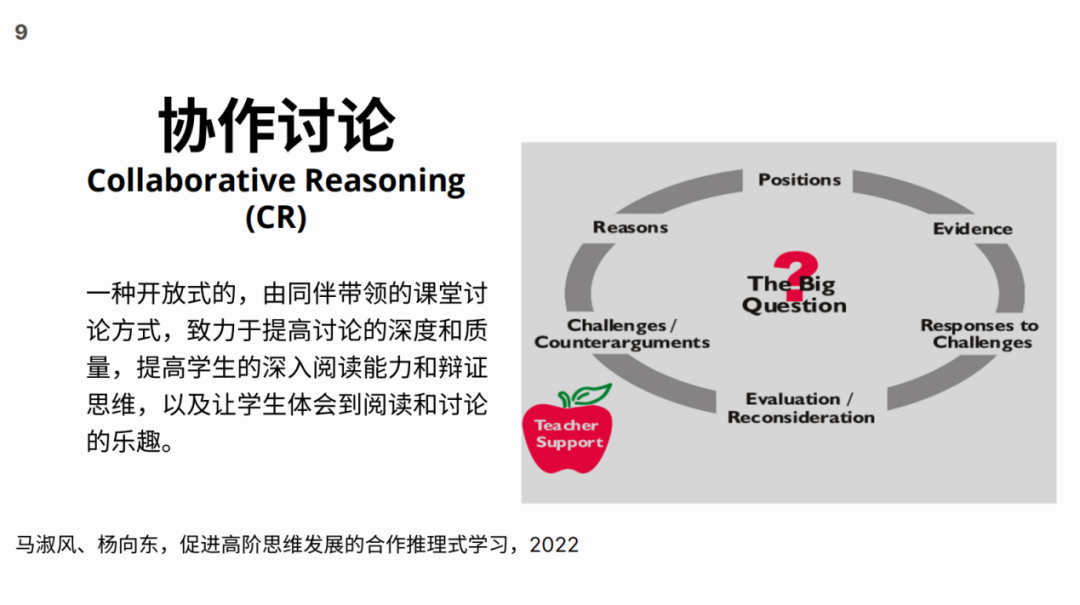
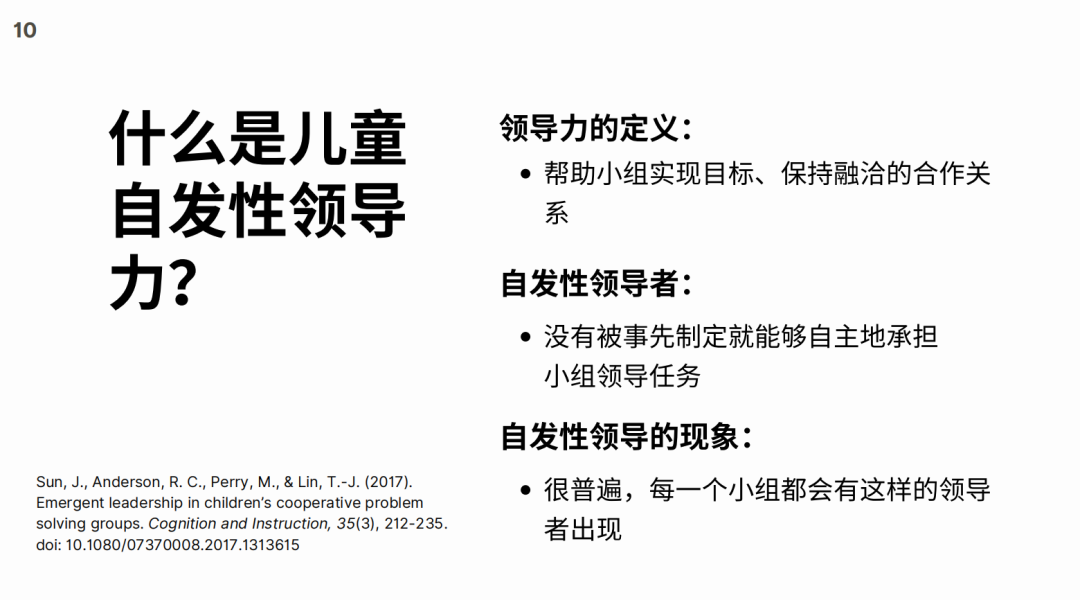
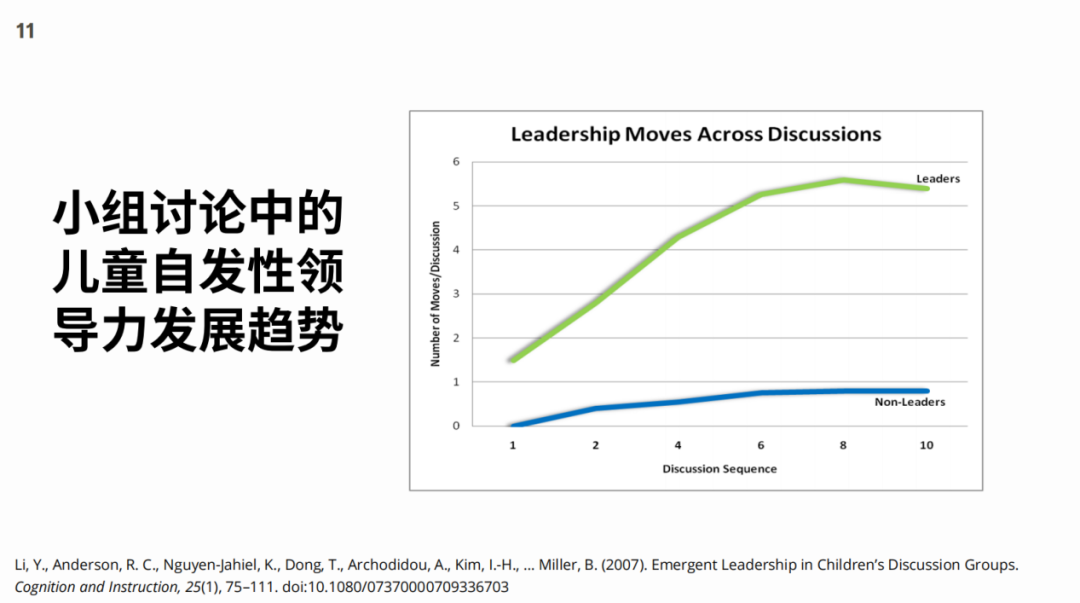
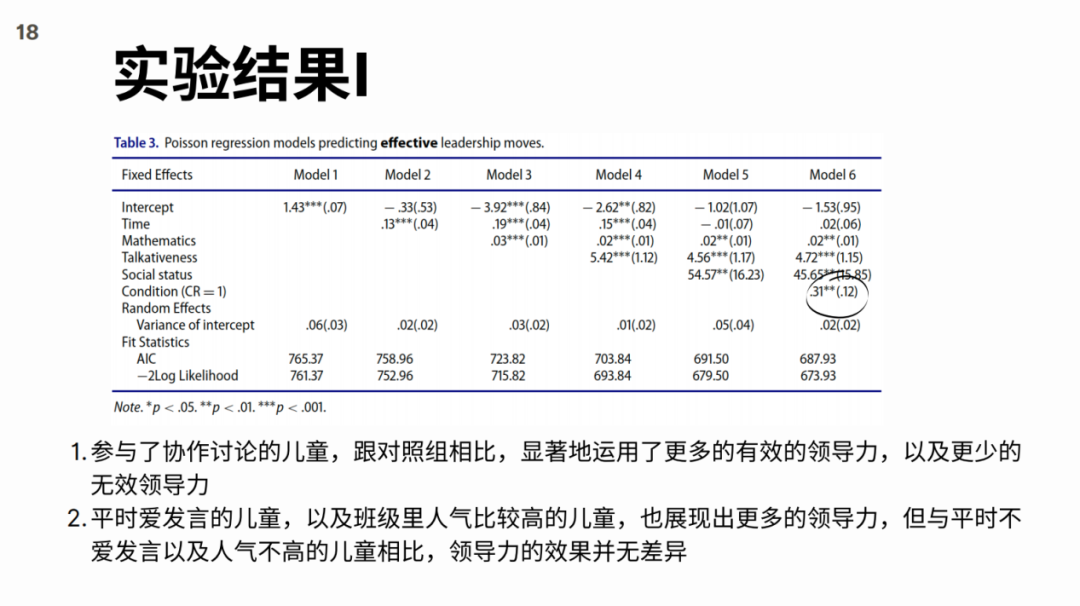
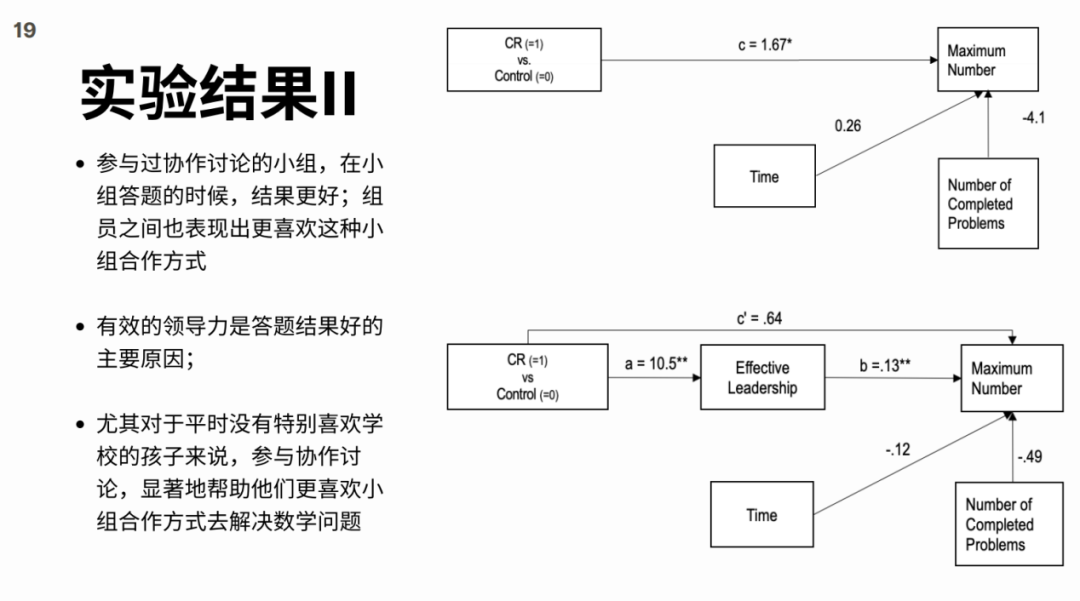
Associate Professor Sun Jingjing's research mainly focuses on the use and transfer of children's spontaneous leadership in collaborative discussions, and its help to group cooperation. Her experimental subjects included 252 Chinese fifth-grade students. The students were divided into an experimental group and a control group. Students in the experimental group were asked to discuss some social issues through collaborative discussions, while the control group did not undergo such pre-training. Then, the students in the experimental group and the control group had to conduct a collaborative discussion on three math problems. The experiment mainly focused on the performance of children's spontaneous leadership from four aspects, including assigning tasks, proposing and explaining solutions, planning group time, and promoting group consensus. Through experiments, she found that participating in collaborative discussions can enable children to use more effective leadership and reduce ineffective leadership, and the effect of leadership is not affected by students' usual speech performance.
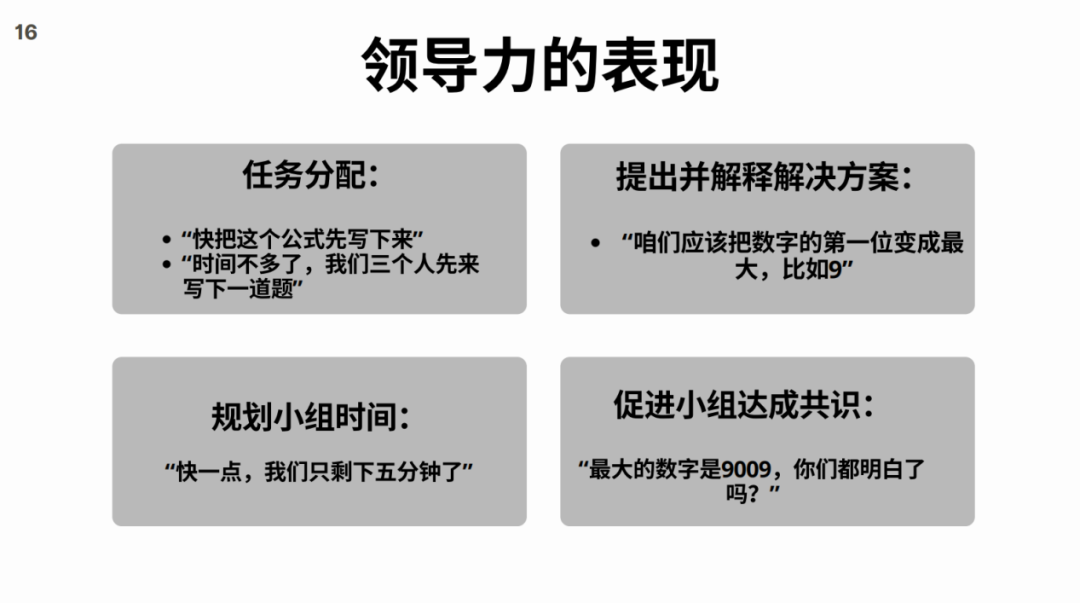
In the qualitative analysis, she found that the realization of effective leadership requires appropriate timing, an inclusive tone, a respectful attitude and an open mind.
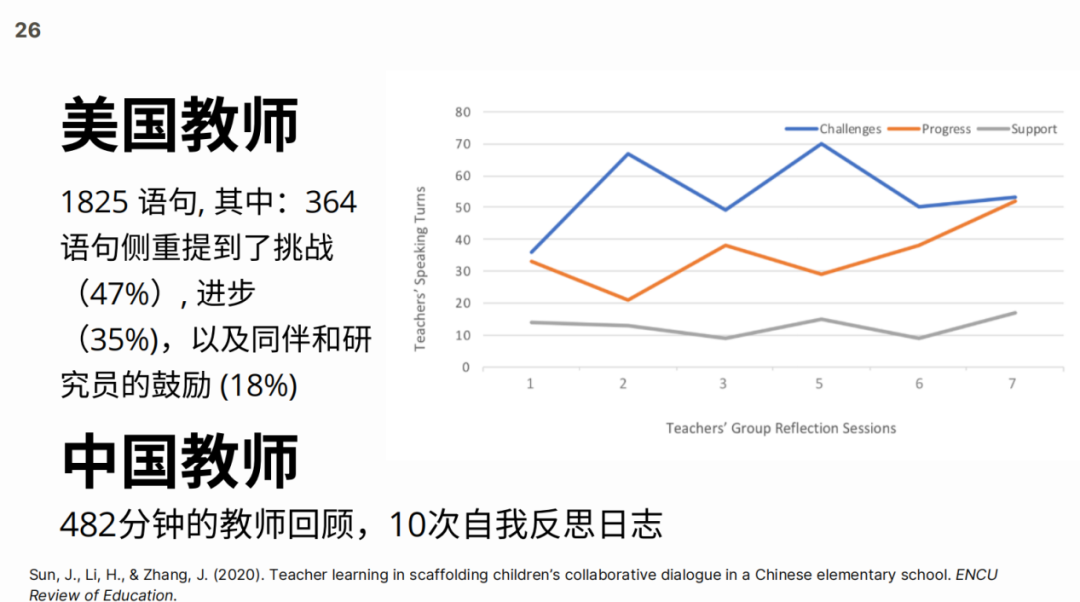
Collaborative discussion can help promote children's social-emotional development, so how can teachers design instruction to introduce collaborative discussion in school settings? Associate Professor Sun Jingjing then introduced her second topic - assisting teachers to introduce collaborative discussion into Chinese and American classroom teaching. The research question she specifically focuses on is: What are the challenges and gains that teachers encounter when they try to collaborate and discuss? Can reflective teacher discussions help teachers build confidence and effectively incorporate collaborative discussion into classroom instruction? Through the comparative experiment between China and the United States, she obtained the following experimental results.
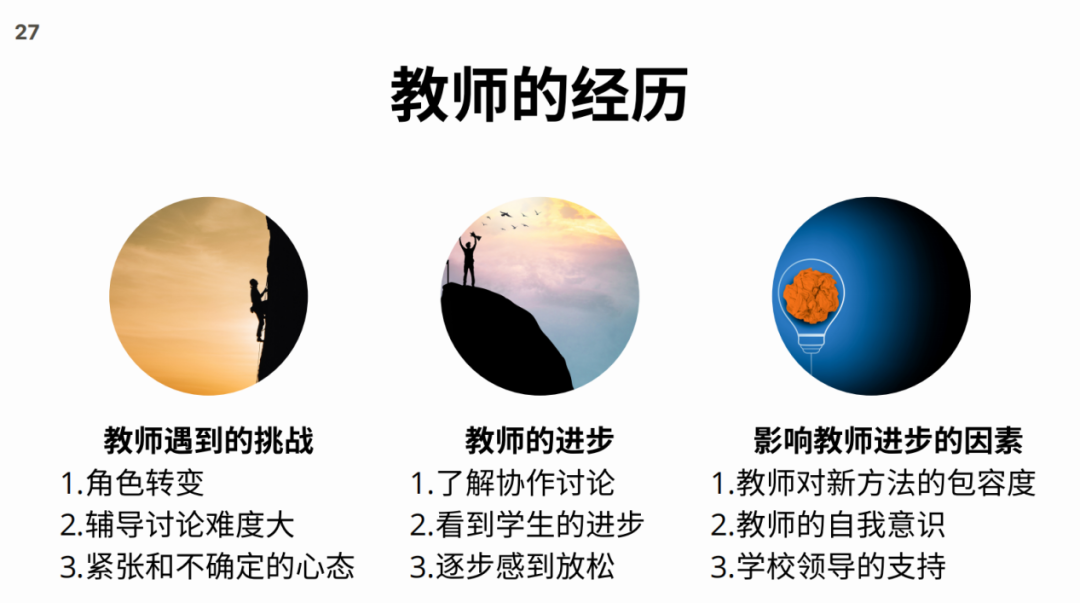
Teachers can overcome challenges and bring collaborative discussion into the classroom. So, how can it be ensured that schools promote social-emotional nurturing invite parents and communities to participate? Associate Professor Sun Jingjing introduced her third topic: designing and practicing localized social-emotional curriculum.
In the curriculum setting for Native American children, she paid attention to the two cultural factors of aboriginal people and mainstream culture, and carried out a three-tiered curriculum design, dividing the curriculum design into four stages. Through the long-term cooperation from 2018 to 2023 and with the improvement of curriculum experiments, the localization of curriculum design has been gradually realized. This kind of curriculum design not only aims at the development of social emotional strength, but also helps Aboriginal students understand their own culture and enhance cultural confidence.
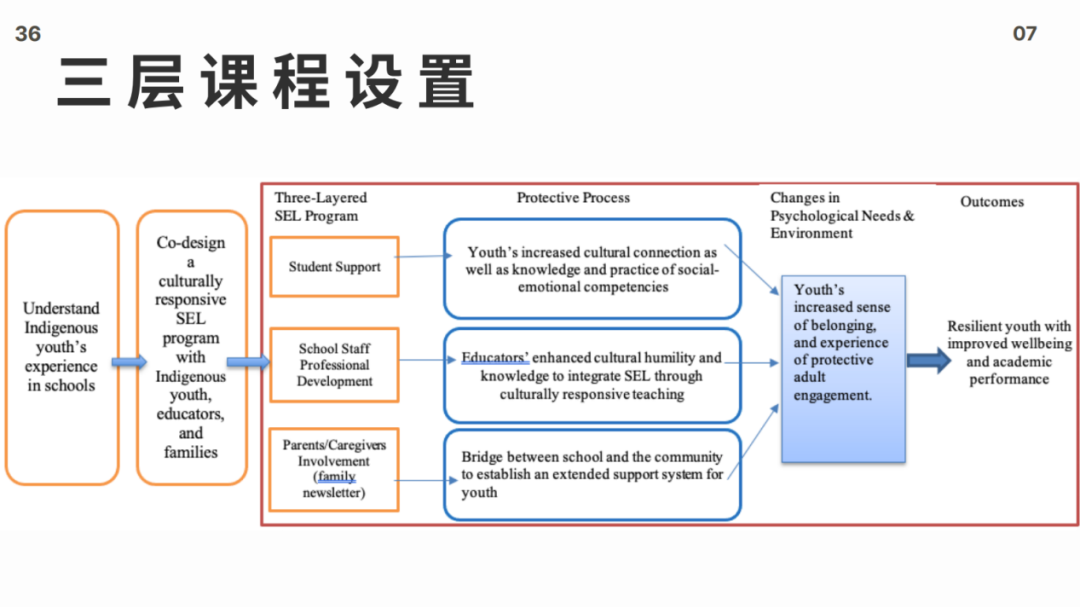
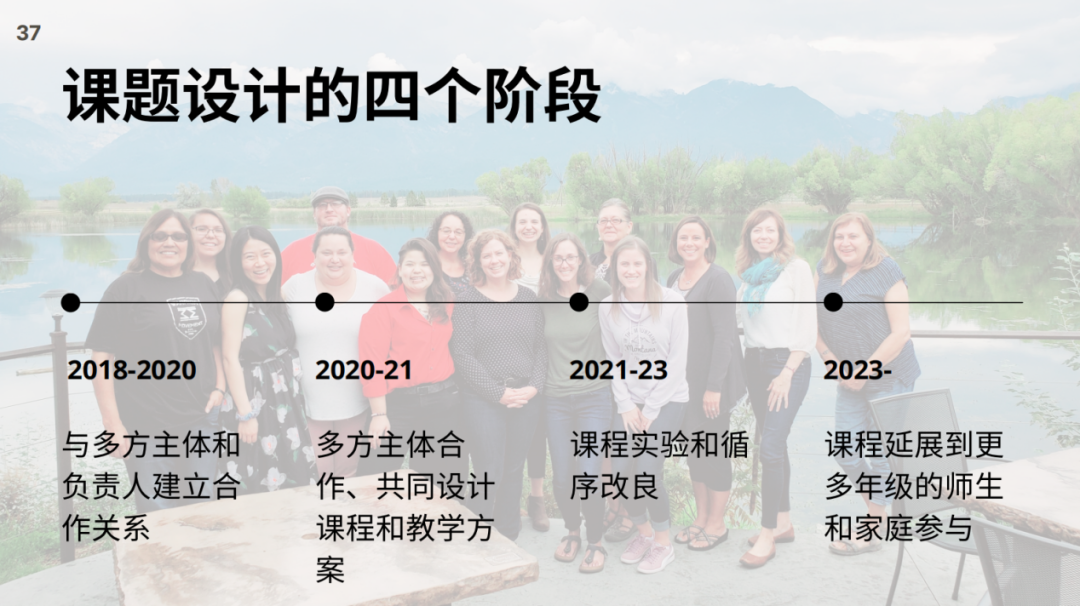

Associate Professor Sun Jingjing and her team localized curriculum by adding distinctive culture, held days of learning activity and invited parents of students to participate. Research has shown that socio-emotional development is multidimensional and requires multi-party cooperation to achieve localization.
Professor Zheng Tainian, Associate Professor Ma Shufeng, Associate Professor Wang Zhe and Associate Professor Shi Yuchen fully affirmed the value and significance of collaborative discussion for students' learning and social emotional development. They conducted in-depth discussions with Associate Professor Sun Jingjing about how to conduct social emotional learning more effectively, how to achieve long-term cooperation with the community or school, how to measure the effect of intervention and other issues.

 Address: 3663 Zhongshan North Road, Shanghai
 Email: ecnuici@163.com
 电话:021-32526084