

On the afternoon of April 3, Professor Bao Lei, a professor of the Department of Physics and the School of Education of Ohio State University and the president of the International Chinese Physics and Astronomy Society, guested at the 160th Huaxia Curriculum Forum, and made a speech entitled "The American College Entrance Examination System and Top-notch Innovation Talent Development”. The forum was chaired by Professor Liu Lianghua from the ICI, East China Normal University, and attracted many teachers and students to participate in the study and discussion.
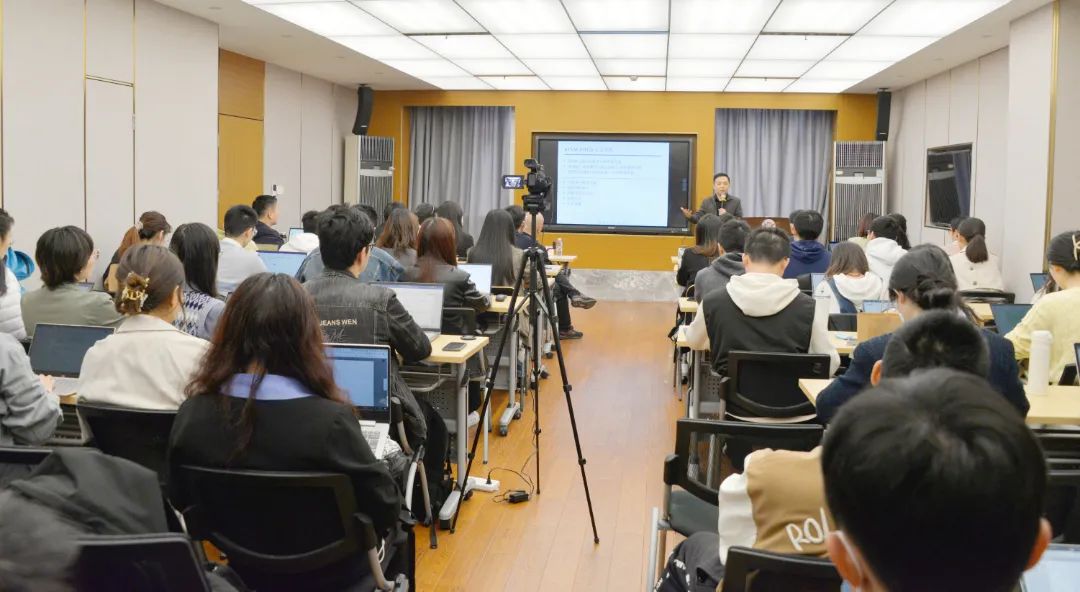
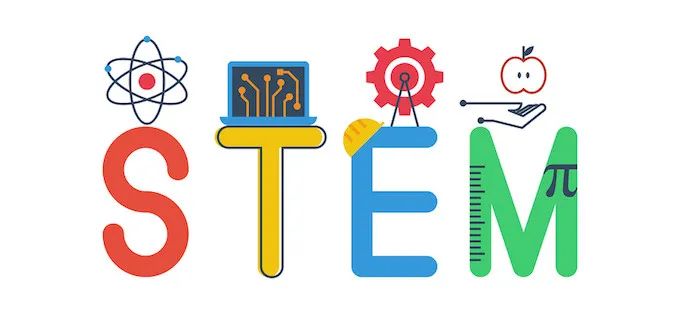
Professor Bao Lei briefly shared the development context, core functions and goals of STEM education in the United States. He focused on three groups of relationships: the relationship between STEM and the cultivation of top-notch innovative talents; the relationship between broad and in-depth courses in the United States and top-notch and the cultivation of innovative talents; the relationship between the American college entrance examination system and the cultivation of top-notch innovative talents.
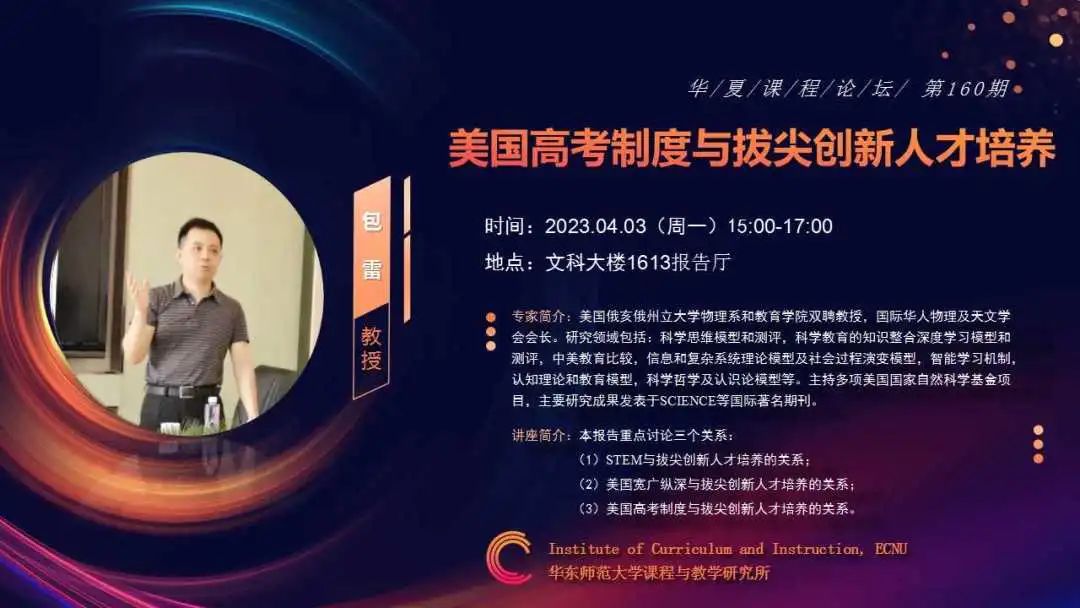
Secondly, the American primary education has a broad and deep curriculum system, and these diversified courses are conducive to the cultivation of top-notch innovative talents. Top-notch innovative talents usually refer to world-leading talents who are extremely profound in specific fields, and these talents are often cultivated through traditional single-subject learning methods rather than integrated and interdisciplinary methods. The broad and deep curriculum system not only emphasizes providing "broad" course choices for different individual students, but also pays attention to specific individuals. Once they choose certain courses, they can conduct "deep" learning around specific courses and gradually move towards specialization.

On the whole, the export of STEM education in the United States lies in its broad and deep curriculum system. In this research-centered educational ecosystem, the "seeds" sown in the basic education stage can obtain diversified "fruits" in the higher education stage. ". In contrast, the bottleneck of STEM education in China lies in the narrow examination-oriented curriculum system. The limited resources have led to fierce competition and introversion, and the narrow content has led to a single talent training model. The exit with narrow room for improvement curbs students' long-term interest in STEM learning, which is not conducive to the diversified development of talents.

Therefore, professor Bao Lei came up with three revolution visionaries for China’s GaoKao:
First, recognize that the reform of the college entrance examination is part of the reform of the education system;
Second, broaden and deepen the content of the college entrance examination, and reform the single evaluation method;
Third, gradually implement the full credit system and link curriculum reform with the college entrance examination.
Professor Bao Lei’s statement about three groups of relationships stirred the strong interest of the teachers and students present for further questioning. In the follow-up question-and-answer session, the participating teachers and students discussed "the relationship between STEM courses and creativity cultivation", "how to incorporate humanistic and moral content in STEM courses", "the relationship between top-notch innovative talents and elite education", "requirement for schools brought by broad and deep curriculum system” “ the relationship between breadth and depth”.


 Address: 3663 Zhongshan North Road, Shanghai
 Email: ecnuici@163.com
 电话:021-32526084