

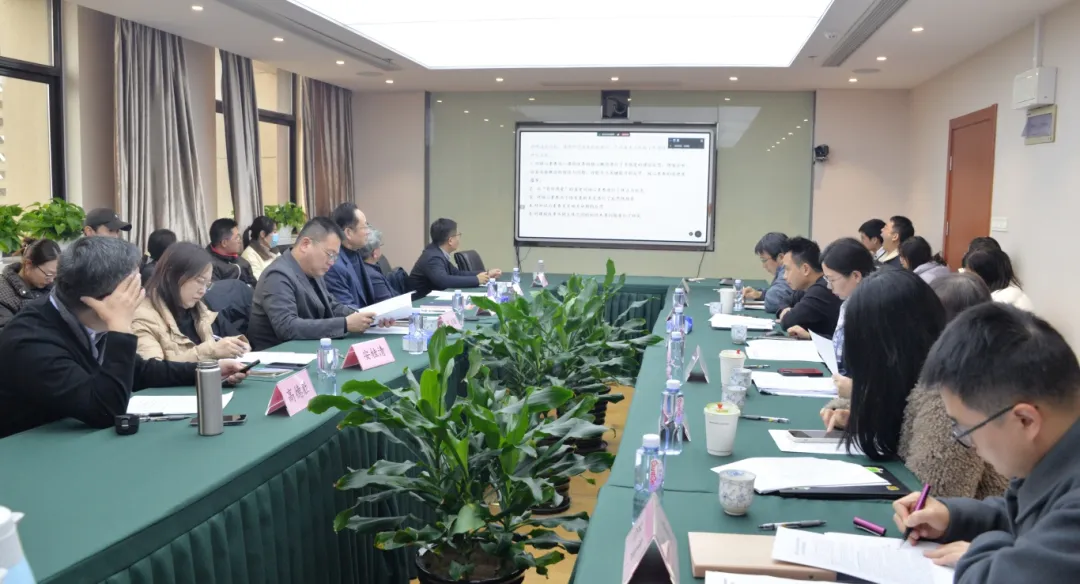
To better achieve the anticipated goals of the "14th Five-Year Plan" and further advance key research projects, a mid-term progress seminar was held on December 11 at Room 1606 of the Humanities Building at East China Normal University (ECNU). The event, hosted by the Curriculum and Instruction Research Institute of ECNU—a key research base of the Ministry of Education’s Humanities and Social Sciences—focused on the central theme of "Major Issues in K-12 Curriculum and Textbook Reform Under the Guidance of High-Quality Development."
The conference featured esteemed experts, including Professor Yu Le Jin, Director of the Education Department at Shenzhen University; Professor Wen Sen Yu from the School of Education at Fujian Normal University; and ECNU scholars such as Professor Zhenguo Yuan, Director of the Education Department; Professor Zhifeng Lü, Dean of the Academy of Humanities and Social Sciences; Professor Zhongjing Huang, Chair of the Education Department; and Professor Yunhuo Cui, Director of the Curriculum and Instruction Research Institute. Mid-term progress reports were presented by five leading experts: Professor Dingrong Hu from Beijing Normal University, Professor Yuanxiang Guo from Central China Normal University, and ECNU professors Shuangye Chen, Deren Gao, and Wei Zhang. Over 50 faculty members, students, and external participants joined the seminar online and offline, including ECNU researchers Guiqing An, Beifei Dong, Hao Lei, Yuchen Shi, Yanling Wang, Zhe Wang, Chengyu Yang, Xiaozhe Yang, and Xin Zheng. Professor Hao Lei, Deputy Director of the institute, presided over the meeting.
1. Opening Remarks
Professor Zhifeng Lü, Dean of ECNU’s Academy of Humanities and Social Sciences, extended a warm welcome and heartfelt thanks to all participating experts and scholars. He highlighted the contributions and achievements of ECNU’s Curriculum and Instruction Research Institute, affirming the theoretical and practical significance of the five major projects. He expressed hope that this academic exchange would bridge theory and practice in curriculum and instruction reform, offering new insights and strength to the long-term development of China’s education system.
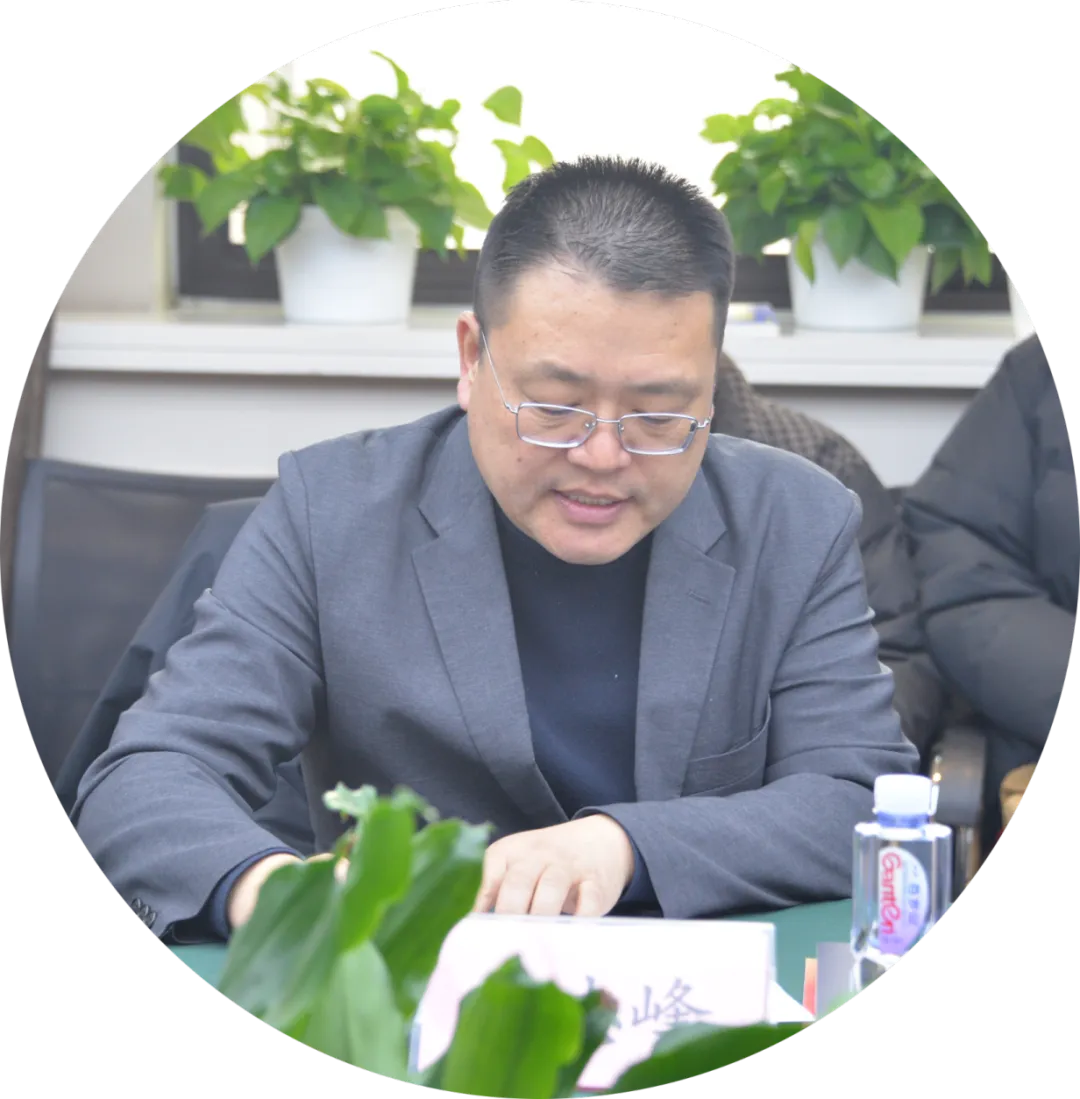
Professor Lu Zhifeng
Dean, Institute of Humanities and Social Sciences, East China Normal University
Professor Yunhuo Cui, Director of the institute, provided background information on the overall planning of the "14th Five-Year Plan" major projects. He acknowledged the progress made across all initiatives and emphasized that the purpose of the seminar was to address challenges and harness collective wisdom to ensure high-quality completion of each project.
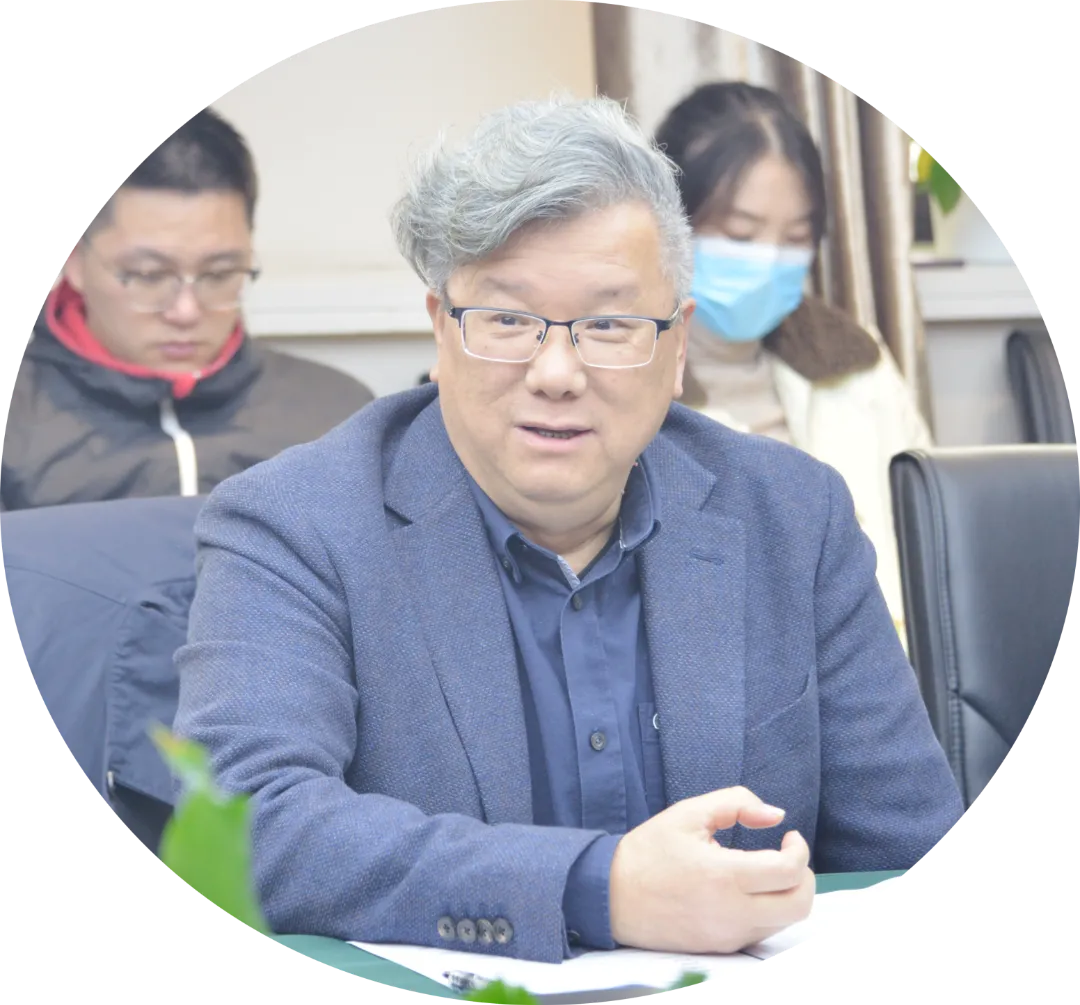
Professor. Cui Yunhuo
Director of Curriculum and Teaching Institute, East China Normal University
2. Project Progress Reports
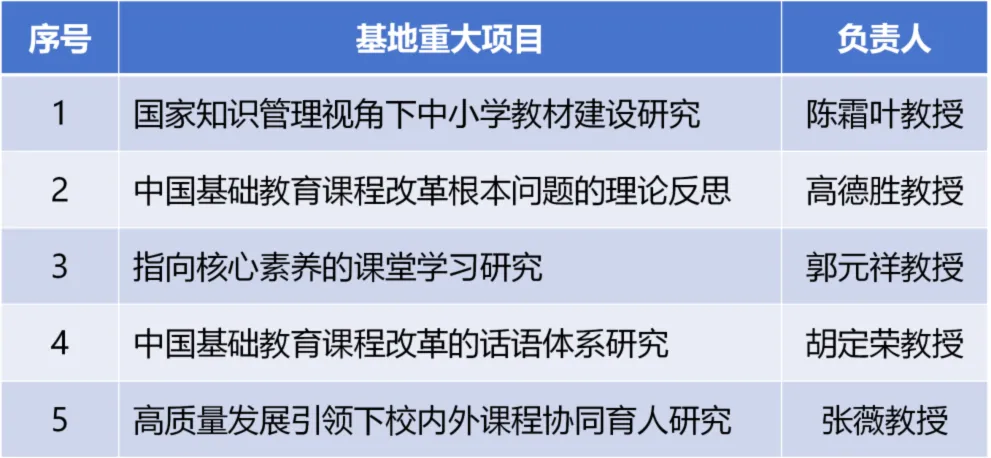
The five project leaders—Professors Deren Gao, Dingrong Hu, Shuangye Chen, Yuanxiang Guo, and Wei Zhang—shared updates on their respective research progress and interim achievements since the project launch. They discussed key findings, challenges encountered, and outlined plans for the next phase, including expected outcomes and goals.
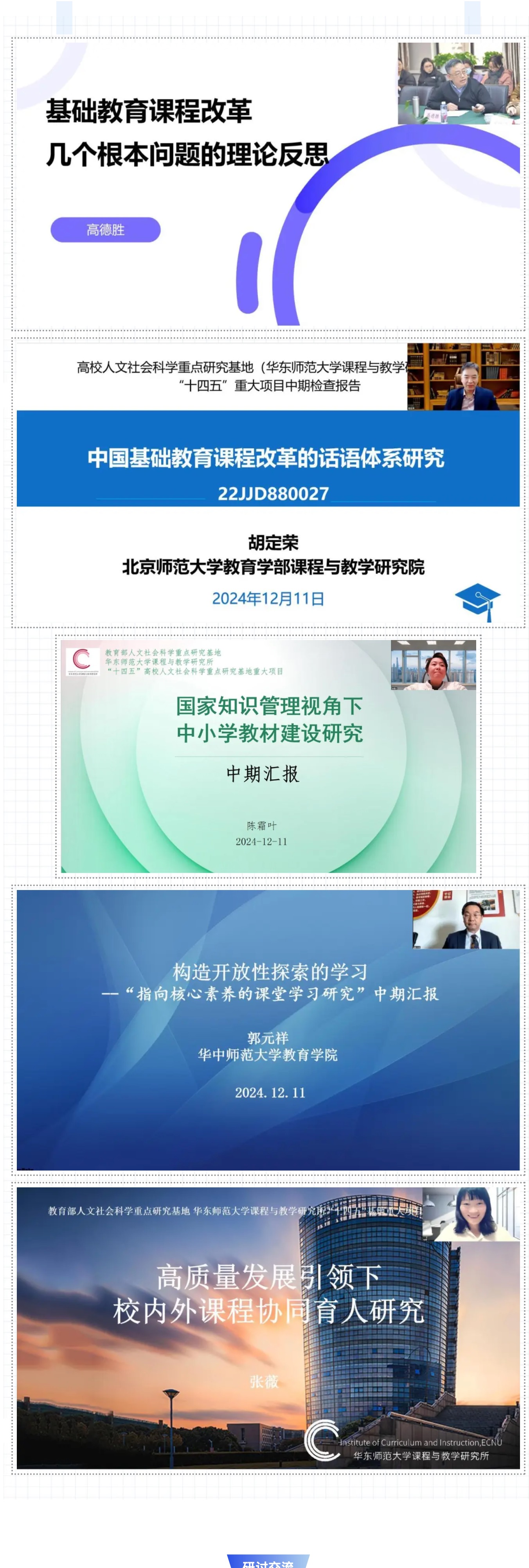
3. Discussion and Exchange
Experts offered constructive and actionable suggestions to address issues raised during the presentations. Discussions focused on enhancing theoretical depth, updating frameworks, and addressing uniquely Chinese educational challenges with greater focus and relevance.

4. Summary and Outlook
In his closing remarks, Professor Yunhuo Cui summarized the seminar’s outcomes, thanking the five lead experts for their insightful presentations. He noted that the research questions tackled by these major projects are highly systematic and complex, and organizing this discussion helped systematically identify and address critical challenges. The institute will continue leveraging academic exchange mechanisms to consolidate collective expertise, improve project quality, and produce impactful research outcomes. These efforts aim to address cutting-edge academic issues and pressing societal concerns, contributing to the development of a distinctively Chinese curriculum, academic, and discourse system.

 Address: 3663 Zhongshan North Road, Shanghai
 Email: ecnuici@163.com
 电话:021-32526084