

Associate Researcher Chengyu Yang of the Curriculum and Instruction Research Institute at East China Normal University has recently published his latest book, The Word is Not Here: A Modern Interpretation and Creation of Traditional Chinese Language Concepts, with Nanjing University Press. The book argues that traditional Chinese language concepts face numerous challenges in the context of modernity. Only through creative transformation can these traditions fulfill their original potential in contemporary language practices and educational settings.
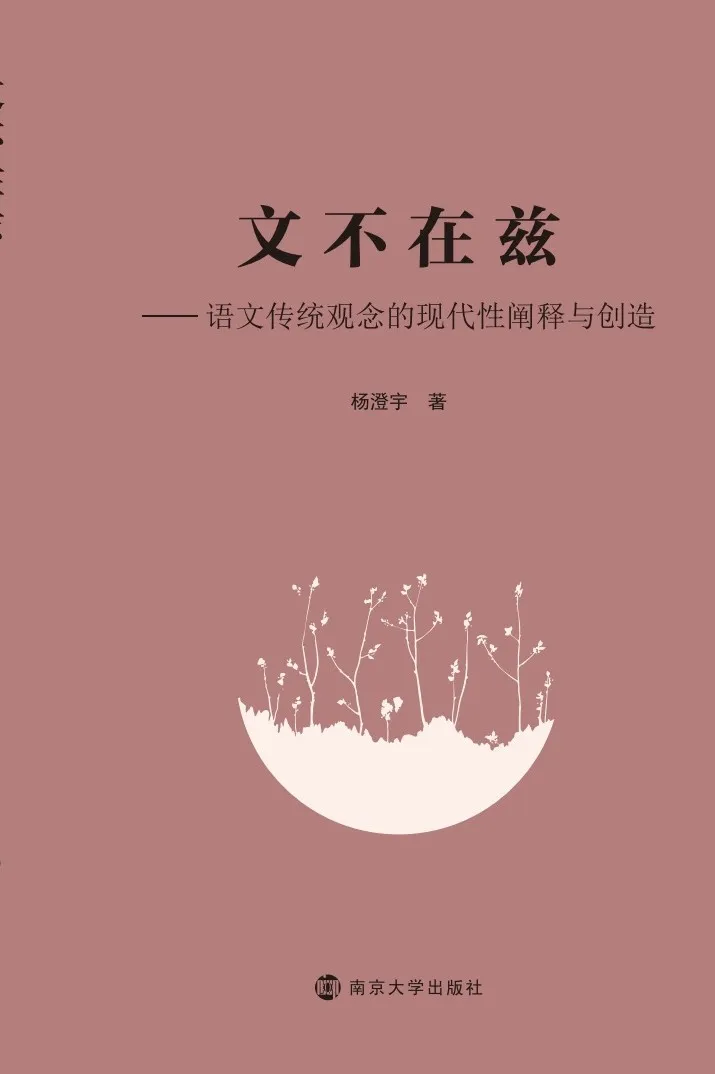
Wen Zizi -- The Modern Interpretation and Creation of Traditional Chinese Ideas
By Yang Chengyu
Nanjing University Press
1. Book Overview
Tradition requires continuous interpretation and reinvention. First, it is essential to clarify the concept of "Chinese language" as distinct from "language," exploring its defining characteristics—such as its moral orientation, holistic inclusiveness, and grounding in everyday life. Second, one must analyze the concept and features of modernity to understand how "nominalist modernity," rooted in individual subjectivity, serves as a guiding principle for reimagining Chinese language traditions. Third, the path to reinvention must return to two foundational pillars: the body and the lived world. Embracing the spirit of "returning to the essence of language," this process seeks to unite tradition and modernity through aesthetic exploration. Finally, we must acknowledge the inherent vulnerabilities and limitations of life, the body, and aesthetics. The solution lies in returning to concrete specifics, employing practical methods such as language games in classroom practice while remaining vigilant against overuse that risks diluting meaning.
In contemporary life, individuals are constantly interrogated by modernity. To navigate this, we must return to the body, to daily life, to aesthetics—and confront the cracks, silences, idle chatter, and obfuscations of language. By continually returning to the essence of language itself, we can rediscover its foundations and possibilities. Language will emerge from the formal autonomy imposed by modernity, moving toward a more profound modernity, embracing contemporaneity, and returning to its origin—tradition, and the ever-emerging traditions. This is not a simple regression but an opening to broader possibilities.
2. About the Author
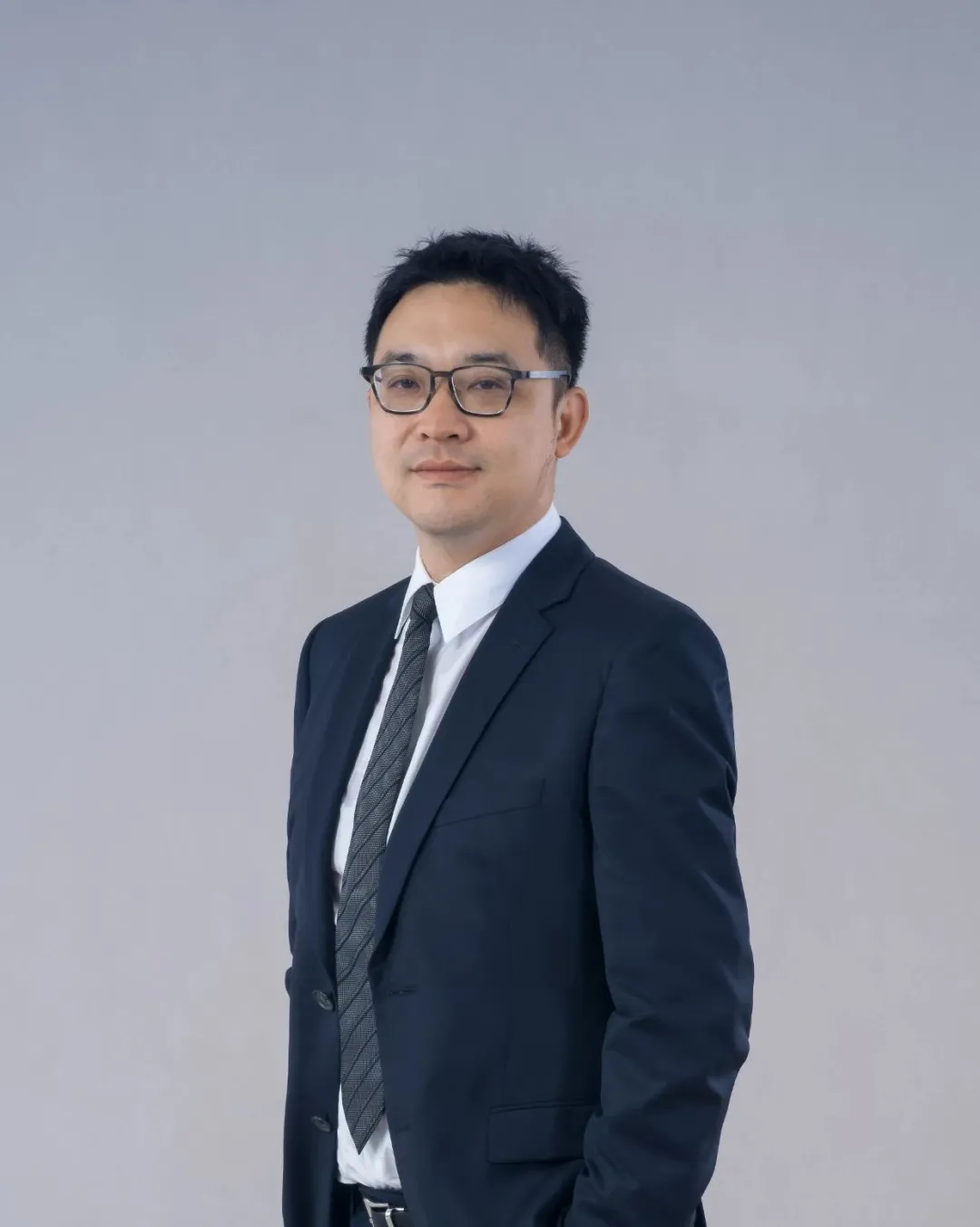
Chengyu Yang is an associate researcher at the Curriculum and Instruction Research Institute of East China Normal University and a visiting scholar at Columbia University in the United States. He is the author of The Phenomenology of Language Life: An Exploration of Chinese Language Curriculum, and has published dozens of articles in core journals such as Educational Research and Wenhui Daily. He has also published collections of poetry and essays. His research focuses on Chinese language curriculum and pedagogy, curriculum aesthetics, and curriculum philosophy.
3. Excerpt from the Book
In the summer of 1999, I took the college entrance exam. I remember the essay prompt that year was "If Memory Could Be Transplanted." This summer, news surfaced online that painless brain-computer interface chips are becoming increasingly feasible. Scrolling through short videos, I learned that patients with severe depression have regained normal lives through implanted brain chips. "Press the switch, and life restarts." If this technology becomes widely available, there is no doubt it will transform human existence. Gilles Deleuze and Pierre-Félix Guattari foresaw this, describing humans as "desiring machines." While artificial intelligence struggles to pass the Turing test to prove "machines are human," the materialist assertion that "humans are machines" cuts closer to the truth. Of course, "machine" here does not refer to an object but to a productive entity.
When this machine can be wirelessly controlled, the phrase "as easy as moving one's arm" becomes ironic, as our bodies have already rusted in an era of high-speed, hypersensitive living. The "body without organs" becomes possible in unexpected ways, challenging entrenched notions of language. When bodies no longer need to articulate commands in complete sentences but merely "think" a fragmentary idea to trigger electronic devices, we must reconsider the function of language. The performative power of speech acts—"doing things with words"—may become redundant. Efficiency demands that a mere fragment of thought suffices. Instructions and narratives may no longer require sentence structures; perhaps a single word—or even silence—will suffice.
People no longer need to spend time crafting reasonable or polite language; artificial intelligence can do that for us. Yet language still struggles to penetrate the heavy flesh, always falling short of expression. But neurons can pierce through frail bodies, creating postmodern spiritual landscapes. Is this enough? We must reflect: What is the essence of language? When information technology and AI replace human thought, will we inevitably arrive at the "brain in a vat"? Does language construct a labyrinth or a spectacle? How should education respond? What is the meaning of knowledge transmission and acquisition if AI dominates linguistic domains? Is human translation still necessary? Will literature, art, and aesthetics be colonized by AI? Can machines paint, write poetry, and entertain themselves? When we name a distant mountain with a warm title, does that name retain its uniqueness and legitimacy?
These complex questions lead us to ponder the "ultimate" question: What is Chinese language education? Researchers cannot ignore the ontological foundation of the discipline. Everyday distractions are enough to make one "lost in the world." We must ensure we are engaged in something meaningful. According to phenomenology, meaning requires content—it cannot descend into nihilism—and intentional action rather than passive waiting. Subjective engagement is necessary for meaning to unfold. Even if we ultimately conclude that the endeavor holds no value—or only confirms uncertainty—this is not necessarily a bad outcome. The process matters more than the result.
Chinese language education boasts a long history, but the modern curriculum is barely a century old. History provides both depth and opportunity, yet the current state of Chinese language education seems burdened by heavy baggage while treading lightly. Among all modern curricula, Chinese language education is the most "special" and "awkward." No one denies its importance, yet everyone habitually questions its professionalism and criticizes its current state. Certain debates persist endlessly, most notably the tension between instrumentalism and humanism. The compromise often takes the form of rhetorical equivocation: "Chinese language is the most important tool for communication and an integral part of human culture. The unity of instrumentalism and humanism is the fundamental characteristic of Chinese language education." But why and how do these two aspects unify? They seem self-evident, like common sense, yet remain unproven.
This dilemma becomes especially acute when Chinese language education encounters the collision and fusion of traditional and modern ideas. Should we prioritize literature or morality? Form or content? Tradition or modernity? East or West? Discussions about Chinese language education often oscillate between binary oppositions. One reason for this lies in the ontological ambiguity of Chinese language education. One perspective may seem correct, while its opposite also appears valid, leading to a cacophony of opinions. Meanwhile, maintaining this ontological ambiguity seems necessary to navigate the field's complexities and resolve seemingly paradoxical issues. Over time, this approach becomes normalized. Such a mindset is quintessentially "Chinese language-like," as it prioritizes pragmatism, minimizing major issues and trivializing minor ones.
Yet, even if we temporarily set aside these metaphysical musings, some pressing practical issues cannot be ignored. At their root, these problems likely stem from the unsuccessful integration of tradition and modernity during the early stages of modernizing Chinese language education—a legacy that remains unresolved today. Early efforts resembled a "patchwork" movement, employing techniques like "grafting" and "burning bridges after crossing rivers." Old ideas were fused with new thinking to yield societal benefits, after which outdated traditions were discarded. However, the power of tradition is formidable, and people's linguistic lives remain "bound by tradition." Simultaneously, there is constant lamentation about the loss of tradition and dissatisfaction with the present. Society packages tradition in search of novelty, yet attempts to return to tradition feel superficial, and innovations gradually homogenize into standardized products. Old bottles with new wine are often criticized; what happens when the old bottles disappear and the new wine is impure? We must return to the ontological concept of Chinese language.
By tracing the threads, we can clarify the trajectory of the current state and development of Chinese language education. Amidst diverse perspectives, one undeniable consensus emerges: we are on the path to modernity, and modernity is an unavoidable topic. No matter how much we lament "the word is not here" or even "civilization is not here," we cannot reverse the tide of modernization. Any traditional concept, in the contemporary era, faces the challenge of integrating into modern society and thought rather than starting anew. Acknowledging this consensus compels us to critique certain educational phenomena, such as extracurricular Confucian tutoring classes, classical reading programs, and so-called "virtue schools for women," which operate outside the regulated curriculum system yet masquerade under fashionable labels like "comprehensive Chinese language" or "excellent traditional culture." This forces us to revisit traditional Chinese language concepts, scrutinize this complex subject, identify the roots of these issues, and seek solutions.
At the same time, we must confront a challenging ontological question: What is the relationship between Chinese language and language? They are certainly not identical, so what distinguishes them? For now, I propose this definition: Chinese language, in contrast to a narrow view of language, is the generation and expression of meaning within the lived world.
The encounter between Chinese language tradition and modernity represents the collision of two extraordinarily complex concepts. Modernity can be understood in countless ways—as a specific historical period, a unique mode of social and institutional life, or a particular narrative framework ("pre-modern," "modern," "post-modern"). It can also be seen as an unfinished project since the Enlightenment. Within these varied interpretations, we must ask: What is the core of modernity, and how should it be described? Yet, pursuing such answers risks falling into essentialism.
Rather than asking how to avoid being "bound by tradition," we should ask why we must be bound by it. Key features of Chinese language tradition—such as its moral orientation, holistic inclusiveness, and grounding in everyday life—are the very ground we stand on, past, present, and likely future. Transforming these traditions into modern contexts is not a matter of choice but necessity. Since this transformation is inevitable, we must explore possible pathways. We must discern which new problems are actually old ones and which old problems face new challenges.

 Address: 3663 Zhongshan North Road, Shanghai
 Email: ecnuici@163.com
 电话:021-32526084