

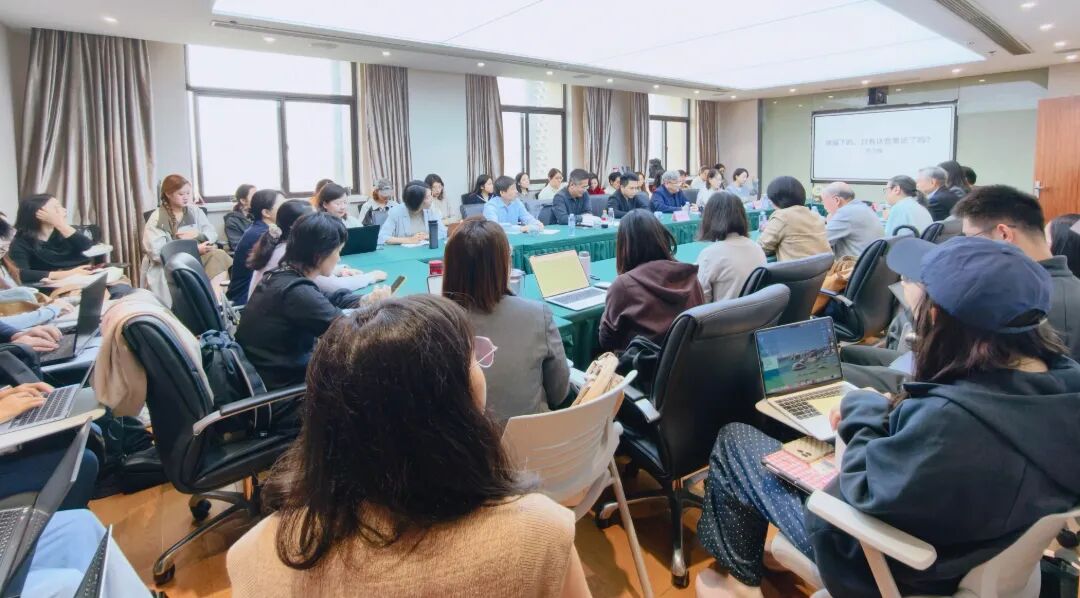
What does an education scholar leave behind—and how can research make a lasting difference to schools, policy and future generations? Professor Leslie N. K. Lo explored these questions at the 192nd Huaxia Curriculum Forum at East China Normal University on 24 October.
Lo, founding Dean of the Faculty of Education at the Chinese University of Hong Kong and Distinguished Senior Chair Professor in Beijing Normal University’s Faculty of Education, reflected on his involvement in educational reform, institution building and doctoral education. Associate Professor Zhang Xiaolei of ECNU’s Institute of Curriculum and Instruction chaired the forum.

Participants at the event
Reflecting on four forms of scholarship
Lo organised his reflections around Ernest Boyer’s four forms of scholarship: discovery, integration, application and teaching. The framework enabled him to consider contributions that extend beyond publications to policy, professional practice and the development of other scholars.
He traced the development of education as a discipline at the Chinese University of Hong Kong, including the establishment of an independent faculty and degree programmes spanning undergraduate study, master’s degrees, the EdD and the PhD. He also discussed changes to assessment and the preparation of graduates for research, policy and practice.
Working with policy and schools
Drawing on his policy advisory work, Lo discussed reports on preschool and special education in Hong Kong. These contributed to debates and reforms concerning entry qualifications for early childhood teachers, the integration of education and care, inclusive education and support for students with learning difficulties.
He also recalled establishing the Hong Kong Institute of Educational Research and developing school improvement initiatives from the 1990s onwards. The Quality School Improvement Project drew on Henry Levin’s Accelerated Schools approach and emphasised sustained communication among professionals, understanding the commitment of principals and school leadership teams, and building shared ownership through discussion.
Across university–school partnerships, Lo has used cultural-historical activity theory to examine teacher learning within the institutional and organisational contexts of school change. His work connects comparative education, teacher education and school improvement.
A scholarly relationship spanning decades
In his welcome, Institute Director Professor Cui Yunhuo recalled meeting Lo at Harvard University in the 1990s and subsequent visits to the Chinese University of Hong Kong. ECNU Emeritus Professor Jin Linxiang also reflected on more than three decades of friendship and educational exchange, using a photograph from the 2002 opening of the Tian Jiabing education building to recall Lo’s contributions to connections between Hong Kong, mainland China and the international research community.
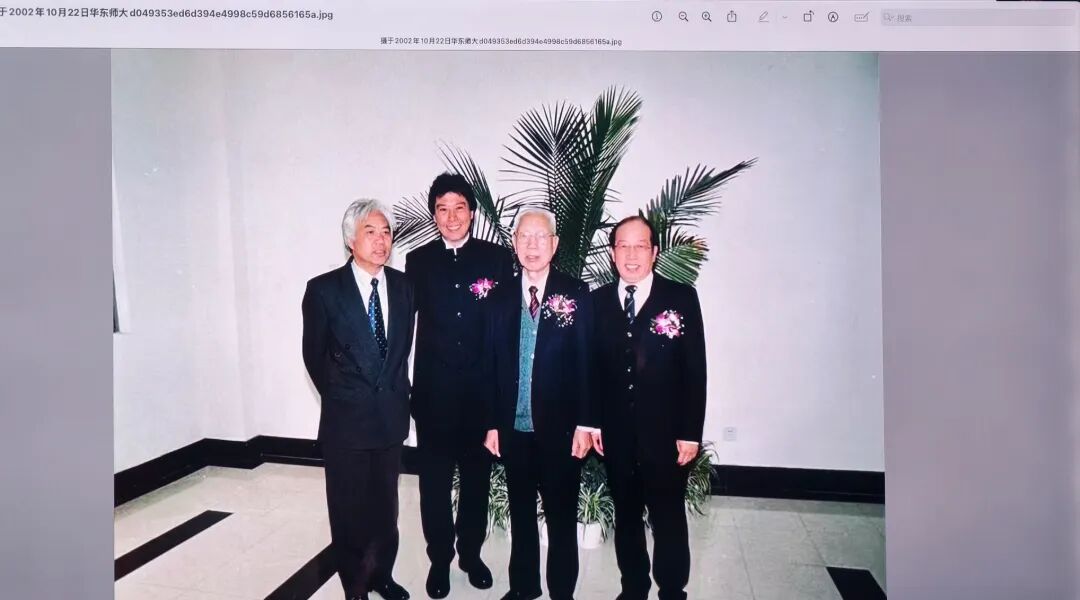
Guests included representatives of the Tin Ka Ping Foundation, Beijing Normal University and ECNU. Their discussion highlighted Lo’s contribution to academic partnerships, researcher development and support for educational institutions.
Lo concluded with a photograph of two wooden chairs that had accompanied generations of doctoral students through their studies. He expressed the hope that they might one day enter an education museum, preserving something of the relationships and experiences through which scholarship is passed on.

 Address: 3663 Zhongshan North Road, Shanghai
 Email: ecnuici@163.com
 电话:021-32526084
