

Eight graduate students from East China Normal University’s Institute and Department of Curriculum and Instruction presented research at the European Conference on Educational Research (ECER) in Tampere, Finland. Their work connected questions arising in Chinese education with international debates on teacher agency, educational equity, science learning, AI and family life.
The conference, organised by the European Educational Research Association, was held at Tampere University from 17 to 21 August 2026 under the theme Knowing and Acting: The Changing Conditions and Potentials of Education Research.
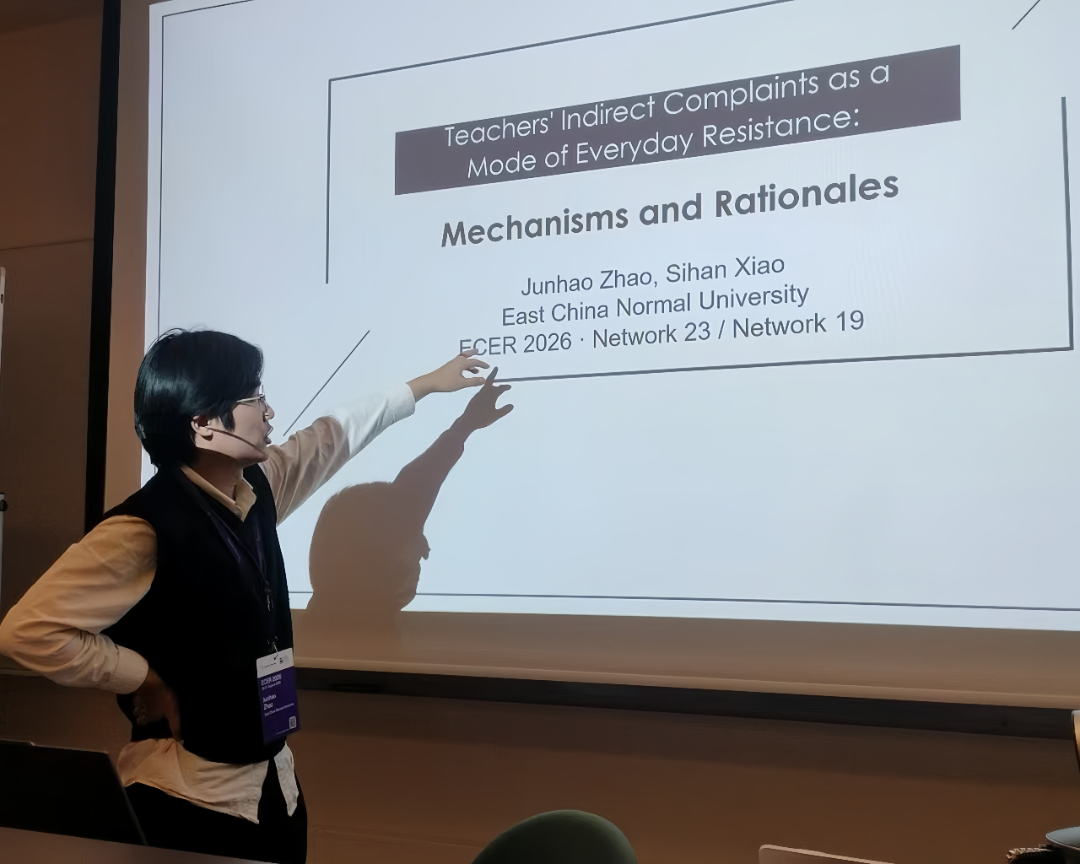
Zhao Junhao, master’s student, 2025 cohort — Paper
Topic:Teachers’ Indirect Complaints as a Mode of Everyday Resistance: Mechanisms and Rationales
Zhao examined how humour and indirect complaints can become forms of collective resistance among teachers. A case analysis of a staff meeting in a Shanghai public kindergarten showed how a joking complaint, laughter and colleagues’ apparent corrections enabled teachers to express shared concerns while managing interpersonal and professional risks. The study connects these interactions with wider pressures, including employment uncertainty associated with falling birth rates.

Li Yijie, master’s student, 2024 cohort — Poster
Topic:Reflect on Human Needs: The Energy-Related Needs in Middle School Science Textbooks in China
Li analysed how human energy needs are represented in Shanghai’s revised Grade 6 science textbooks. Drawing on needs theory, the study examined both textual descriptions and underlying values. It argues for closer attention to how textbooks help students weigh everyday needs and development against energy conservation and environmental sustainability.
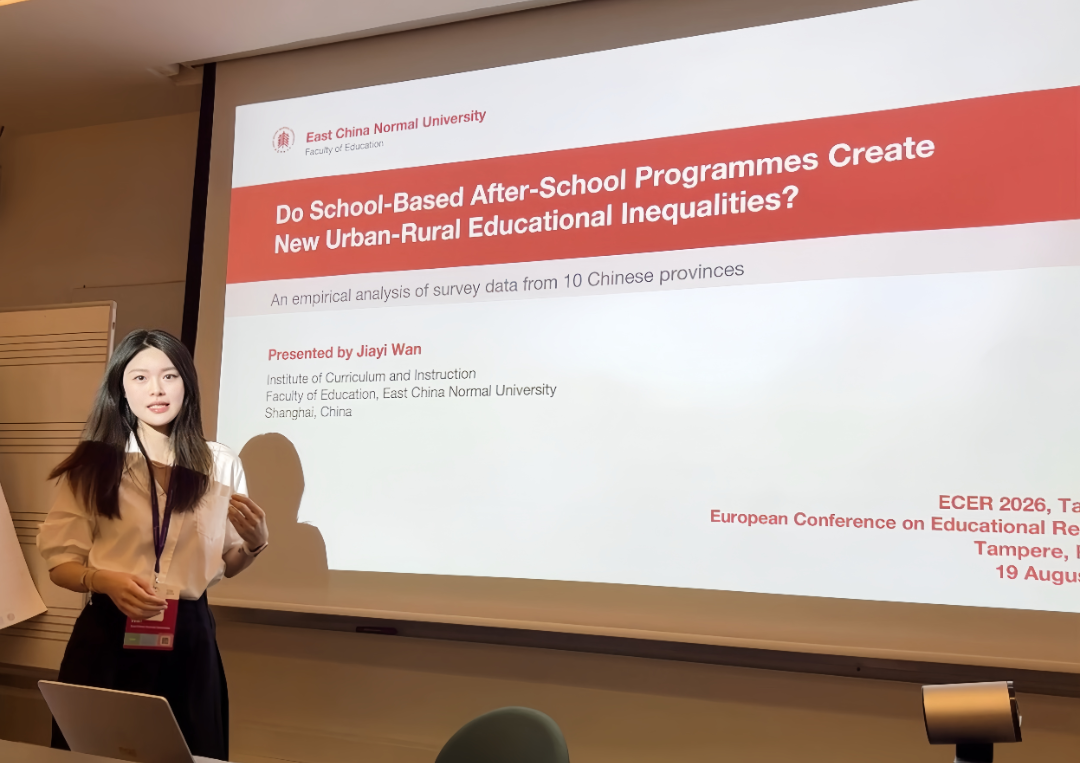
Wan Jiayi, master’s student, 2024 cohort — Paper
Topic:Do After-School Services Create New Urban-Rural Educational Inequalities? An Empirical Analysis of Data from 10 Chinese Provinces
Wan investigated differences in the provision and governance of after-school services under China’s “double reduction” policy, which seeks to reduce excessive homework and off-campus tutoring burdens. The study suggests that broad coverage can coexist with inequalities in service quality, raising questions about how a policy intended to expand access is reshaped in urban and rural settings.
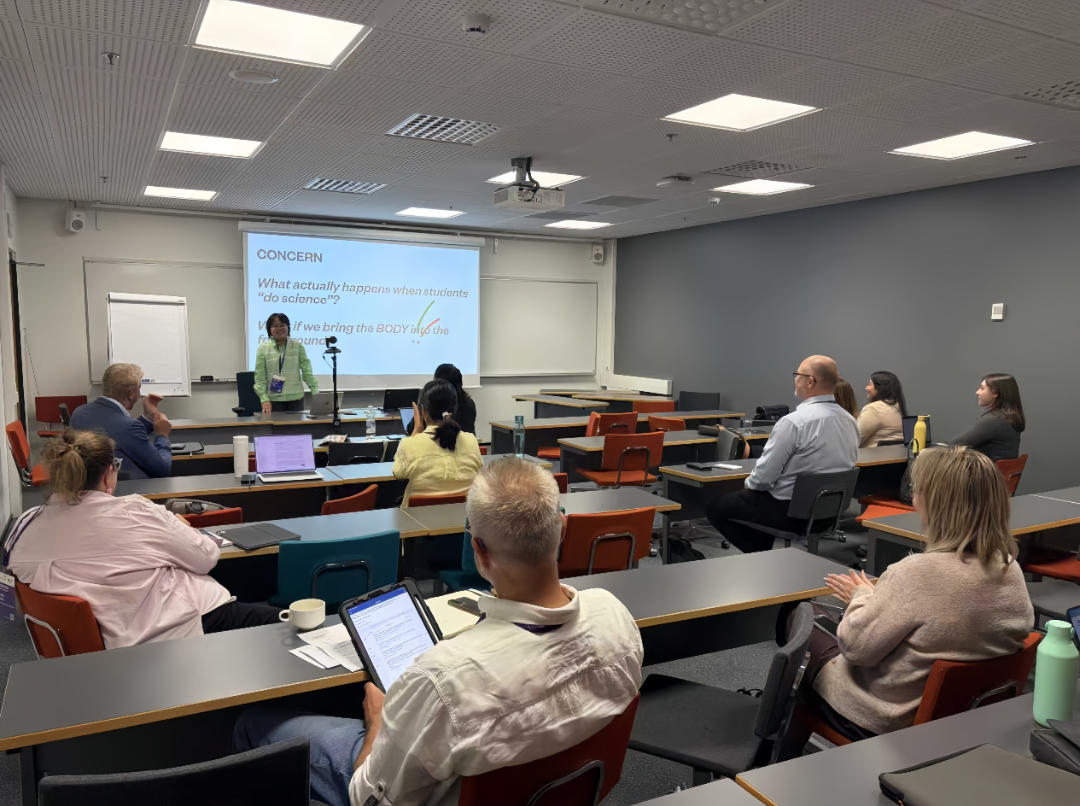
Yang Haoxuan, doctoral student, 2025 cohort — Two papers
Topic:The Role of the Body: Looking Closely at How Elementary Students Engage with Science Practices
Drawing on sustained observation and interaction analysis in primary science classrooms, Yang explored the role of bodily activity in tacit learning, dialogue, the expression of thinking and emotional engagement. The study asks when hands-on activity becomes an opportunity for scientific learning.
Topic:The Assembled Body in Science Classrooms: An Empirical Study of How Primary Students Engage in Science Practices
A second paper adopted a sociomaterial perspective to examine how experimental kits, the quantity of materials and their spatial arrangement enable or constrain participation. It considers the relationships among bodily engagement, equitable opportunities, measurement uncertainty and scientific practice.

Zhuang Yuan, doctoral student, 2025 cohort — Poster
Topic:What Hinders Perspective-Taking in Socioscientific Issues Instruction? A Case Study
Zhuang investigated a Grade 6 debate about pet cloning, using classroom recordings, interviews and student worksheets. Although students were assigned different positions, they often focused on winning, peers’ abilities and task completion rather than understanding stakeholders’ experiences. The findings question the assumption that every socioscientific issue is best approached as an evenly balanced debate and highlight how competition can divert attention from empathy, responsibility and ethical judgement.

Rong Jiani, doctoral student, 2024 cohort — Paper
Topic:Creating Space for EFL Teachers’ Engagement with AI: A Nudge-Based Experimental Study
Rong conducted a randomised controlled trial involving 138 lower secondary English teachers in eastern China. The study examined whether non-coercive support could encourage AI use in a policy-driven environment. It found that a nudge intervention creating low-risk opportunities to experiment encouraged teachers to try AI, offering evidence on how policy goals might be pursued while respecting professional autonomy.

Cheng Chao, doctoral student, 2023 cohort — Paper
Topic:“I am a Good Mother”: Maternal Performance and the Reproduction of Patriarchy Through Musical Mothering of Chinese Mothers
Using participant observation and interviews with 11 mothers, Cheng examined how urban middle-class women enact ideals of “good motherhood” through their children’s piano education. The analysis identified investment in children’s cultural development, intensive care and the regulation of children’s emotions and behaviour as interconnected practices.
The study argues that unequal family roles can be sustained through moral expectations of love, responsibility and sacrifice, as mothers take on largely invisible educational and emotional labour. It also identifies limited opportunities for agency as mothers reinterpret expectations and reconsider their children’s musical goals.
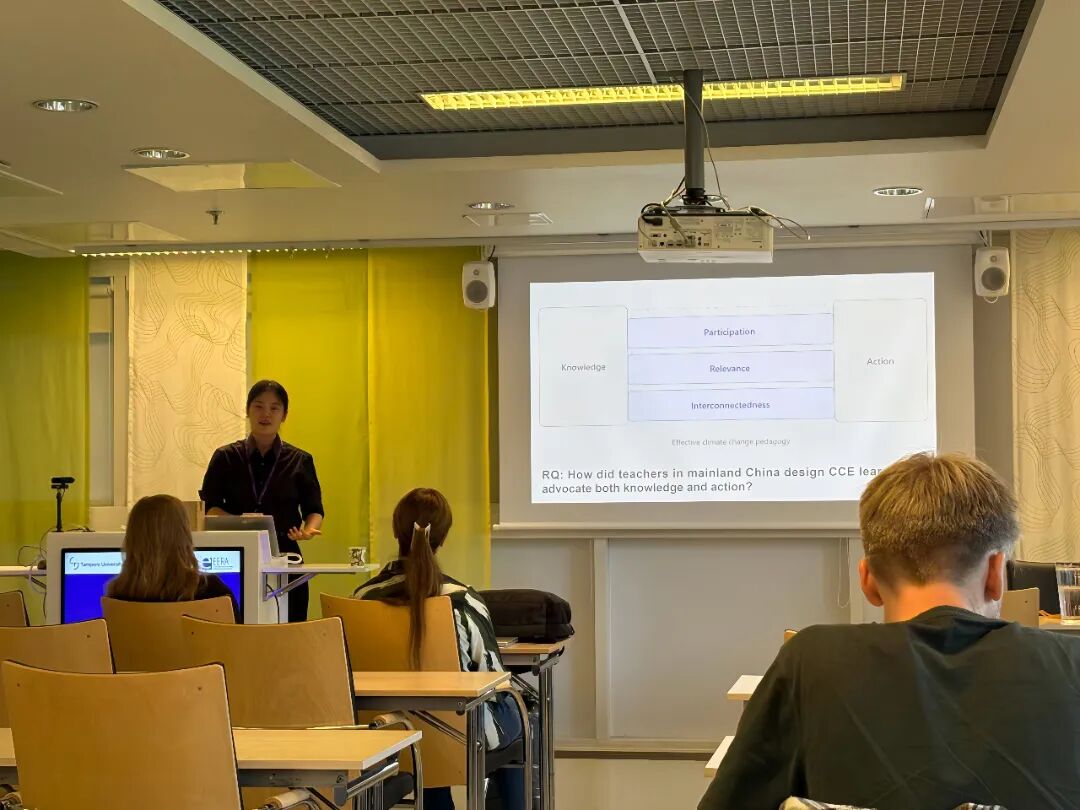
Yan Yuanyuan, doctoral student, 2023 cohort — Paper
Topic:Teaching for Reinhabitation: Chinese Teachers’ Pedagogical Strategies on Climate Change Education
Yan analysed experienced teachers’ climate education designs through an ecobioregional perspective. The study explored how students can build connections with local natural and built environments, understand interactions between systems, participate in consultation and use scientific inquiry to examine environmental limits. It connects these practices with place-based education and the idea of learning to inhabit local communities more responsibly.
Participation in ECER enabled the students to discuss their methods and findings with researchers working across national and disciplinary contexts. The Institute continues to support international academic exchange as part of graduate research education.

 Address: 3663 Zhongshan North Road, Shanghai
 Email: ecnuici@163.com
 电话:021-32526084
