

On the morning of October 15, 2025, in celebration of East China Normal University’s 74th anniversary, the Institute of Curriculum and Instruction (ICI) hosted a special academic seminar at the Mengliu Building.

Prof. Cui Yunhuo, Director of ICI, delivered a keynote lecture titled "AI + Teaching Research and Deepening Curriculum Reform." The session was chaired by ICI Vice Director Yang Chengyu and attended by key faculty members, including Liu Junyan, Shi Yuchen, Wang Yanling, Wang Zhe, Xu Shiyu, Yang Xiaozhe, Zhang Xiaolei, Zheng Xin, and Zhou Wenye. The event attracted nearly 100 faculty members and students from both within and outside the university.
Redefining Teaching Research in the "Unit Era"
Prof. Cui focused on the theme of "AI + Teaching Research in the Era of Unit-Based Instruction." He systematically elucidated how artificial intelligence is reshaping the paradigm of teaching research, offering a roadmap for the transition from traditional lesson observation to evidence-based teaching research.
Philosophy & Principles:Prof. Cui opened with a guiding philosophy: "Trust in AI, avoid blind faith, and maintain confidence." He addressed the pain points of traditional teaching research:
1.Curriculum reform often remains stuck at the level of "public demonstration classes."
2."Everyday classrooms" remain a "black box," preventing students from truly benefiting from reforms.
3.He proposed a practical principle of "Application is Paramount," advocating for AI tools to be integrated as daily teaching and learning aids.

The AIC Platform: From "Watching" to "Data-Driven Analysis"
Prof. Cui introduced the High-Quality Classroom Intelligent Analysis Platform (AIC). Built on research from the International Consortium for Classroom Discourse Analysis, the platform automatically collects multimodal data—including speech, behavior, time, and academic content.
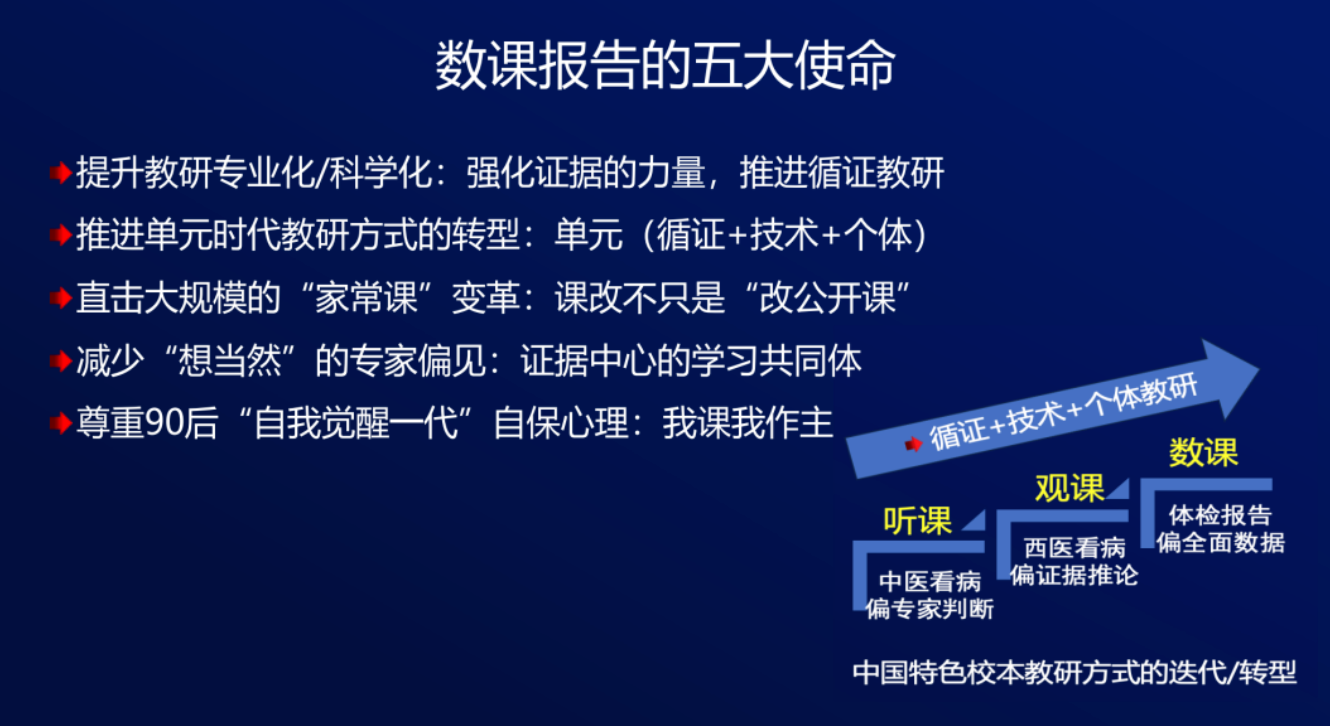
This marks an iterative shift from "Listening to Class" (traditional) ➡️"Watching Class" (video) ➡️"Digitizing Class" (Data-Driven Analysis).
He presented the "Classroom Data Report 2.0," which visualizes previously invisible elements such as interaction patterns and cognitive processes. Key analysis modules include:
1.Chronological Teaching Matrix (9-Grid)
2.Teacher-Student Interaction Graphs (TS Maps)
3.IRF (Initiation-Response-Feedback) Coding
These tools evaluate teaching across three dimensions—Effectiveness, Equity, and Democracy—to construct a "Profile of a Quality Classroom," highlighting features like human-machine collaboration and macro-micro evidence verification.
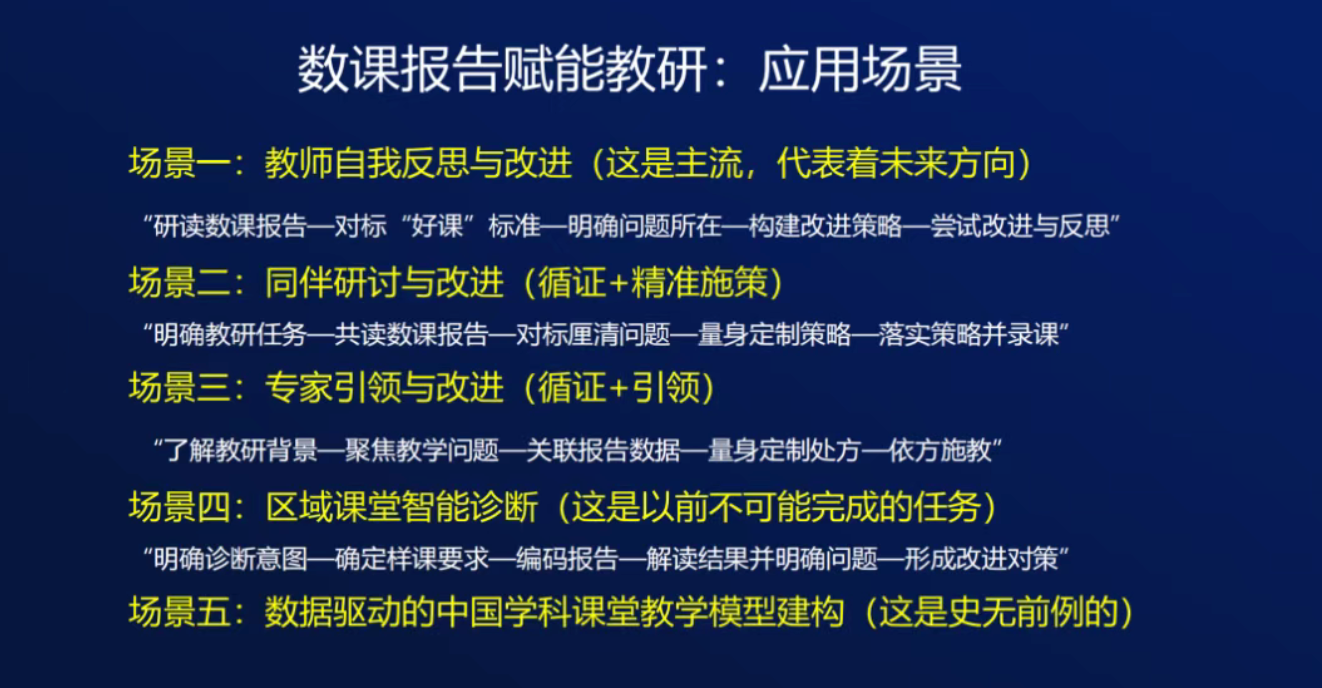
Five Application Scenarios for AI-Empowered Research
Prof. Cui detailed how the "Classroom Data Report" empowers different stakeholders:
1.Self-Reflection: Teachers can use reports to benchmark against "Quality Classroom" standards and take ownership of their improvements.
2.Peer Inquiry: Colleagues can use data to drive precise, targeted discussions rather than vague feedback.
3.Expert Guidance: Reduces subjective bias, allowing experts to offer "tailored" improvement plans.
4.Regional Diagnosis: Enables large-scale intelligent diagnosis of teaching quality across a district.
5.National Norms: Helps build a national database of subject-specific classroom norms, filling a gap in local teaching research standards.
The Five Missions of the Data Report
In his conclusion, Prof. Cui summarized the strategic missions of the project:
1.Enhance the professionalism and scientific rigor of teaching research through the power of evidence.
2.Adapt to the transformation of teaching methods in the Unit-Based Instruction Era to implement core competencies.
3.Open the "black box" of everyday classrooms to benefit more students.
4.Reduce "assumed" biases of experts and build an evidence-centered learning community.
5.Respect the needs of Gen Z (post-90s) teachers, stimulating their motivation for autonomous development.
Citing case studies from schools such as Shanghai Kongjiang No. 2 Primary School and the Affiliated Experimental Middle School of SWUFE, Prof. Cui called on educators to embrace technology while maintaining human agency, using evidence-based practices to drive genuine classroom transformation.
Interactive Exchange
During the Q&A session, faculty and students engaged in a spirited discussion with Prof. Cui. Key topics included:
1.The pedagogical values guiding the AIC algorithms.
2.How "Quality Classroom" standards adapt to the specific characteristics of different subjects.
3.Strategies for mitigating technological risks.
This lecture not only deepened the audience's understanding of AI-empowered teaching research but also clarified the responsibility of researchers in promoting digital transformation and fostering student core competencies. The exploration of "AI + Teaching Research" is a systematic, long-term process, and ICI looks forward to continued research that addresses the core issues of technology-education integration.


 Address: 3663 Zhongshan North Road, Shanghai
 Email: ecnuici@163.com
 电话:021-32526084