

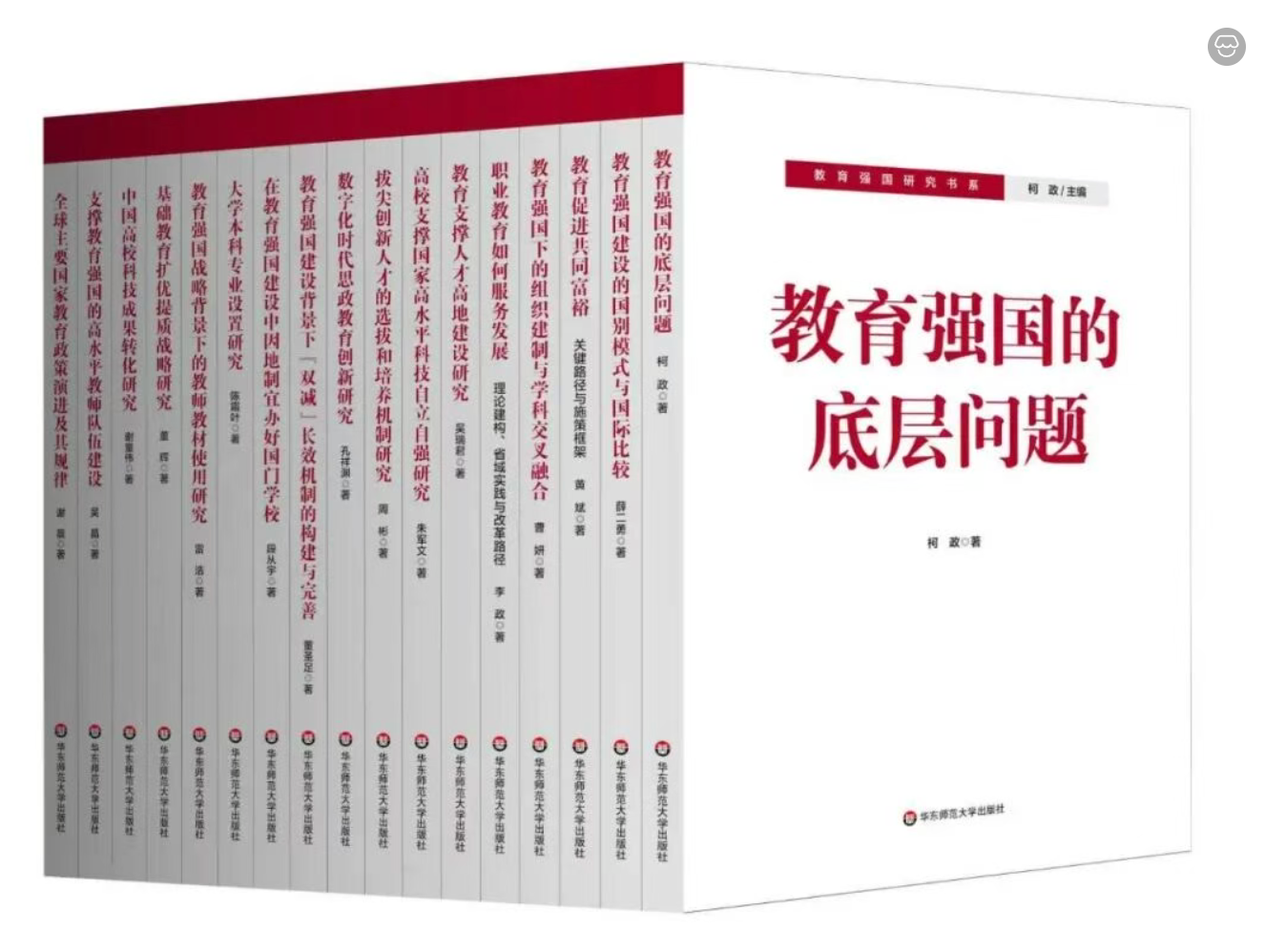
As China pursues its national goal of becoming a global education powerhouse by 2035, the focus of academic inquiry is shifting. This strategic objective serves as a "litmus test" for whether educational research is truly rooted in authentic, real-world problems. To bridge the gap between theory and practice, Professor Ke Zheng has led a team to launch the "Education Powerhouse Research Series," a collection of works dedicated to exploring China’s systematic leap from a "large" to a "strong" education nation.
About the Editor-in-Chief
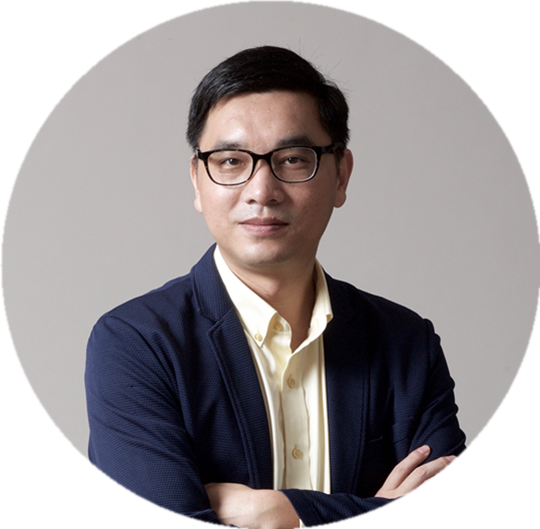
KE Zheng
Executive Dean of the National Institute of Education Macro Policy, ECNU; Professor at the Institute of Curriculum and Instruction (ICI), ECNU.
A New Paradigm: Rooting Theory in Authentic Practice
In his introduction to the series, Professor Ke Zheng challenges the current state of educational theory, arguing that the construction of a "Chinese independent knowledge system" must prioritize utility over mere international peer recognition.
Bridging the Theory-Practice Gap Professor Ke observes a growing disconnect where practitioners find academic theories "useless," not because they are too abstract, but because they are "off-topic." Theories are often built on scenarios that practitioners never actually encounter. "The most urgent task," Ke argues, "is to extract the knowledge that actually works in Chinese educational practice, theorize it, and return it to the field to improve the quality of education."
From "Shallow" Problems to Deep Theory Addressing skeptics who claim practical issues (such as multi-campus layouts or reducing student workload) lack "academic depth," Professor Ke contends that these are precisely where deep theoretical work is needed. He compares the current state of "student burden" research to early physics before the refined measurement of "temperature"—the lack of depth is not due to the subject itself, but to a lack of collective scholarly investment and rigorous disciplinary accumulation.
The Series: An Open and Systematic Exploration
The "Education Powerhouse Research Series" is organized around two main pillars:
Research on the Education Powerhouse: Addressing foundational questions—what defines an education powerhouse, why this strategy is vital now, and what global historical experiences can teach us.
Research for the Education Powerhouse: Identifying the specific, major reforms required across various sectors—from basic and higher education to vocational and international cooperation—to achieve a systematic qualitative leap.
The "Three Opens" Philosophy: To ensure the series remains a dynamic and authoritative resource, it follows three principles of openness:
Open Topics: Welcoming any significant issue related to building an education powerhouse.
Open Timeline: New volumes are added as soon as research matures; there is no fixed deadline.
Open Authorship: Welcoming both established scholars and rising stars based on their ability to provide theoretical clarity and practical guidance.
Strategic Impact and Support
The series has received significant institutional backing, including being designated as a "Shanghai Education Modernization Key Project" by the Shanghai Municipal Education Commission. It has also gained attention from key departments within the Ministry of Education (MOE), highlighting its role as a strategic resource for national policy and academic development.
By prioritizing the "real issues" of China’s reform, the series aims to contribute "Chinese Wisdom" to global educational governance, offering a robust theoretical framework that is both locally rooted and globally relevant.

 Address: 3663 Zhongshan North Road, Shanghai
 Email: ecnuici@163.com
 电话:021-32526084