

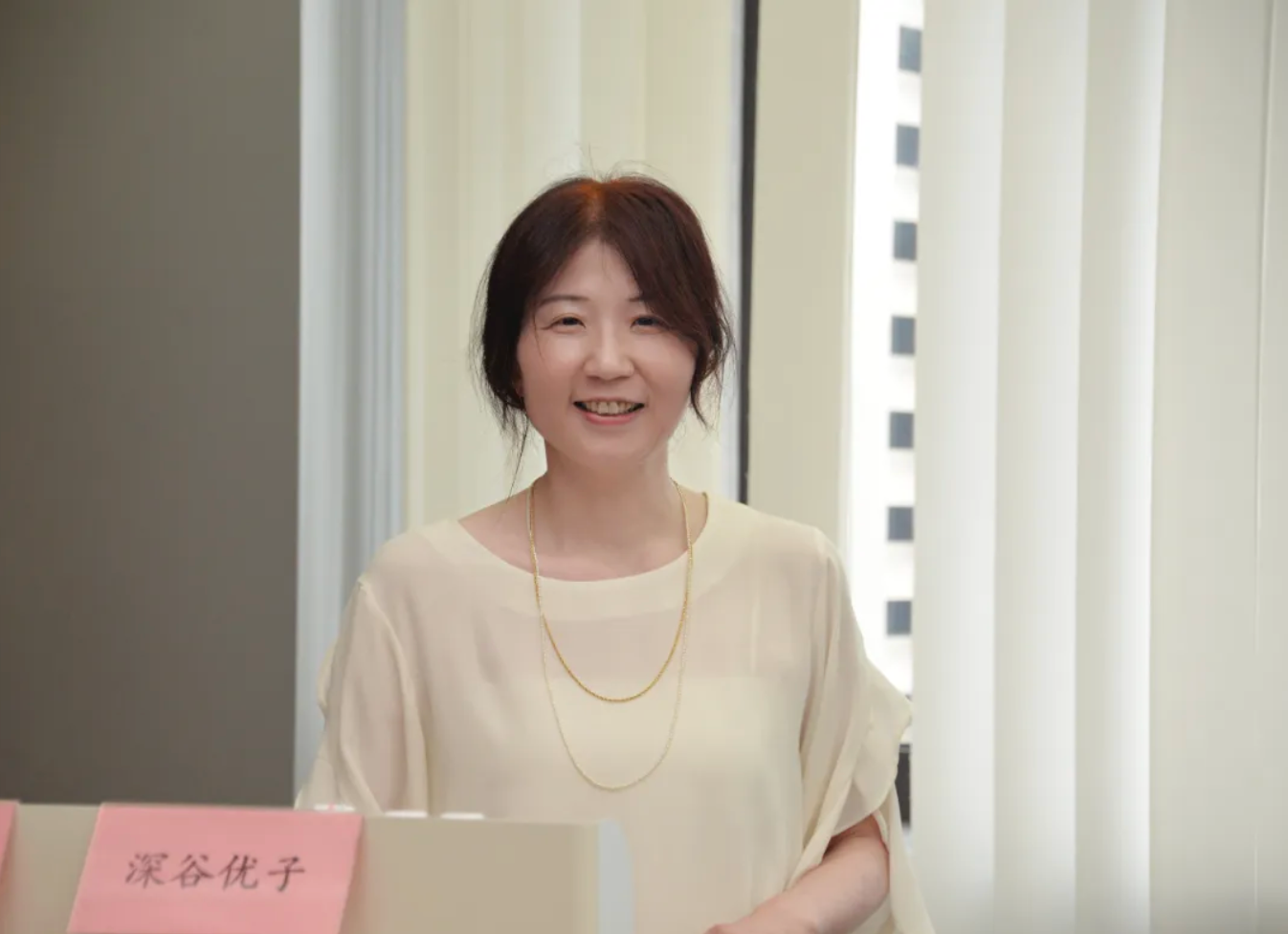
On April 21, the 186th session of the Huaxia Curriculum Forum was successfully held in Room 1613 at East China Normal University (ECNU). The forum featured a keynote lecture by Professor Yuko Fukaya from Kokugakuin University, Japan, titled "The Current Status and Significance of Childhood Reading."
The seminar systematically explored the developmental patterns, empirical realities, core values, and pedagogical pathways of reading among primary school students. The forum was chaired by Cheng Chao, a Ph.D. candidate (Class of 2023) in the Department of Curriculum and Instruction, with Professor Shen Xiaomin serving as the official interpreter. Faculty members and researchers from the Institute of Curriculum and Instruction (ICI), including Shi Yuchen, Yang Chengyu, Zhang Zihong, and Wang Bingru, participated in the scholarly exchange.
Key Research Insights: How Children Develop Reading Habits
Professor Fukaya shared critical data and theoretical frameworks from her extensive research in Japan, debunking several common cognitive misconceptions regarding children's reading habits.
1. Reading as a Long-Term Construct, Not an Innate Talent
Professor Fukaya emphasized that reading proficiency is not an innate capability but a long-term, structurally scaffolded developmental process.
Early Childhood: Children accumulate vocabulary and textual familiarity through oral communication, parent-child shared reading, and environmental print.
Primary School: Continuous reading practice enhances decoding skills and reading fluency. This stage marks a critical transition from guided reading to autonomous, self-regulated reading.
2. Physical and Cognitive Obstacles to Reading
Addressing the phenomenon of children who "do not read," Professor Fukaya argued against the simplistic reduction of the problem to a "lack of interest or time." Instead, research points to deeper systemic barriers:
Cognitive barriers: Difficulties in fluent textual decoding.
Physical/Physiological barriers: Insufficient core physical stamina required to sustain focus (e.g., the physical inability to maintain sitting posture or sustain attention spans).
Core Takeaway: Children can only enter a stable and productive reading state when cognitive capacities and physical readiness align.
Empirical Trends: The Landscape of Reading in Japan
Professor Fukaya presented robust statistical data illustrating the reading habits of Japanese primary school students:
Volume and Consistency: Students in Grades 4–6 read an average of 12 books per month (including in-class and assigned reading), equivalent to 2–3 books per week. Approximately 60% of students maintain a stable habit of self-selected reading (over 1–2 books per week).
The "Memorable Book" Catalyst: Notably, about 80% of children possess a "highly meaningful, unforgettable book." This emotional anchor is crucial for intrinsic motivation, creating a positive feedback loop: Encountering a great book➡️Sparking intrinsic interest ➡️ Expanding reading volume.
Content Shift: Content preferences naturally evolve from picture books and illustrated encyclopedias in lower grades to biographies, popular science, and sports literature in higher grades.
The "Adolescent Drop-off": A critical challenge currently facing Japanese educators is the significant decline in reading habits as students transition into junior and senior high school.
The "Home-School-Community" Support Network
The research underscores that a reading environment consists of much more than the mere physical availability of books; it functions as a socio-cultural support system.
Family Foundation: Home libraries & Parental modeling
⬇️
Peer Triggers: Recommendations & Social sharing
⬇️
School Scaffold: Teacher guidance & Library infrastructure
The Multidimensional Value of Reading
Linguistic Predictor: A robust positive correlation exists between reading volume, vocabulary size, and comprehension skills.
Academic and Career Trajectory: Stable reading habits enhance intellectual capacity, predicting long-term academic and professional success.
Empathy and Agency: Deep reading fosters empathy, transforming children from passive consumers of information into active creators of meaning.
The Saturation Point: Professor Fukaya cautioned against the "more is always better" fallacy. Extreme reading volumes can paradoxically impede healthy development by displacing essential time for physical exercise, socialization, and rest.
Actionable Pathways for Future Reading Pedagogies
To sustain literacy development, Professor Fukaya proposed five forward-looking strategies:
Design Accessible Environments: Create spaces where books are readily available and peer discussions are actively encouraged.
Establish Rhythms: Standardize a baseline pacing of at least one book per week in primary school to help students find their "anchor books."
Diversify Typologies: Guide children beyond fiction to explore science, history, and biographies.
Prioritize Deep Reading: Encourage meaning-making and critical reflection over mere information extraction.
Bridge Educational Stages: Leverage home-school-community collaboration to prevent the reading drop-off during secondary education.
Academic Q&A and Scholarly Exchange
During the interactive session, ECNU faculty and students engaged in a vibrant dialogue with Professor Fukaya, covering several contemporary debates in literacy education:
Reading in the AI and Short-Video Era: Professor Fukaya advocated for a renewed emphasis on print media and self-paced reading. This approach helps safeguard the cognitive process of deep thinking against the passive, fragmented information consumption characteristic of digital algorithms.
The Paradox of "No Time to Read": The root cause of reading avoidance is typically an under-stimulated motivation rather than a genuine deficit of time. Remediation should focus on activating intrinsic interest rather than arbitrarily mandating reading hours.
Reading Fluency vs. Reading Literacy: Fluency targets measurable, technical skill performance (such as decoding speed), whereas literacy represents a holistic competency encompassing deep comprehension, synthesis, and critical thinking.
Institutional Synergy in Japan: Participants discussed the division of labor in Japanese schools, where professional school librarians and classroom teachers collaborate closely to deliver reading guidance. This collaborative structure offers a valuable model for optimizing reading curriculums internationally.


 Address: 3663 Zhongshan North Road, Shanghai
 Email: ecnuici@163.com
 电话:021-32526084