

On March 31, the Annual Meeting of National Coordinators for the UNESCO Associated Schools Network (ASPnet) commenced in Sanya, Hainan Province, centered on the theme "Transformative Education in Practice."
The high-level global event was co-hosted by UNESCO and the Department of Education of Hainan Province, organized by the International Centre for UNESCO ASPnet (ICUA), and supported by the Chinese National Commission for UNESCO, East China Normal University (ECNU), and China Daily 21st Century Review. The assembly brought together approximately 100 delegates, including national coordinators from 45 countries, officials from UNESCO Headquarters and regional offices, representatives from the MoE of China, local authorities, universities, and member schools.
As the official academic advisory institution for ICUA, the Institute of Curriculum and Instruction (ICI) at ECNU designed and spearheaded the conference's inaugural Capacity-Building Workshop. Anchored on the theme of "Teacher Professional Development," the session was chaired by Dr. Xu Shiyu and headlined by Professor Cui Yunhuo (Director of ICI), who systematically shared China's 25-year trajectory in classroom-rooted school-based research.

The Global Challenge: Bridging Philosophy and Classroom Practice
Global education is undergoing a paradigm shift from knowledge transmission to core competency cultivation, and from teacher-centric instruction to learner-centered environments. While Transformative Education has become a global consensus, educational authorities worldwide face systemic bottlenecks in practice:
Outdated instructional frameworks that resist pedagogical innovation.
A cognitive gap regarding what transformative education entails in real-world settings.
A historical decoupling between theoretical professional development and actual classroom realities.
Addressing these universal implementation dilemmas, the ICI team positioned teachers as the primary agents of educational transformation, providing global delegates with a scalable blueprint adaptable to localized contexts.
The Triadic Ecosystem: 25 Years of Chinese School-Based Research
During the keynote session, "Transformative Education Demands Transformative Teachers," Professor Cui Yunhuo dissected the localized strategies that have sustained China's basic education curriculum reform since 2001.
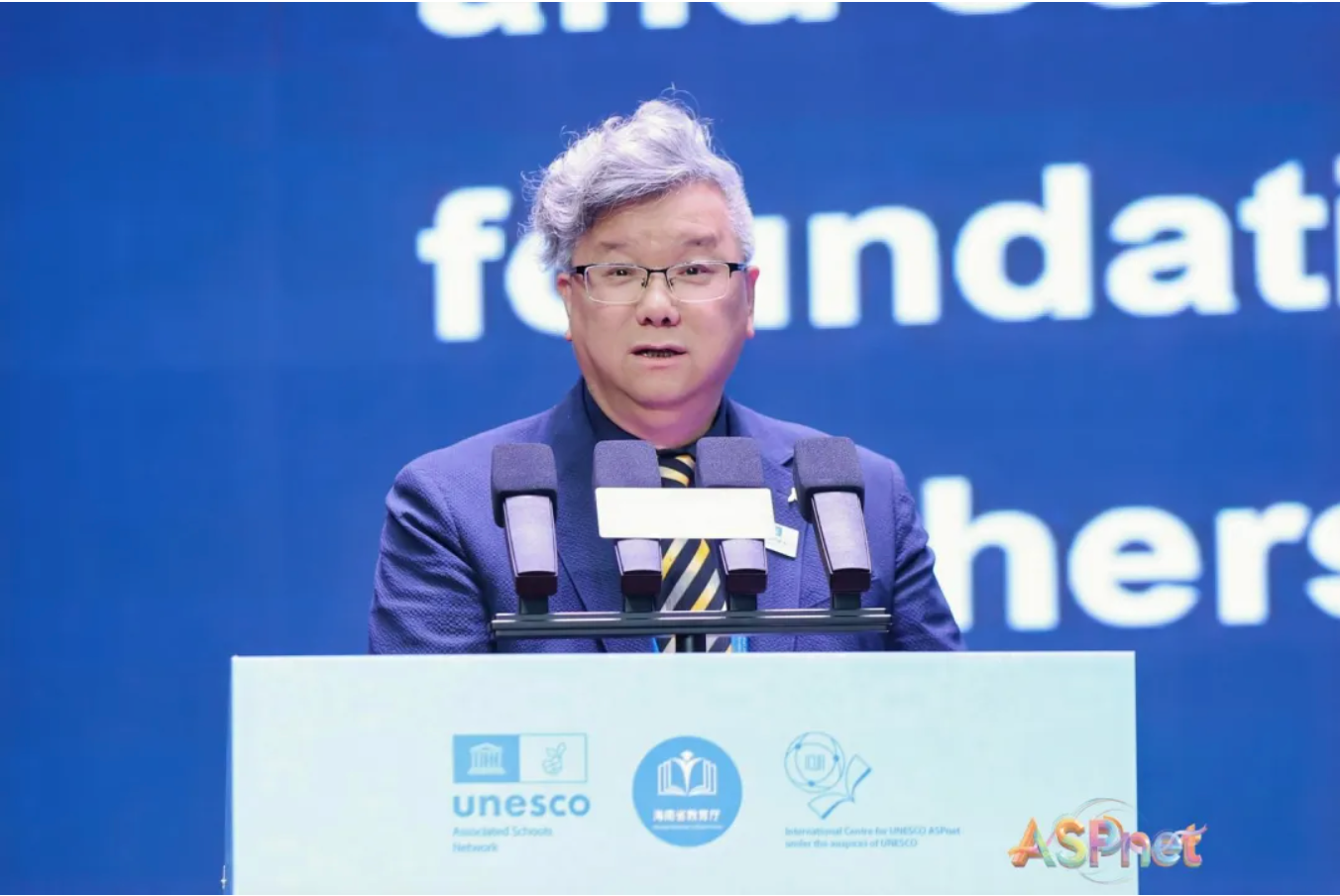
Professor Cui argued that transformative education exerts a "triple pressure" on global educators—disrupting their instructional goals, classroom practices, and professional roles. To alleviate this burden, China developed a Triadic School-Based Research Ecosystem composed of three core pillars:
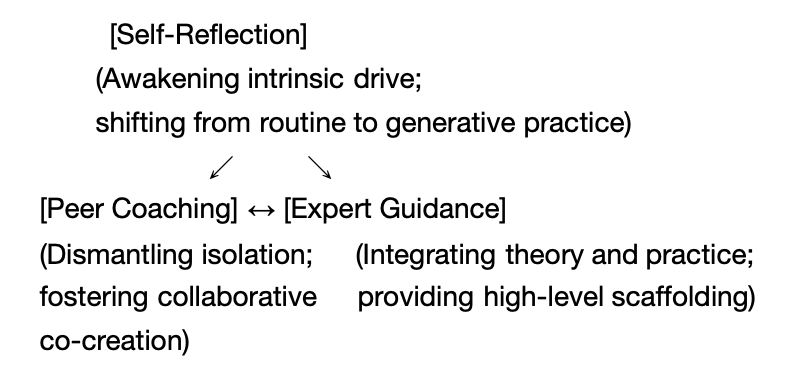
By institutionalizing this "Practice–Reflection–Re-practice" closed-loop system, teachers successfully transition into transformative practitioners.
High-Level Recognition and Global Resonance
The capacity-building session attracted prominent international leadership, including Min Jeong Kim (Director of the Division for Education 2030, UNESCO Headquarters) and Lydia Ruprecht (Global Coordinator of UNESCO ASPnet), who highly commended the operational depth of the Chinese framework.
During the interactive co-creation segments, national coordinators from nations such as Thailand, Kenya, and Moldova shared their localized educational trials. Their experiences strongly resonated with the core tenets of the Chinese triadic model, validating the universal applicability and cross-cultural adaptability of school-based collaborative research.

Actionable Core Consensus for Global Education
The international dissemination of China’s educational experience is designed as a reciprocal co-construction of a global educational ecosystem rather than a unilateral export of methodology. Based on decades of empirical data, ICI synthesized a clear action plan for global transformative education:
Micro-Interventions for Macro-Impact:Initiate pedagogical reforms by targeting authentic, high-leverage problems within daily classroom settings.
Ecosystemic Scaffolding:Replace fragmented, one-off training sessions with a sustained, collaborative professional network.
Glocalized Integration:Nurture students' global competencies while keeping them deeply anchored in their localized cultural heritage.
Future Outlook
Educational transformation begins with the teacher and matures through classroom practice. This annual meeting marks a significant milestone in bringing China’s school-based research paradigm into global policy dialogues. Moving forward, ICI will continue to utilize its academic research as a bridge, leveraging the global ASPnet network to co-construct an international, collaborative, and transformative educational ecosystem.


 Address: 3663 Zhongshan North Road, Shanghai
 Email: ecnuici@163.com
 电话:021-32526084