

On June 15, 2026, the 189th session of the Huaxia Curriculum Forum was convened at the Putuo Campus of East China Normal University (ECNU). This high-level scholarly event was jointly organized by a coalition of ECNU's premier educational divisions: the Institute of Curriculum and Instruction (ICI), the National Institute of Basic Education Reform and Development, the Institute of International and Comparative Education, the Advanced Institute of Education Sciences, and the editorial board of Global Education Outlook.
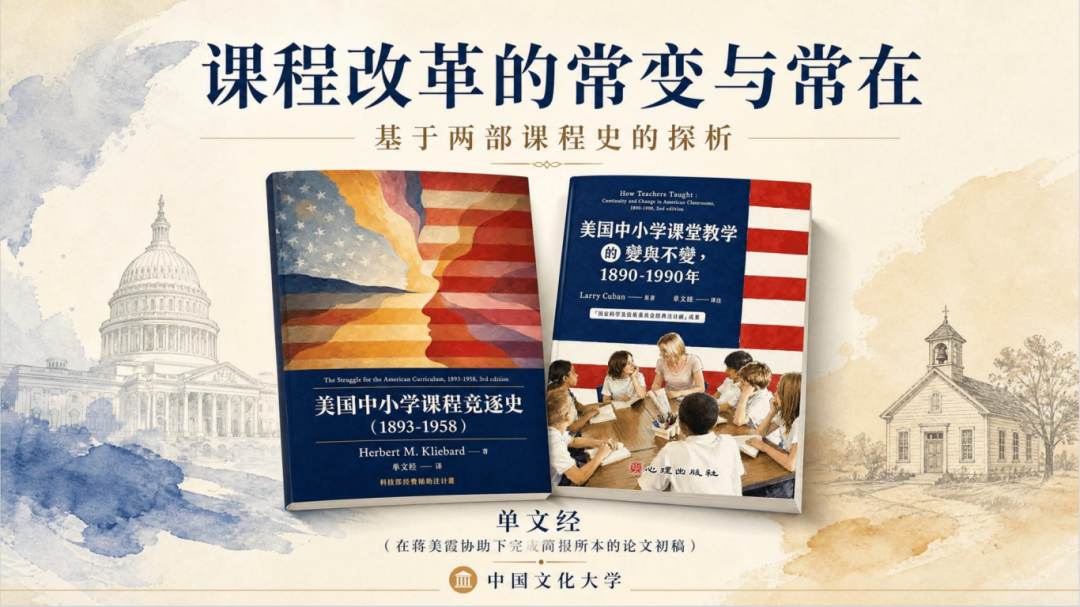
The forum featured a keynote lecture by Professor Shan Wenjing (Chinese Culture University; formerly Professor at Taiwan Normal University and Dean of the Faculty of Education at the University of Macau), titled "The 'Constancy' and 'Change' of Curriculum Reform: An Analysis Based on Two Canonical Histories."
The seminar was chaired by Professor Zhou Wenye, Chair of the Department of Curriculum and Instruction, and attended by an esteemed panel of ECNU discussants, including Lifelong Professor Ding Gang, Professor Cheng Liang, Professor Huang Shuguang, Professor Peng Zhengmei, and Professor Zhou Yong.
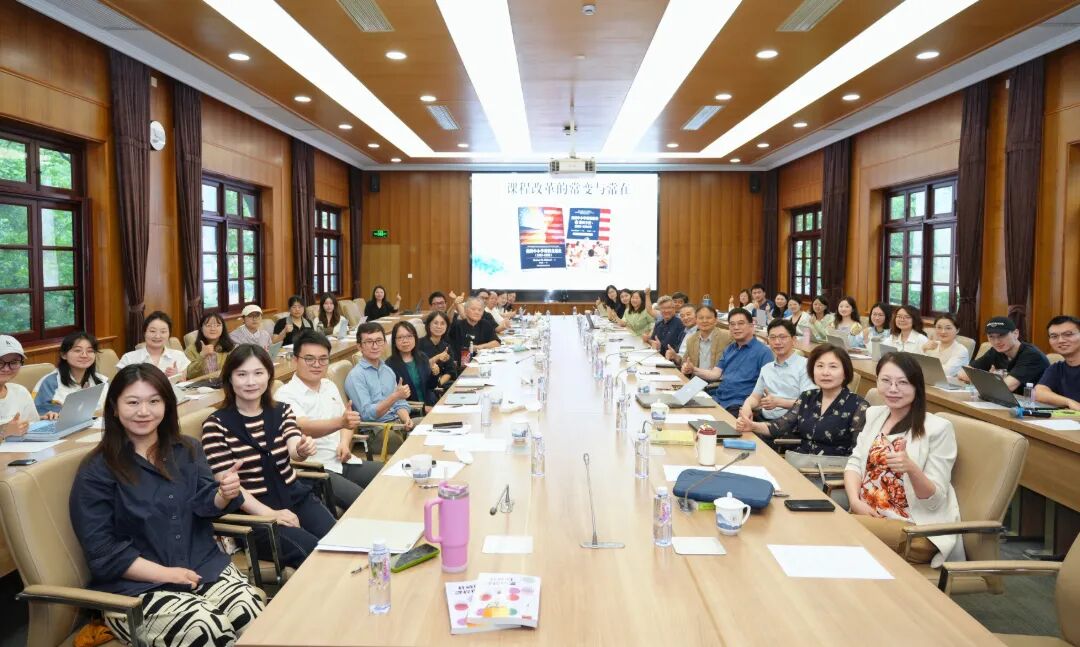
Opening Remarks: The Invariant Laws of Dynamic Reform
Professor Cui Yunhuo, Director of ICI, delivered the opening address. Drawing from his 30-year career in curriculum policy, Professor Cui shared two anecdotal reflections that framed the afternoon's debate:
· The Politics of the Credit Grid: The continuous negotiations and compromise among different academic disciplines over instructional hours and credit allocations reveal that curriculum reform is inherently a complex process of political negotiation and value balancing.
· The Persistence of Core Classroom Problems: While new open research lessons and localized curriculum initiatives roll out continuously, the foundational dilemmas and structural challenges of classroom teaching remain remarkably unchanged over decades.
Professor Cui noted that curriculum reform constantly oscillates between dynamic paradigm shifts and invariant systemic laws—a duality that perfectly mirrored the lecture's theme.

Keynote Highlights: Deconstructing the History of Curricula and Instruction
Professor Shan Wenjing anchored his historical analysis in two monumental cornerstones of American educational historiography:
· Herbert Kliebard’s The Struggle for the American Curriculum (1893–1958)
· Larry Cuban’s How Teachers Taught: Constancy and Change in American Classrooms (1890–1990)
By cross-examining these texts, Professor Shan mapped out why certain elements of schooling change overnight, while others remain fiercely resilient.
1. Why Curriculum Reforms Continually Occur
Professor Shan argued that curriculum reform is rarely a purely technical or pedagogical endeavor. Instead, it serves as a socio-political arena shaped by macro-social transitions, political climates, and competing interest groups. The selection of textbook content, the re-ordering of subject hierarchies, and the framing of learning standards are fundamentally processes through which societal power relations and cultural values are contested and re-negotiated.
2. The Resilience of the Subject-Based Structure
In exploring the phenomenon of "constancy," Professor Shan analyzed why traditional subject-based curricula remain the dominant framework of modern schooling. Despite consecutive historical waves of progressive education, child-centered activity curricula, core integration projects, and modern Project-Based Learning (PBL), the disciplinary architecture has endured. Most successful reforms do not replace the existing structure; they adapt, supplement, or restructure it.
3. Teacher Agency and the Non-Linear Classroom
The translation of curriculum policy from official state texts into actual classroom instruction is never a linear process. Teachers operate as the ultimate gatekeepers and interpretive agents. Faced with identical reform mandates, different educators exercise distinct professional judgments shaped by school cultures and localized teaching contexts, resulting in highly complex, varied classroom realities.
4. Methodological Reflections on Historiography
Professor Shan concluded with critical methodological advice for education researchers:
· Dual-Contextual Awareness: Interpreting Western educational theories requires a deep understanding of two distinct contexts—the original environment in which the theory was generated, and the localized environment into which it is translated and adapted.
· Look to the Archives:True curriculum history must move past high-level policy documents. Researchers should immerse themselves in the lived reality of past schools by analyzing raw historical artifacts, including historical teacher logs, authentic student assignments, and institutional school archives.
Panel Synthesis: Multidimensional Dialogues on Educational Lineages
Following the keynote, the special guest panelists offered interdisciplinary commentary, connecting historical perspectives to contemporary educational challenges:
· Micro-History of Curricula (Prof. Zhou Yong):Traced the micro-history of how football was institutionalized into Shanghai schools during the late Qing Dynasty. Over a 30-year evolution, the sport shifted from a simple physical education activity to a vehicle for nationalist sentiment, demonstrating how macro-historical trajectories map onto localized, micro-level curriculum designs.
· The Policy-Reality Matrix (Prof. Cheng Liang):Highlighted the micro-mechanisms connecting top-down policy to real-world classroom execution. He urged researchers to focus less on policy rhetoric and more on the structural, stable factors that anchor educational institutions during times of rapid regulatory change.
· Philosophical Harmonies (Prof. Huang Shuguang): Offered a philosophical synthesis drawing from the I Ching (Book of Changes), noting that change and constancy form a unified dialectic. He argued that amidst today's hyper-velocity digital revolution, curriculum design must return to a humanistic standpoint, re-centering John Dewey's "child-centered" philosophy to preserve the human element in education.
Closing Summary
Professor Ding Gang delivered the closing synthesis. He commended Professor Shan’s dual analytical matrix—merging the history of official curriculum design with the empirical history of actual classroom instruction. Professor Ding concluded that sustainable, high-quality educational transformation must maintain a meticulous equilibrium between radical innovation and historical inheritance to safeguard the true essence of schooling.


 Address: 3663 Zhongshan North Road, Shanghai
 Email: ecnuici@163.com
 电话:021-32526084